

Sight Unseen
A blind expat's musings on life, death, and the Trump era
My name is Christopher Winner. I am an American citizen who has lived in Europe, predominantly Rome, for nearly half a century, and I founded The American | In Italia in 2004. I also began a column titled “Area 51,” which exists to this day. But, in 2015, I was diagnosed with glaucoma and have gradually lost my sight. The thoughts and comments you read below are snippets of my thinking in these challenging times and are dictated to co-managing editor Leigh Smith.

Miracle on hold: The woman who comes to clean my flat every two weeks is an ardent believer in miracles. That I am blind and have cancer sounds to her like a trifle, at least as viewed by the pot-stirring makers of miracles. She has never revealed her religion, and I do not ask. Perhaps Transylvanian. Perhaps a cousin of Dracula’s. Maybe no more or less than an Eastern goddess with connections. So what must I do, I ask her. Simple, she replies. Begin by willing my vision to return and politely asking that my cancer go elsewhere, perhaps on a sightseeing tour to Egypt or Holland or Washington, D.C., where it already thrives. And next? Well then, it should be obvious. I must die because death is the scratch that pays for healthy resurrection. I consider this but finally ask if she can work a simpler miracle by cleaning the fridge, which needs help. As for my own miracle, I’ve placed it on hold, no doubt much to cancer’s delight that I’m not dead yet. But we’ll see what the coming months bring.
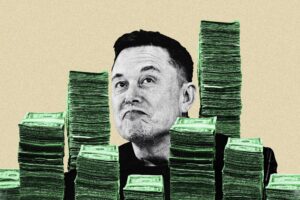 Musk’s monolith: While a student at Columbia University in New York City, I took a course in architecture, and my final paper concerned the ongoing construction of the World Trade Towers in the late 1960s and early 1970s. Few know this, but one of the original planning proposals suggested a single 200-story skyscraper, part of which would of course break the cloud cover over the city. This idea was discarded above all because of air traffic consideration and the presence of two major airports, LaGuardia and JFK, in the vicinity. But another concern expressed by several planners was that such a monolithic structure, well over 2,000 feet in height, would be “outside the realm of human imagination.” It might attract a cult following and even be worshipped as the towers of ancient scripture were, witness the Tower of Babel. I mention all this in light of Elon Musk’s achieving (then losing) trillionaire status. It, too, is in its own way outside human imagination, and despite capitalism’s unlimited nature, makes me wish a ceiling existed on human financial worth, precisely to avoid the kind of exaggerated monolith that Musk has become. Like the height of a skyscraper, capitalism should not be infinite, because that very infinitude can create impossible envy and, as a result, unhinge all those in its shadow.
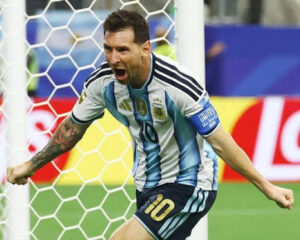 Messi’s heel: At 39 and in his sixth World Cup, the Argentine alchemist Lionel Messi has set the competition’s all-time goal-scoring record with 18. But on his aging heels is France’s talisman Kylian Mbappé, who is but two goals behind in only his third World Cup. The 27-year-old will almost surely surpass Messi either in the coming days or in four years. This is soccer’s carbon copy of tennis, in which Roger Federer and Rafael Nadal reigned supreme for two decades only to see the slightly younger Novak Djokovic shatter both of their Grand Slam records. Back to soccer and the World Cup, bear this in mind. While the Messi machine represents the near entirety of Argentina’s forward-thrusting power, Mbappé has friends and allies in the middle and up front. If he stalls, others can come to France’s rescue. Messi has considerably less help, which on paper puts France in the driver’s seat — unless, that is, an outsider pounces, pushing both the French and Argentine stars to the side of the road.
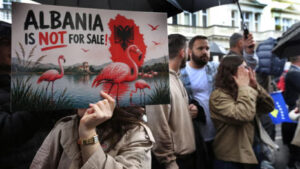 Political nepo babies: Nepotism has always suited the extreme right, whose members see themselves as an entitled clan or tribe, minus the warpaint. This administration is rife with such figures, either linked to the president by family or paid professionals in his keep. In fact, many cabinet members have no political lineage, recruited instead from the ranks of reactionary mass media, the Defense or War Secretary a good example. The son of a presidential lawyer and one-time New York City mayor is a key member of a task force intended to root out the World Cup “unwanted.” Another presidential lawyer will likely soon take over as attorney general. At the festering center of this underworld is the president’s son-in-law, Jared Kushner, already busy planning a much-criticized Albanian seaside resort (witness the Flamingo Rebellion), a European project with Cuba in mind since the president and his developer friends dream of a Havana Gold Coast when the Cuban regime is starved out of power.
So much of what this White House does has the flavor of a nonlethal mob hit, decisions made by the inner sanctum to avoid inconvenience while silencing potential critics. It is the ways and means of the president’s barely legal New York City real-estate world transported wholesale to Washington, D.C. It is what he knows. And it is, by any measure, amoral and ugly.
Political nepo babies: Nepotism has always suited the extreme right, whose members see themselves as an entitled clan or tribe, minus the warpaint. This administration is rife with such figures, either linked to the president by family or paid professionals in his keep. In fact, many cabinet members have no political lineage, recruited instead from the ranks of reactionary mass media, the Defense or War Secretary a good example. The son of a presidential lawyer and one-time New York City mayor is a key member of a task force intended to root out the World Cup “unwanted.” Another presidential lawyer will likely soon take over as attorney general. At the festering center of this underworld is the president’s son-in-law, Jared Kushner, already busy planning a much-criticized Albanian seaside resort (witness the Flamingo Rebellion), a European project with Cuba in mind since the president and his developer friends dream of a Havana Gold Coast when the Cuban regime is starved out of power.
So much of what this White House does has the flavor of a nonlethal mob hit, decisions made by the inner sanctum to avoid inconvenience while silencing potential critics. It is the ways and means of the president’s barely legal New York City real-estate world transported wholesale to Washington, D.C. It is what he knows. And it is, by any measure, amoral and ugly.
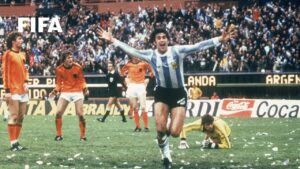
Dirty Cup: The 1978 World Cup in Argentina was played against the grimmest possible political backdrop. The recent marring of the Stars and Stripes has not been pretty, but it pales before memories of a military dictatorship run by Gen. Jorge Videla. His so-called National Reorganization Process witnessed the detention of tens of thousands of individuals and families who became known as los desaparecidos, the vanished. Many of his victims were abducted randomly and taken to detention centers or small concentration camps, where they were first tortured and then murdered, their remains scattered. Videla was among several Central and South American strongmen at the time, including Chile’s Pinochet, Paraguay’s Stroessner, Nicaragua’s Samoza and, perhaps, the worst of the lot, El Salvador’s “death-squad” mastermind Roberto D'Aubuisson, all of them for years in Washington’s good graces because of their mutual loathing of communism. Jimmy Carter created a human rights secretariat intended to rein in their abuses, only to see his successor, Ronald Reagan, disband it. But the big show, the cup, went off without a hitch, the Argentina of Mario Kempes ultimately defeating the Total Football of Johan Cruyff’s Netherlands in the final. Protests were held in some European cities, and a few enterprising reporters exposed Videla’s crimes, all in vain since on the heels of Videla came the equally repressive Gen. Galtieri, who maintained the same policies while also plunging Argentina into the 1982 Falklands War. The grisly desaparecidos period has lately been fully exposed, and families of the victims acknowledged, but all of it far too little, far too late, the Argentina of that time still remembered by some as Kempes’ night of glory.
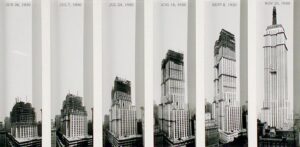 Father’s Day: By chance, I stumbled onto a vitriolic Atlanta radio station tied at the hip to this president’s Truth Social network. In just a few minutes I heard he was the greatest of all presidents to lead the greatest of all nations. The United States did not need old friends in Europe because they had turned liberal, inclusive, and were in any case weak and doddering entities swollen with dark-skinned interlopers and reliant on the U.S. for their own defense. I learned all Democrats were deluded or brainwashed Marxists. I learned that America did not need a federal government but should rely instead on private corporations such as Space X or Meta. I was told the U.S. was in its rights to seize Greenland or any other territories It deemed essential to national security. Finally, I learned that the president should become a kind of czar with greater executive power, especially over the annoying judiciary. None of this is entirely new. It was spoken in part during the red-baiting era of the 1950s and, soon after, extolled by the reactionary John Birch Society. It resurfaced in the 1990s and reached new peaks, witness the Tea Party, when the “Islamist” president ascended to the White House. But the radio broadcast also reminded me of the words of my father, who on our first weekend trip to New York — I was 11 — told me that while it was fine to marvel at the skyscrapers and wide boulevards, I should always remember the U.S. was not New York City at heart. It was provincial and parochial, even isolationist, and had become a true world player only as a result of World War II and the ascent of Stalin’s communism. If the Cold War ever ended, he said, America might well retreat into a belligerent shell, suspicious of all that did not strictly adhere to its cultural norms. But my eyes were too focused on the Empire State Building to pay him much attention. Now, 62 years later, it’s clear I should have been listening.
Perilous times: Katrina Kent is the pen name of a British escort who wrote a column for this magazine in the years before COVID. She began as a stripper in Las Vegas and Miami before returning to London, where she started a sexting service and financed porn videos in which she starred to reap even greater profits. After several successful years, she was able to sell her business and revel in financial self-sufficiency, her goal from the start. Her own interest in voyeuristic sex was marginal, she told me, but she recognized early on that puritanical America was sex-crazed enough to enrich a shrewd and clever business operator. The door was opened by the web, which led to the dark web, which led to addictive algorithms, which has culminated in the introduction of the generative side of Artificial Intelligence as the ultimate and unrestricted sex toy. But it is impressionable youth (the Epstein files tell a sad story) who are the most vulnerable and likely to suffer in this new libertine world. The Internet had the chance to regulate itself in its early days but did not. The last I spoke to Katrina, more than five years ago, she worried about the fate of her children, should she have them. She understood the cravings that allowed countless child brothels to flourish in Industrial Revolution Era London, and as a result she feared bleak days ahead for minors. She was painfully right.
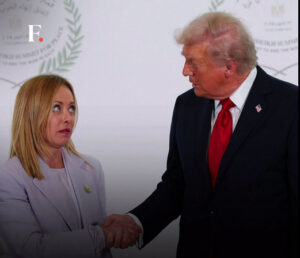 Meloni on fire: It takes nimble thinking to transform condescension into political capital. But Italy’s far-right Prime Minister Giorgia Meloni was more than up to the task. At the G-7 Summit, the American president, typically rude, said he had spoken to Meloni but only after she chased him down to “beg” that he pose for a photo with her, something he said he agreed to because he felt sorry for her. A day later, Meloni hit back hard in a widely circulated video in which she said the president had fabricated the entire incident, adding, “I, and Italy, do not beg.” Meloni, lately criticized by the center-left for her perceived deference toward Washington, was almost instantly rehabilitated. Here, for everyone to see, was a new and tougher prime minister who had vocally defended the pope from White House insults and refused any involvement in the Iran War, positions that tended to push her away from reactionary policies ahead of 2027 national elections. Though Italy failed to qualify for the World Cup, her words and tone aroused Italian nationalism--all the more so since the president persists in assailing her online.
Why the American president cannot rein in his crudeness is anyone’s guess, but in terms of Europe, it runs deeper than the matters of national popularity, energy policy, migration, and Middle East wars. A decade ago, the French intellectual Bernard-Henri Lévy said in a New York debate that while he worried about the new president’s domestic and foreign policy, he was just as concerned about his egregious lack of style. He was right to worry. But, increasingly, European leaders are learning to fight fire with fire, which Meloni continues to do, giving her an odds-on chance of retaining her Italian leadership.
Meloni on fire: It takes nimble thinking to transform condescension into political capital. But Italy’s far-right Prime Minister Giorgia Meloni was more than up to the task. At the G-7 Summit, the American president, typically rude, said he had spoken to Meloni but only after she chased him down to “beg” that he pose for a photo with her, something he said he agreed to because he felt sorry for her. A day later, Meloni hit back hard in a widely circulated video in which she said the president had fabricated the entire incident, adding, “I, and Italy, do not beg.” Meloni, lately criticized by the center-left for her perceived deference toward Washington, was almost instantly rehabilitated. Here, for everyone to see, was a new and tougher prime minister who had vocally defended the pope from White House insults and refused any involvement in the Iran War, positions that tended to push her away from reactionary policies ahead of 2027 national elections. Though Italy failed to qualify for the World Cup, her words and tone aroused Italian nationalism--all the more so since the president persists in assailing her online.
Why the American president cannot rein in his crudeness is anyone’s guess, but in terms of Europe, it runs deeper than the matters of national popularity, energy policy, migration, and Middle East wars. A decade ago, the French intellectual Bernard-Henri Lévy said in a New York debate that while he worried about the new president’s domestic and foreign policy, he was just as concerned about his egregious lack of style. He was right to worry. But, increasingly, European leaders are learning to fight fire with fire, which Meloni continues to do, giving her an odds-on chance of retaining her Italian leadership.
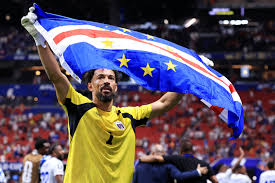 Go, Charlemagne: Though many times said and written, it’s still worth remembering that the World Cup is as much a global exercise in populism and patriotism as it is a sporting event. The essence and identity of nations, not club teams, are pitted against each other. The cup is, in effect, a referendum on all aspects of national culture. Results can instantly make countries very glad or very sad. Germany’s 7-1 thrashing of Brazil in the 2014 semifinals —
in Rio, no less — seemed to all but bury the record five titles that Pele’s country had accumulated over 60 years. An even greater seismic shock came at the 1966 cup, when a North Korean team jokingly referred to by Italian newspapers as a hodgepodge of diminutive farmhands, ousted mighty Italy. So humiliating was that loss that una Corea, “a Korea,” came to mean any major embarrassment. America, provincial by nature and fundamentally self-confident on the global stage, cannot fathom what it means when a Cape Verde, population 530,000, holds European champion Spain to a 0-0 draw. This is true David and Goliath stuff that “Go USA” America cannot fully comprehend because it has not been exposed to foreign invasion, the burdens of occupation, decades of rebuilding, mass poverty, colonialism, and what might be called general international irrelevance.
In spirit, to borrow from historian William Manchester, the World Cup can at times seem to hark back to a world lit only by fire, in which jousts and heraldic banners with crested seals mattered above all else. Please, then, don the glasses of historical context when you watch this World Cup, bearing in mind that while the United States now proudly celebrates its 250th birthday, the cumulative age of the competing countries easily surpasses a millennium. Just ask Braveheart’s tartan army.
Go, Charlemagne: Though many times said and written, it’s still worth remembering that the World Cup is as much a global exercise in populism and patriotism as it is a sporting event. The essence and identity of nations, not club teams, are pitted against each other. The cup is, in effect, a referendum on all aspects of national culture. Results can instantly make countries very glad or very sad. Germany’s 7-1 thrashing of Brazil in the 2014 semifinals —
in Rio, no less — seemed to all but bury the record five titles that Pele’s country had accumulated over 60 years. An even greater seismic shock came at the 1966 cup, when a North Korean team jokingly referred to by Italian newspapers as a hodgepodge of diminutive farmhands, ousted mighty Italy. So humiliating was that loss that una Corea, “a Korea,” came to mean any major embarrassment. America, provincial by nature and fundamentally self-confident on the global stage, cannot fathom what it means when a Cape Verde, population 530,000, holds European champion Spain to a 0-0 draw. This is true David and Goliath stuff that “Go USA” America cannot fully comprehend because it has not been exposed to foreign invasion, the burdens of occupation, decades of rebuilding, mass poverty, colonialism, and what might be called general international irrelevance.
In spirit, to borrow from historian William Manchester, the World Cup can at times seem to hark back to a world lit only by fire, in which jousts and heraldic banners with crested seals mattered above all else. Please, then, don the glasses of historical context when you watch this World Cup, bearing in mind that while the United States now proudly celebrates its 250th birthday, the cumulative age of the competing countries easily surpasses a millennium. Just ask Braveheart’s tartan army.
Bitter heart: Some sons and daughters of European friends believe that I lived in a simpler, if not golden, age. Less social and political fragmentation since a global war had just been fought and the continent was busy rebuilding. No useful-but-addictive Internet. No AI.  Far less daily pressure on parents and children alike, and as a result, a smaller chance of insecurity brought on by constant stress and anxiety. Influenced by 1950s Hollywood movies and family-oriented sitcoms, they imagined American households of that period as wholesome and uncomplicated. In some respects, I admit that such nostalgia isn’t altogether wrong. But what this fails to account for — and I speak from experience — were twice-weekly fallout shelter drills when my entire Washington, D.C., classroom was herded into the cold, dank basement under a flickering light bulb suspended by a thread. The year was 1964. It also fails to consider the extent to which my parents worried regularly about the prospect of nuclear war. At cocktail parties, men debated overkill. They were essentially counting how many tens of millions of Americans or Russians would die in a first-strike missile attack. When I tried to seek refuge in Hergé’s Tintin series, I was told I needed to behave more like an adult since my mortal future was at stake. So instead I played with my stuffed animals. All of this is to say, beware the teasing grapes of idealized nostalgia. They can be as bitter as a bitter heart.
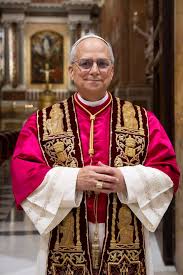 imaginable way. Both his social conscience and sense of morality are robust. Entering the political arena, he all but denounced the Iran War and its architects. In recent months, he has visited the poor and the dispossessed in central and east Africa while doing the same on a trip to Spain’s Canary Islands, where he warned human traffickers that they risked eternal damnation, strong words from a pontiff, though in line with his late 19th-century predecessor, Leo XIII, who upheld worker rights during the Industrial Revolution. In a thoughtful encyclical that minced no words, this latter-day Leo has also warned of AI’s danger to human autonomy and spiritual dignity. It is therefore no surprise that he would turn down an official invitation to travel to the United States for its lavish Independence Day celebrations. Instead, he will use July Fourth to mingle among those this White House considers subhuman, saying mass on the stockade-filled southern Mediterranean island of Lampedusa, where Italy detains stray migrants. If Pope Leo has proved one thing in his brief tenure, it is that his early American upbringing taught him the fundamentals of civics, civil society, human decency, and compassion, bulwarks of what America once stood for. And it is moving to behold.