

Sight Unseen
A blind expat's musings on life, death, and the Trump era
My name is Christopher Winner. I am an American citizen who has lived in Europe, predominantly Rome, for nearly half a century, and I founded The American | In Italia in 2004. I also began a column titled “Area 51,” which exists to this day. But, in 2015, I was diagnosed with glaucoma and have gradually lost my sight. The thoughts and comments you read below are snippets of my thinking in these challenging times and are dictated to co-managing editor Leigh Smith.

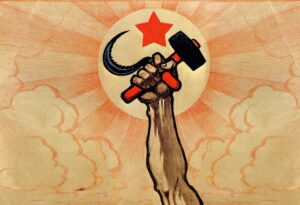 Reds: This administration is increasingly eager to brand all members of the Democratic Party as socialists, communists, or leftist subversives and, as such, an imminent threat to American democracy. The principal reason for this is that Democrats, in addition to seeking more balanced trade agreements, insist on promoting diversity and inclusiveness of the kind that saw a youthful Muslim elected as mayor of New York City in a landslide. These sorts of events are an abomination to the sitting president and his allies. Their only solution is to create an enemy on a mass scale and hope the alarm bells sound loudly enough to worry voters ahead of November midterm elections. In the period immediately after 9/11, Republican strategist Carl Rove used similar political maneuvers to tar and taint Islam, though the strategy was ultimately ineffective — a Black American who had spent part of his youth in Indonesia was elected to the first of two presidential terms in 2008. The scenario is slightly different today, with a robust group of tech oligarchs determined to protect their interests from bogeymen outsiders spearheaded not by the Chinese, mind you, but by the communist Chinese, a conjunction out of use since the early 1970s. This new wave of fear-mongering suggests all Democrats are in cahoots with Beijing, allowing China to “steal” American technological and military innovations. In effect, electing Democrats means electing Reds whose sole mission is to diminish the country’s revived exceptionalism.
Is China an American rival? It most certainly is, but by seeking to humiliate Democrats, Republicans are behaving in the same way as their Red rivals, who openly smear and jail their enemies. Not exactly pretty stuff from a republic that on July 4 repeatedly cast itself as the greatest nation in human history. To which I say, subversively, bring on the Reds. They may — in an equitable world — turn out to be more eager to cooperate with the red, white, and blue than ever before imagined.
Reds: This administration is increasingly eager to brand all members of the Democratic Party as socialists, communists, or leftist subversives and, as such, an imminent threat to American democracy. The principal reason for this is that Democrats, in addition to seeking more balanced trade agreements, insist on promoting diversity and inclusiveness of the kind that saw a youthful Muslim elected as mayor of New York City in a landslide. These sorts of events are an abomination to the sitting president and his allies. Their only solution is to create an enemy on a mass scale and hope the alarm bells sound loudly enough to worry voters ahead of November midterm elections. In the period immediately after 9/11, Republican strategist Carl Rove used similar political maneuvers to tar and taint Islam, though the strategy was ultimately ineffective — a Black American who had spent part of his youth in Indonesia was elected to the first of two presidential terms in 2008. The scenario is slightly different today, with a robust group of tech oligarchs determined to protect their interests from bogeymen outsiders spearheaded not by the Chinese, mind you, but by the communist Chinese, a conjunction out of use since the early 1970s. This new wave of fear-mongering suggests all Democrats are in cahoots with Beijing, allowing China to “steal” American technological and military innovations. In effect, electing Democrats means electing Reds whose sole mission is to diminish the country’s revived exceptionalism.
Is China an American rival? It most certainly is, but by seeking to humiliate Democrats, Republicans are behaving in the same way as their Red rivals, who openly smear and jail their enemies. Not exactly pretty stuff from a republic that on July 4 repeatedly cast itself as the greatest nation in human history. To which I say, subversively, bring on the Reds. They may — in an equitable world — turn out to be more eager to cooperate with the red, white, and blue than ever before imagined.

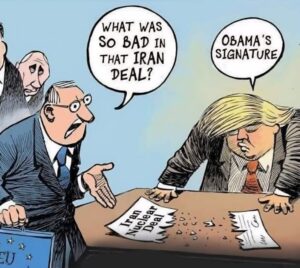 Scum: The American president is tedious in the extreme. At the NATO summit in Ankara, he has returned to his name-calling ways, this time lambasting Britain but above all socialist-run Spain for failing to help him in his war against Iran, rekindled with a new volley of White House insults. He labeled the Iranian leadership as “scum,” a word an American president has never used publicly to describe the rulers of another nation, and called its negotiators “liars,” “sick people,” and part of a “cancer” in need of excising, which Iran ironically rebuked by saying the president was behaving as he had with FIFA, changing rules to suit himself. During the Revolutionary period, John Adams, among the signers of the “Declaration of Independence,” worried openly if the new nation in the offing, its wealthy elite still comprising slaveholders, could live up to the virtues spelled out in its founding documents. He frankly doubted it, perhaps fearing the eventual ascent of a haughty leader who would refer to his adversaries as scum and cancerous without first pausing to look at himself in the mirror.
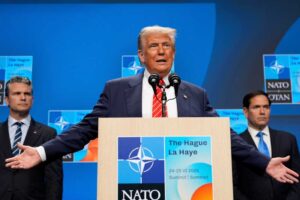 NATO on the brink: However surreal it may seem, it is entirely possible to imagine this White House walking away from NATO, which refuses to do what it’s told. This president swears by unilateral action and perceives NATO as costing him billions without doing his bidding, witness Iran. The alliance’s chief, a Washington sycophant, recently tried to insist on NATO’s relevance after a meeting with the president, saying at least 500 American airstrikes had originated from Italian bases, a remark Italy immediately denied and NATO swiftly retracted. Washington, it seems, would prefer to save money and return to a pre–World War II posture, a dangerous game. It is not even clear — given the strong America-first movement of the time — whether Franklin Roosevelt would have intervened against Nazi Germany had the Japanese not forced his hand. Now, in an interdependent era comes an interdependence-denier. Should Vladimir Putin’s Russia decide to challenge Poland (which is manufacturing drones for Ukraine), it will likely be up to Poland and its NATO partners to deal with the consequences. In such a scenario, this new White House will respond only if it suits the president, under no circumstances deploying American troops, leaving that chore to a weakened NATO. Why, you may ask, this exaggerated and ruinous posture? In large part, because the Europe that defines NATO is increasingly reluctant to invest in American tech companies and by now it should be obvious to all that this is a vindictive commander-in-chief, who literally cannot abide those who vex him. So it is that Europe and NATO’s check may face an improbable checkmate.
 Red-card stench: At the 1936 Munich Olympics, Adolf Hitler might well have thought it within his autocratic reach to demand that the International Olympic Committee strip Jesse Owens of his gold medals, his meticulous lieutenants perhaps finding a loophole in the IOC rulebook to suit their intentions. Hitler’s loathing of non-Aryans was notorious, and Owens’ swagger annoyed him all the more. But Hitler stood pat. Violating national sovereignty was one thing, meddling in sports quite another.
Cometh a childish 21st-century American autocrat, who, breaking rules both written and implicit, has successfully bullied FIFA, world soccer’s governing body, into overturning a red card handed out to a star American player, an infraction that, the world over, would be cause for an immediate one-game suspension.
UEFA, the European Federation, has protested this reversal as “unprecedented, incomprehensible, and unjustifiable,” rebukes that mean nothing to a convicted felon who knows nothing of the game of soccer. And yet, this decision, because it meddles with the details of how a game is played and officiated, has loosed a stench over the competition.
For Americans who don’t follow soccer, it would be as if basketball-loving President Obama had overturned the result of an NCAA Final Four game because he believed, despite officiating at the time, that a technical foul should’ve been called on a player who scored a game-winning shot, an act domestic fans would find unthinkable and very possibly revolt against. What the next teams to face the U.S. should, but will not, do is to remain stationary, arms folded, for a full 30 seconds following the playing of national anthems to visibly protest a decision that will forever assign an asterisk to the history of both FIFA and, sadly, the U.S. Men’s National Team.
Editor's note: Notwithstanding the return of the banned player, Folarin Balogun, Belgium thrashed the United States 4-1, eliminating the last host team from the 2026 World Cup.
Red-card stench: At the 1936 Munich Olympics, Adolf Hitler might well have thought it within his autocratic reach to demand that the International Olympic Committee strip Jesse Owens of his gold medals, his meticulous lieutenants perhaps finding a loophole in the IOC rulebook to suit their intentions. Hitler’s loathing of non-Aryans was notorious, and Owens’ swagger annoyed him all the more. But Hitler stood pat. Violating national sovereignty was one thing, meddling in sports quite another.
Cometh a childish 21st-century American autocrat, who, breaking rules both written and implicit, has successfully bullied FIFA, world soccer’s governing body, into overturning a red card handed out to a star American player, an infraction that, the world over, would be cause for an immediate one-game suspension.
UEFA, the European Federation, has protested this reversal as “unprecedented, incomprehensible, and unjustifiable,” rebukes that mean nothing to a convicted felon who knows nothing of the game of soccer. And yet, this decision, because it meddles with the details of how a game is played and officiated, has loosed a stench over the competition.
For Americans who don’t follow soccer, it would be as if basketball-loving President Obama had overturned the result of an NCAA Final Four game because he believed, despite officiating at the time, that a technical foul should’ve been called on a player who scored a game-winning shot, an act domestic fans would find unthinkable and very possibly revolt against. What the next teams to face the U.S. should, but will not, do is to remain stationary, arms folded, for a full 30 seconds following the playing of national anthems to visibly protest a decision that will forever assign an asterisk to the history of both FIFA and, sadly, the U.S. Men’s National Team.
Editor's note: Notwithstanding the return of the banned player, Folarin Balogun, Belgium thrashed the United States 4-1, eliminating the last host team from the 2026 World Cup.
Red scare, 2: Determined to retain control of both houses of Congress in November midterm elections, the Republican Party is tearing a page from Joe McCarthy’s Red-baiting book. He was the 1950s congressional demagogue who rose to national prominence by portraying all liberals and progressives, no matter their walks of life, as insidious communists attempting to undermine the republic. He was a fraud and a chronic liar but did considerable damage before being both confronted and humbled by broadcaster Edward R. Murrow in a seminal television interview. What today’s Republicans are banking on is the absence of a Murrow-like figure in divided America. Interestingly, this Red-baiting strategy was also used with great success by the late Italian Prime Minister Silvio Berlusconi, a tycoon who labeled all enemies as communist conspirators and as a result won support from Italy’s populism-prone southlands. Many dubbed him a pernicious autocrat, but he basked in the attention and exercised political influence for three decades, mostly because he owned the country’s three major private TV networks. He would react with delight to this American president’s choice of enemies. Demagogues of a feather flock together, and unless America’s Democratic party can deliver a rational response to this new-era red baiting and a president with a McCarthy-like sneer, it will be trampled in the manner of those who were not resolute enough to challenge McCarthyism and, 50 years later, a charismatic Italian who carried its torch.
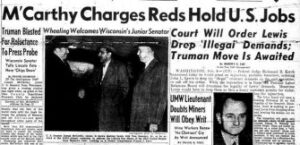
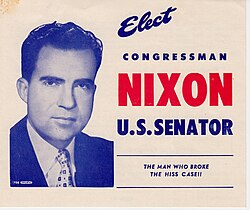 Red scare, 1: In the late 1950s, President Dwight Eisenhower warned of the creation of a military-industrial complex, which would be fueled by the global threat of communism and thus generate a massive arms buildup. Ironically, some 80 years later, an American president has resurrected communism from its crypt, insisting, as Richard Nixon once did, that all America faces a communist threat. The real threat, however, is the growth of the now-robust corporate-political complex, which creates wars to produce investment opportunities for powerful American companies. In political terms, this is called cronyism, and it is as old as America. So, what this president is doing is distracting from this cronyism of unprecedented proportions by telling national crowds that they face communist enemies linked to the Democratic Party, all of this without foundation. The goal is clear. To scare unenlightened or ignorant voters into casting their ballots for the president’s alleged good-guy system built on unrestricted capitalism. It is the latest twist in an already unbearable presidential script, and bears an uncanny resemblance to Nixon’s anti-communist witch hunts of the late 1940s that began a political career that would ultimately lead him to two presidential terms before he disgraced himself.
I now live far away from my America, but I am always reminded of Yogi Berra’s charming tautology, “it’s déjà vu all over again,” only this time, and I hate the bromide, the rich just keep getting richer.
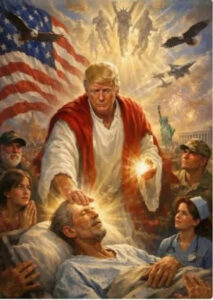 Antichrists: At the heart of the extraordinary row between the American pope and the American president is the matter of what American-ness truly signifies. The pope, who spent much of his adult life among Peru’s poor and misbegotten, argues that to be American is to confer inalienable human dignity upon citizens and migrants alike, the centerpiece of a July 3 video message that honored America’s long history of compassion and inclusion as exalted by the Declaration of Independence. But to the openly xenophobic American president, these concepts are well nigh revolting. He has lived a life of privilege, worships money, and has no patience for those who do not in some way resemble him and his values system. For this reason, the president’s July 4 festivities are by invitation only and favor the country’s oligarchs. By contrast, the Chicago-born pontiff of Creole origin is on Lampedusa, Italy’s southern Mediterranean detention island, to mingle and pray with stricken boat people, in an effort to bring dignity and hope to those who in Italy and elsewhere are often spit upon. He is attempting to embody the spirit of the Statue of Liberty, a symbolic monument whose pledge has been mooted by a president who implicitly deplores the huddled masses if they fail to show their papers, the classic “deine Papiere” spoken by Nazi police in the 1930s and ’40s. Neither the pope nor the president can win this argument. Dignity and disdain will never shake hands. There is no deal to be had here. But there is a choice worth making between right and wrong, and the pope, seeing his nation in trouble, abides by the former, and this America can use any nobility that comes its way, lest its birthdays remain indefinitely in the hands of billionaire Antichrists.
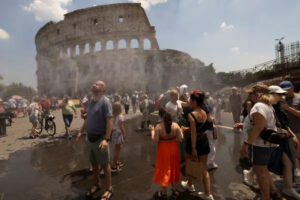 Lucifer rules: I have lived through many a Rome summer, each of them at one time or another invariably stricken by heat waves of different durations. For decades, most residents of the city did without air-conditioning, reserved in the large for luxury hotels. But this new and unremitting vapor lock, carried over weeks not days, bears no resemblance to any past in my memory. The city is oppressed by a bloated humidity as corpulent at midnight as it is at midday.
The mercury reading of the Mediterranean Sea has risen, and weather, like politics, now seems geared to extremes. The power grid in my neighborhood is made feeble and breaks down repeatedly, a new development. And yet, these unlivable temperatures appear likely to persist for years to come. It matters less to me if climate change is human-made or not. But what is evident in this latest brutal stretch is that the planet is undergoing major change of the kind that once exterminated entire species through excesses of temperature both high and low. The message to humans is clear, though it may take a century to absorb — beware, you may be the next woolly mammoth, but extinguished through sweat, not ice.
Lucifer rules: I have lived through many a Rome summer, each of them at one time or another invariably stricken by heat waves of different durations. For decades, most residents of the city did without air-conditioning, reserved in the large for luxury hotels. But this new and unremitting vapor lock, carried over weeks not days, bears no resemblance to any past in my memory. The city is oppressed by a bloated humidity as corpulent at midnight as it is at midday.
The mercury reading of the Mediterranean Sea has risen, and weather, like politics, now seems geared to extremes. The power grid in my neighborhood is made feeble and breaks down repeatedly, a new development. And yet, these unlivable temperatures appear likely to persist for years to come. It matters less to me if climate change is human-made or not. But what is evident in this latest brutal stretch is that the planet is undergoing major change of the kind that once exterminated entire species through excesses of temperature both high and low. The message to humans is clear, though it may take a century to absorb — beware, you may be the next woolly mammoth, but extinguished through sweat, not ice.
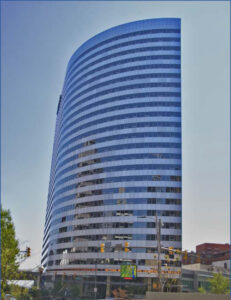 Cultural faux pas: In the spring of 1986, the newspaper USA Today recruited me into its Cover Stories department as a writer and editor. It came to pass only because my friend and mentor Dave Mazzarella, who had published my first work when he was editor of the Rome Daily American, interceded on my behalf. He had left Rome in the late seventies and was now head of the international side of Gannett, USA Today’s parent company. Filled with hope, I arrived from Rome at the newspaper’s gorgeous Rosslyn, Virginia, headquarters (a strikingly reflective skyscraper) where Karen Jurgensen, the head of the department, and Barb Geehan, her assistant, immediately invited me to a get-acquainted lunch at a Georgetown restaurant. It was there, toward the end of the meal, that I committed a major blunder. As my European training had taught me, I excused myself from the table and paid the check. When Jurgensen found out, she was politely livid and explained, between the lines, the protocols of position, power, and money. I was no longer in Europe, she said. My payment was canceled, and the ride back to the newspaper was a silent one. Geehan later tried cheering me up by telling me it wasn’t my fault that I lived in strange, Jurassic Rome. In later years, when I returned to USA Today as a correspondent in London, I shared this story with Mazzarella, by then the newspaper’s editor. As a dapper man of European sensibilities, he laughed. All it took was one faux pas to teach me that culture can be tricky. Sadly, my ties with Jurgensen remained on the chilly side, and I left the paper 18 months later, a lesson learned the hard way.
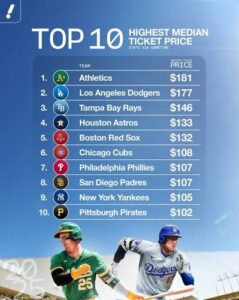 Dead bums: The bleacher bum is dead. In the 1950s, he could and would surrender a dime or a quarter to watch his beloved Brooklyn Dodgers or Chicago Cubs. He worked long hours for a living and shelling out a coin or two to attend a game and grab a hot dog made his day. Good bye to all that. The average price for the second-round matchup between Croatia and Portugal now hovers around $2,000 on resale markets. The new supply-and-demand structure of ticket pricing, whether for the World Cup, the NFL, or getting an up-close seat for a Taylor Swift concert, is geared to an elite for whom $5k is pocket change. It’s the latest lip service to the concept of the Almighty Dollar since European prices, while high, still make occasional room for bums. Sports was never designed for supply and demand or unchecked market capitalism. Instead, the idea was to give both collars, white and blue, a chance to go to the ballgame (and sip an affordable Coke). Now, those hundreds of millions of fans who still lead bleacher bum lives largely find themselves shut out, with an occasional free TV broadcast their only recourse. Want someone to take you out to the ballgame? These days, best to give Mark Zuckerberg a call.
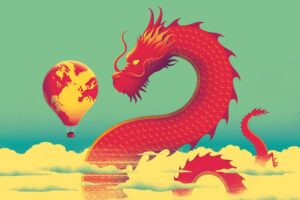 On the bridge: I spoke recently to an Italian friend who runs a media and consultancy firm that for the last decade has helped Chinese planners and futurists to better understand what’s ahead for Europe, not next year but a century from now. China, he says, believes in proven longevity, and many European states have millennial legacies, not China’s 12,000 years, to be sure, but sufficient to be considered battle-tested entities. But that is not the case for politically and culturally fractured America, still an infant in national terms. Some Chinese insiders say America is headed for a civil war, though not necessarily a military one, that may lead to the secession of states, a red-blue snap they call it. The United States may well be divided by coasts, with the populous eastern states grouped on one end and the western on the other, in effect dissolving the Union. This scenario is now easier to contemplate as American far-right chieftains decimate Washington while challenging federal governance. The future may bring a return to something akin to the self-governing 13 colonies, no national presidentialism required. Instead, governors would run independent states and their economies, using militias for protection. Such ideological combat may place celebrating a 500th birthday out of reach. And what nation, you ask, will profit most from an undone United States? China of course.
Remain long enough on a bridge and your rivals may someday float beneath you in bloated plain sight, and no country is better at playing waiting games than homogeneous China.
On the bridge: I spoke recently to an Italian friend who runs a media and consultancy firm that for the last decade has helped Chinese planners and futurists to better understand what’s ahead for Europe, not next year but a century from now. China, he says, believes in proven longevity, and many European states have millennial legacies, not China’s 12,000 years, to be sure, but sufficient to be considered battle-tested entities. But that is not the case for politically and culturally fractured America, still an infant in national terms. Some Chinese insiders say America is headed for a civil war, though not necessarily a military one, that may lead to the secession of states, a red-blue snap they call it. The United States may well be divided by coasts, with the populous eastern states grouped on one end and the western on the other, in effect dissolving the Union. This scenario is now easier to contemplate as American far-right chieftains decimate Washington while challenging federal governance. The future may bring a return to something akin to the self-governing 13 colonies, no national presidentialism required. Instead, governors would run independent states and their economies, using militias for protection. Such ideological combat may place celebrating a 500th birthday out of reach. And what nation, you ask, will profit most from an undone United States? China of course.
Remain long enough on a bridge and your rivals may someday float beneath you in bloated plain sight, and no country is better at playing waiting games than homogeneous China.