It’s no secret that food is its own language. Food can convey immense history, culture, and emotions through its array of flavors. In Italy, each dish has its own story, and here is my reflection on my favorite ones and why they hold a special place in my heart.
To preface, the Marvin family’s life revolves around food: Many of our conversations (and arguments) involve deciding what to cook or where to go for our next meal. Countless of my childhood memories consist of blasting music in the kitchen, chopping vegetables, and stirring pasta before sitting down together and enjoying the fruits of our labor.
This upbringing taught me the importance of appreciating— even seeking out— an array of food, no matter the house, restaurant or culture from which it comes. Naturally, when I found out that I was going to Italy, my mind was not only excited at the prospect of eating authentic Italian meals, but eager to gain more knowledge on the dining customs in Italy.
My first meal after arriving was at a family-owned restaurant in Bologna called Trattoria Da Vito. A rich, meaty lasagna accompanied by a house red wine beckoned to me from the menu.
As I took each bite, my eyes widened more and more. I indulged in layers of delicate sheets of lasagna, creamy ricotta, and meat sauce. But the dish was not the only part of the experience that spoke straight to my heart.
Something that I noticed, which I would take note of in subsequent meals as well, is that restaurants take offense when you don’t finish your entire meal. I ate almost all of my pasta but couldn’t bring my stomach to conquer the last little bit. The waiter asked me, “Did you not like it?” in a confused tone.
I quickly muttered an apology before explaining, “It was so delicious; I’m just so full already.” My sheepish smile said it all; I was embarrassed at the idea of offending him for not finishing my meal. I indulged in layers of delicate sheets of lasagna, creamy ricotta, and meat sauce. But the dish was not the only part of the experience that spoke straight to my heart.
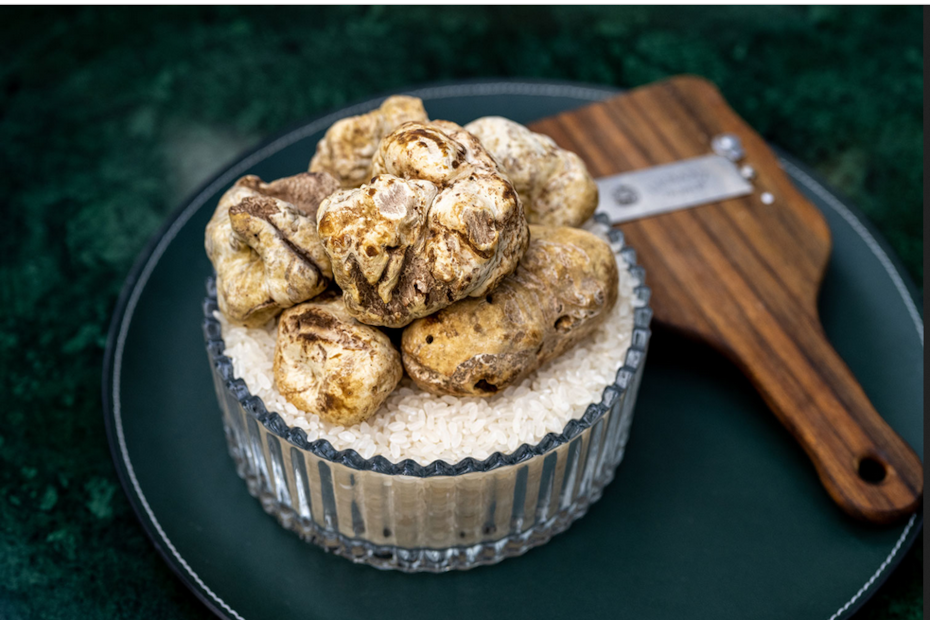
In the middle of our Italian journey, my friends and I took a trip to a nearby town called Gubbio. The area is famous for its truffles, so every corner had a store with truffle products lining the shelves, from oils to sauces to wines that featured the earthy, savory flavor.
Upon our arrival at Locanda del Duca (the Duke’s Inn) we were seated outside, where we buzzed with anticipation for our dinner while admiring the scenery around us.
Perris, Shaniyah, and I convinced ourselves to share a plate with assorted antipasti after smelling wafts of fresh bread pass by us. A wooden board was brought out, brandishing a lovely spread of beef tartare, toasted bread, and silky scrambled eggs, all featuring heaps of freshly shaved black truffles on top.
In a matter of minutes, the plate was empty — but my mind was not. First, I noticed that this dish would never be replicated in the States. In Italy, restaurants shave truffles onto the plate like their life depends on it. Generous mounds appear on your pasta, eggs, and steak — all at a fair price.
Finally, I feel compelled to share a dish that is especially close to my heart: Penne alla vodka — the dish that has stuck with me through prom dinner parties, date nights, and family celebrations.
When I found that the restaurant next to the bus station sold this comfort meal of mine, I immediately made plans to go. My friends and I have now gone several times, filling up on family-style bowls of the creamy dish and bonding over shared experiences. We’ve laughed, made friends with the waiter, and found joy in this peculiar place for a restaurant.
Which brings me to my last point: Food is a catalyst for connections, both old and new. During my stay in Italy, a dish that I have eaten more than a thousand times became something new for me. It transformed into a vessel for conversations and bonds that I will cherish for a lifetime, with people who I met for the first time this summer.
Editor’s Note: This essay marks the second in a series initiated by American Associate Editor Kristine Crane, who spent the summer teaching in the immersive Cagli Project. The first essay, by Sabatino Stacchi, is here.