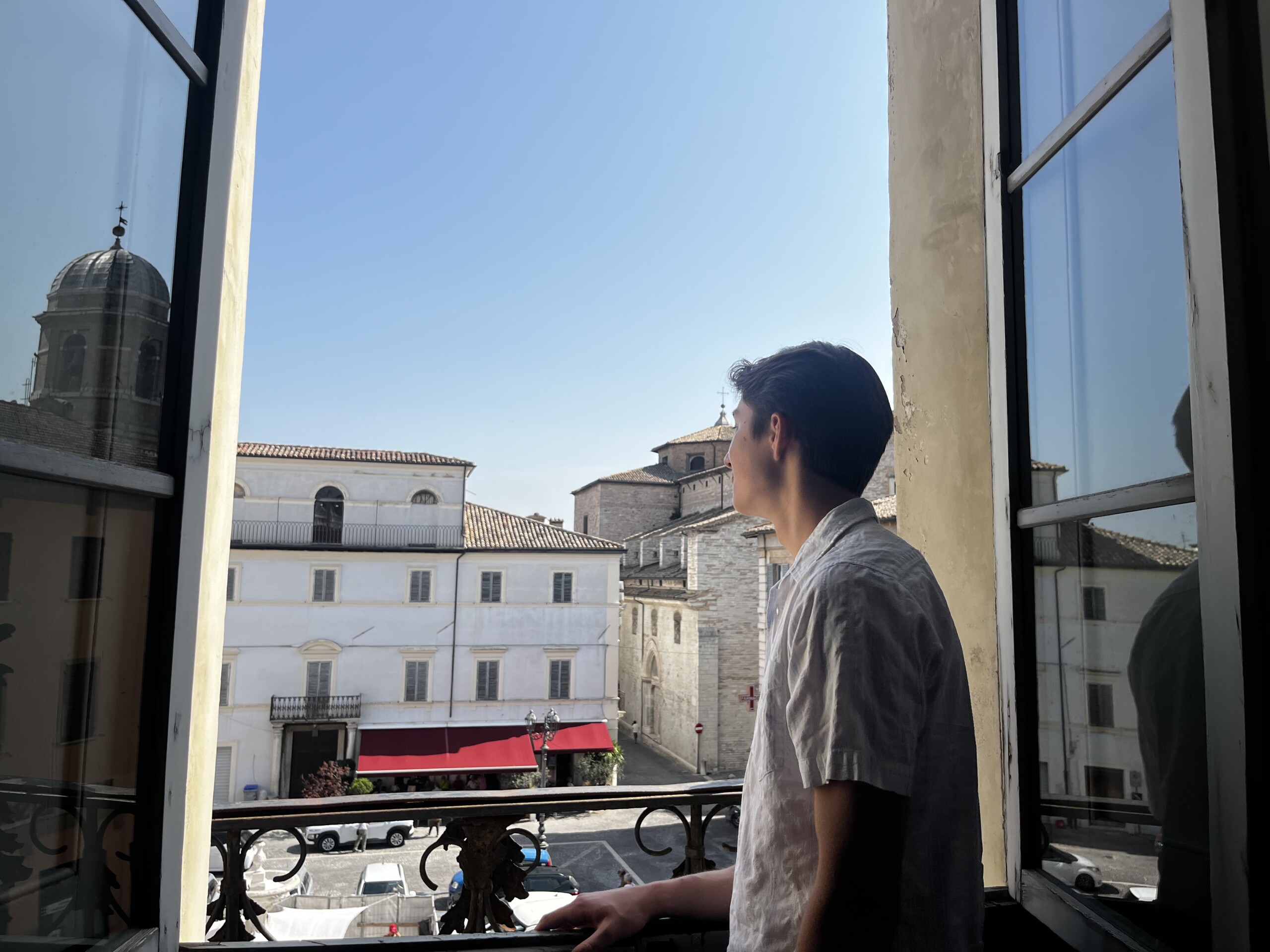
A bright blue awning extends over my head, shading me from the bright sun rapidly warming Piazza Giacomo Matteotti. A man walks briskly past me, pushing a cart full of beverage crates, the glass bottles clanging together as he traverses the rough cobblestone street. I’m seated outside of Caffe d’Italia in another session of what has become a weekday ritual. After class, I walk the short distance to the café to claim a round table and black wicker chair. For the next hour or so, I’ll review that day’s Italian lesson while consulting my trustworthy phrasebook, often aided by a fresh brioche and a rich cappuccino. If another member of the program comes by, I cheerfully invite them to sit, although I’ve come to cherish these daily moments of solitude and reflection.
Throughout major cities in Italy and Southern Europe, a much different scene is unfolding at identical outdoor eateries. Local residents, fed up with the adverse effects of excessive tourism, are barraging U.S. nationals and other foreigners with squirt guns.
This unique method of activism originated during the summer of 2024, at a time when many residents of Southern European countries felt that municipal governments were failing to curb the worst impacts of overtourism. Some have taken issue with the most obvious manifestations of touristification: namely, clogged city landmarks and the closure of original establishments in favor of tourist traps. Others have decried a rising cost of living in the historic centers of major cities, where short-term rental apartments are most likely to drive up prices and displace longtime residents, including those employed in exploitative, tourism-supported service industry jobs. Believing that their calls for action have gone unheeded, locals are resurrecting old tactics and renewing their calls for government action this summer.
By any objective standard, I am a tourist in Italy and have been so for the past month. At the same time, I empathize with these activists’ cause and support their organizing. On a certain level, I feel that I can relate to the frustrations that they are expressing. I’m from Portland, Ore., which has struggled with the persistent problem of unlicensed Airbnb rentals since 2014, a grievance often leveraged by Southern Europeans in major cities. I share my neighbors’ love for our city, and it pains me to hear the stories of people who have been priced out of their neighborhoods due to rising rents — an economic process fueled in part by the proliferation of short-term vacation rentals. Since I became aware of these protests, my status as an American visitor in a foreign country has clashed with my ideological convictions.
The towns that dot rural Italy are brimming with vibrant people, rich food, and interesting history, and to pretend otherwise impoverishes the possibilities of tourism.
After wrestling with this dichotomy, I’ve come to believe that there’s a fundamental difference between the impact of my presence in Cagli and the impact of overtourism in major European cities — and it’s not just because nobody is spraying me with a water gun. Rather, I feel I have benefitted from the unique approach to international travel that The Cagli Project embraces.
When I told my friends in the United States that I would be going to Cagli for a month, they asked why I wasn’t going to Rome, Milan, or Florence — cities that supposedly represent the best of Italian culture. However, after spending a month living in Cagli and traveling through Le Marche, I would argue that I have received a far richer cultural education here than I would have in a larger city.
As I’ve learned during my time here, my connection with Italian culture cannot be measured in my proximity to the Colosseum, the number of euro I throw into the Trevi Fountain or how long I spend walking around the Roman Forum. Those things are certainly well worth doing, but they do not represent the complete picture of Italian life that foreigners can access while here.
I’ve learned the most about Italy — and come to grips with the fallacy of my preconceptions — through interactions that I’ve had with everyday Italians. In Mirka’s colorful flower shop; the endless studios of the Accademia di Belle Arti di Urbino; the rectory of the Cattedrale di Santa Maria Assunta; and in countless short but meaningful interactions along the way, I’ve learned about my new home by immersing myself with its longtime residents. Moreover, I have been received with unwavering patience by locals who don’t hesitate to help me navigate moments of cultural dissonance.
For this reason, I share Southern Europeans’ concern about the impact of overtourism in this region. Regardless of whether they live in Cagli, Rome, or Madrid, longtime residents deserve to live a dignified life, free of economic precarity. After all, it is they who imbue these cities with such a rich, attractive culture, and we must heed their concerns.
To be sure, this crisis does not mean the end of international travel, nor does it mean the end of travel to major cities. However, it should open a conversation about how we can distribute the burdens of tourism more equitably.
The towns that dot rural Italy are brimming with vibrant people, rich food and interesting history, and to pretend otherwise impoverishes the possibilities of tourism. These cities offer untold opportunities for further exploration, but often receive far less attention than their metropolitan counterparts.
So, next time you’re traveling to Italy, reserve some time on your itinerary to visit Cagli or one of the many towns like it.
Editor’s Note: This essay marks the first in a series initiated by American Associate Editor Kristine Crane, who spent the summer teaching in the immersive Cagli Project.