Sight Unseen
A blind expat's musings on life, death and the Trump era
My name is Christopher Winner. I am an American citizen who has lived in Europe, predominantly Rome, for nearly half a century, and I founded The American | In Italia in 2004. I also began a column titled “Area 51,” which exists to this day. But, in 2015, I was diagnosed with glaucoma and have gradually lost my sight. The thoughts and comments you read below are snippets of my thinking in these challenging times and are dictated to co-managing editor Leigh Smith. See also my personal website.
Orbán’s end: For sixteen years, Hungary’s Viktor Orbán was the European Union’s most accomplished chameleon. His expedient shifts from right to center and back to right — his true home — caused havoc in the EU. He vetoed budgets and forged a friendship with Vladimir Putin when no other states would touch him. He then morphed into an apologist for the Ukraine war. Until recently, his constituency admired him as a shrewd nationalist. All that has now ended with a landslide election defeat in which his party effectively lost control of the country to a younger, center-right candidate named Péter Magyar. Orbán’s mystique had been fading, true, but few expected this slaughter. The why is simple enough. The far right that used to serve Orbán so well suddenly became home to a troubling, Big-Stick American president as well as the dwelling place of the Israeli prime minister, a man Orbán severed ties with the International Criminal Court to host. Putin was one thing, but Orbán was now in league with a new and surprising duo of devils, neither one a political admirer of the EU, and this is to put it mildly. Hungary was also grappling with its own economic problems as well as allegations of widespread corruption. Enough was enough, and Orbán was gone in a day, American endorsements made useless since this United States more resembles the old Kremlin than anything traditionally American. What next? Probably closer ties with Brussels and a distancing from both the us and Israeli leadership. Orbán, a masterful Sisyphus, was a marvel at pushing even the most improbable rocks up steep inclines, only to step aside when they began to roll back toward him. Finally, he was not able to get out of the way.
Israel 2.0: It is an unfortunate accident of history that the United States and Israel, inseparable allies, would at the same time be led by governments of the extreme right, each inclined toward 1930s militarism. The campaign against Iran was only in part motivated by fears that Islamic nation was close to developing a nuclear weapon. The second component, just as vital, was to sever the umbilical cord between Tehran and its major terrorist proxies, Hezbollah in Lebanon and Hamas in Gaza. This Israeli leadership is unlike its more open-minded predecessors. It seeks not only full control of Gaza, but also as much of Lebanon as it can secure, both stepping stones toward a vibrant Greater Israel, no Palestinian state in the mix. Nor are civilian casualties of any special concern. Here is Israel’s version of Manifest Destiny, a concept to which the American president can relate. An expanded and unimpeded Jewish state dealing freely with its rich Arab neighbors (Saudi Arabia, the Emirates, and Kuwait, among others) would represent an unrivaled commercial and political juggernaut. For this reason it has no intention of curbing its military moves in Lebanon, which makes enduring peace with Iran hard to imagine. These times have the flavor of a Judeo-Christian jihad, though both Israel and the U.S. would find such a parallel profoundly objectionable. Yet it is, without doubt, one extremism pitted against another, with the biblical nation-builders holding the upper hand.
The talented Mr. Vance: A certain Mr. J.D. Vance can at times surpass his master in the rhetoric of unpleasantness. Last year, he so infuriated European leaders that they made it clear they would no longer deal with him. He has lately been replaced at summits by Marco Rubio, the Secretary of State. But now the young ruffian is back, this time, to meddle in Hungarian affairs, throwing his and his boss’ support behind Prime Minister Viktor Orbán, who is trailing in opinion polls ahead of Sunday elections. Orbán is pals with a man named Putin and, like young Vance, takes pleasure in tossing verbal grenades at the European Union. Vance has also weighed in on the Iranian ceasefire deal, naturally insisting America won a beloved and unquestioned victory. Bear in mind, please, that this is the man who may run for president in 2028, assuming this incumbent chooses to step aside. Vance is an all-too-lucid reactionary who revels in supporting the unsupportable, including Israel’s self-aggrandizing operations in Lebanon, which are gradually rivaling Gaza’s in scope. He is frightening because he exudes a lethal mix of confidence, arrogance, and ignorance, much like his president. Worst of all, given America’s partisan divisions, he may represent the American future. All of this to say, trouble lurks even outside the dis-Ovaled White House.
Stockholm in Iran: Ceasefire aside, when the leader of a nation such as the United States threatens to eradicate an ancient civilization, those sentiments, once they make the public rounds, cut deeply into the way citizens are inclined to view would-be liberators. So deeply, in fact, that opponents of an oppressive regime can suddenly place national pride ahead of domestic discontent, a kind of in-house Stockholm syndrome brought into being by a loose-lipped and at times lunatic president. Those Iranians who at first welcomed a possible change in government may come to see those who bombed them for more than a month not as saviors but as raiders alone. The U.S. and Israel may claim to have won this war, or won a ceasefire, but they have no notion of the disillusionment they have inflicted on the people they sought to redeem. If the Iranian masses now behave more gingerly toward those who would “rescue” them, this will be the cause. A pummeled regime that was not supposed to have survived has apparently done just that, and in so doing perhaps retrieved a Stockholm syndrome–like reprieve from a restive population.
Shame: Whatever transpires in Iran in the coming days, the American president’s obscene warnings about ending a civilization have diminished if not obliterated a once universally respected office and perhaps shattered beyond repair a vision of a country long admired for its dedication to an ideal of decency. Some may excuse this as back-alley bluster or boardroom vulgarity. But previous presidents knew to check their rantings at the door out of deference to basic public decorum. This man and his cohorts, American jihadists of a sort, eschew such restraint and composure, leaving these United States of America in a gutter no washing will later rob of its stink. I am for the first time in more than 50 adult years ashamed to call myself American, a feeling made all the worse knowing a fair number of my compatriots admire this stench because, in their view, truth is by nature vulgar and better brutal bluntness than what they consider political double-talk. Shame on them, shame on America, shame on any sense of First-ness, shame on electing a convicted felon to the White House, a place his arrogance may keep him from leaving in two years’ time so that the only civilization at risk is our own.
Apollo 8: The first lunar orbital mission came nearly 60 years ago, in 1968, and briefly calmed a planet in chaos. I was 15 at the time, and there was no Internet, no mobile phones, and global news was broadcast only once daily. It was an election year. In a broken South, George Wallace emerged as an unrepentant segregationist candidate. In the space of three months, the leading Civil Rights activist, Martin Luther King Jr., and the most outspoken critic of the Vietnam War, Robert F. Kennedy, were shot dead. As north Vietnamese troops pressed on with a devastating offensive, President Lyndon Johnson announced he would not seek reelection. With hundreds of weekly deaths and despite the presence of half-a-million American troops, the United States was losing the war, or so said the respected CBS anchorman Walter Cronkite. In Paris, students joined workers in massive anti-government demonstrations that seemed on the verge of overturning the existing social and political order. Cold War tensions were also high. In August, the Soviet Union invaded Czechoslovakia to quash a pro-democracy movement and warned the west against any interference.
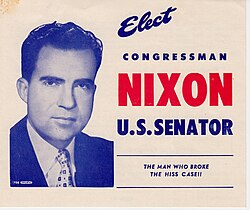
The Democratic party’s political convention saw pitched battles between hardline police and radical protesters. Hundreds were arrested, and Chicago Mayor Richard J. Daley as well as FBI Director J. Edgar Hoover spoke of sedition. In November, Richard Nixon was elected president, saying he spoke for the “silent majority” just as this president speaks for a malignant minority of one.
I mention these events to bring into sharper relief what the three NASA astronauts accomplished during their mission. In scratchy voices heard around the world —there were no video links at the time — they read passages from the Book of Genesis. It was near Christmas and, for the first time in that chilling year, the world felt a sense of peace, harmony, and hopeful humanity. It was as if these three men speaking from so far away had reached the suburbs of the universe, making the interstellar city beyond inevitable. Would that this new group of lunar astronauts could transmit something of the same sentiment, but that seems unlikely in a world fractured beyond even Genesis’ ability to heal.
Hellfire: American evangelicals have a crush on this president. Though often profane, he speaks in the simplistic way of born-again sermons and likes conjuring visions of hellfire. His is childlike language, suited to comic-book bubbles and picturebook readers, wherein he tells us who is good, who is bad, and who has been nice to him. Those who have not been nice are morons, idiots, or low-IQ individuals, whether members of the press corps or Supreme Court justices. His enemies face the wrath of God, since in his mind he is both God and avenger. TV and online preachers are in awe of his bluntness. If only they had his power. All this does not sit well in Europe, accustomed as it is to secular politicians, having long ago set aside popes and monarchs. French President Emmanuel Macron has, so far, been the only leading European to vex this Sun King–like figure, others fearing further trade repercussions. Fortunately, a few diplomats have raised their voices, and they deserve credit. Among them is Sven Kühn von Burgsdorff, a German national and the former European Union representative to the Palestinian territories, no doubt a low-IQ individual, but, as one myself, I choose to reproduce his incisive words below. Remarking on recent events in the Middle East, this is what he had to say: “How can it serve Europe to be seen as a sidekick of an erratic, unreliable, and apparently megalomaniac U.S. president, or of a warmongering, annexationist Israeli prime minister. That cannot be in Europe’s interest, because it comes at the expense of relations with other parts of the world.” As Emmanuel Macron has repeatedly said, it’s time for Europe to grow up.
Firestorm: Since the introduction of mass bombing campaigns in World War II, the line between the justifiable and the grotesque has grown twisted. Late in that war, Allied bombers razed Hamburg, Cologne, and Dresden, though none truly represented military targets. The aim, said the Allies, was to decimate Nazi morale, and Germany was merely reaping what it had sown. Similarly, the dead and contaminated of Hiroshima and Nagasaki — perceived by some as subhuman “Japs” — fell victim to an obstinate military that refused to capitulate. This concept of the subhuman also permeated napalm attacks on countless Vietnamese villages and hamlets, the earliest incarnation of “back-to-the-Stone-Age” military strategy. As the luminous German writer W.G. Sebald once remarked about the carpet-bombing of Germany, the idea was to “stifle any attitude to life” among the surviving population. Cometh Gaza and Iran, in which the Sebald logic is again very much at play. Two heads of state are bombing indiscriminately because, to them, the messy ends justify the messy means, but this is déjà vu all over again in which the virtuous have every right to vanquish the brutal unwashed, no nuance need apply. Gaza Arabs and Islamic Persians are expendable in that the contours of their lives, like those of the Japanese and Vietnamese, are literally inconceivable to the Western mind. Americans are flexing newfound muscles while Israelis look ahead to annexations. Thus, the ruins of Gaza and Iran may now be added to those of Germany, Japan, and Vietnam, the morality of aerial bombing no clearer now than it was 80 years ago. More’s the pity.
In a lifetime lived mostly in Europe, I have never heard veiled sarcasm mixed with disdain quite like this morning’s radio commentary regarding this president’s apparent decision to gradually back away from the Iran war in part, he says, because he failed to receive support from his NATO allies, whom he has spent more than a year berating and insulting and whom he did not openly consult before his Epic Fury. Now, after a month of bombing by both the United States and Israel, he appears ready to step away and let the non–“America First” world go fetch its own oil, a task that will be difficult indeed now that Iran will apparently again call the shots. All his bluster about creating the conditions for democracy in Iran are suddenly gone with the same wind that saw an about-face on Greenland. From Europe’s perspective, the American president is again turning nasty for two reasons. The first is that his war is causing unexpected commercial turmoil and enraging regional friends. The second is that his vaunted military has informed him that any effort to seize Iran would cost many American lives, a political price he will not pay, especially ahead of crucial November midterm elections. That in essence means the Islamic government will survive, even if stuck for now amid Stone Age rubble. It also means Tehran will still control the Strait of Hormuz and force American allies to fork over gobs of cash before fully reopening it. If some call this president irrational, erratic, and dangerously subject to whims, they cannot be blamed. Most say what all have come to know: His truth is the stuff of lies.
Madame Moon: It’s official. The moon is a girl. Or so says the NASA of 2026. She’s calling us, and we’re ready, said a NASA spokeswoman ahead of the coming circumnavigation, a ten-day voyage now set to launch later today. This gender revelation puts the moon in league with sea vessels, forever female for luck and the women left behind. Throughout the moon missions of the sixties and seventies, the Earth’s running mate was a barren “it,” the most impersonal of pronouns. Why the change? Maybe the moon has recently taken to popping estrogen. It will now be up to a new set of astronauts to take her majesty’s wedding gown details and post them to Instagram.
Barometers: When it comes to barometric pressure, by which I mean public morale, it cannot be measured only in terms of cities bombed and enemy leaders assassinated. The Nazi war machine disintegrated when both the German military and the German public sensed beyond doubt that all was lost. The morale behind the Iraq mission came apart the instant it was discovered that Saddam Hussein, the great arch enemy, possessed no weapons of mass destruction. Though the Iran conflict remains young, morale is already aquiver in the United States, which started the war by pointing a finger at Tehran as the latest Evil Empire. Minor seeds of public dissatisfaction are evident, driven mostly by a rise in gas prices and a suspicion that winning the war outright may demand the involvement of U.S. combat troops. Israel, however, remains resolutely pro-war, but even there, the mood is jittery. It has been fighting nonstop since the Gaza attacks of 2023, and some are beginning to tire, another barometric dip. Many have already fled the economically vibrant Emirates, at least for the time being. But most affected, at least subliminally, is Europe, a continent made helpless by the new and belligerent world order, a continent in therapy and on heavy doses of antidepressants. Its young people, by now two generations removed from world war, can no longer imagine what the future holds. The virtuous America portrayed by Hollywood for decades has vanished, as if the Earth below had disappeared from view on a routine flight. Only Iran’s tyrannically rigorous Revolutionary Guard appears to be insulated from drops in morale. War is a mind game. War is a mood. War can make even those remote from the action grow anxious and fear for their sanity. If only boastful leaders cared to pay attention to the world’s plunging pressure, but, alas, they do not.
This president: I have at times been asked why I do not mention the American president by name in these jottings. My reply can be found in the words of former New Zealand Prime Minister Jacinda Ardern, who when speaking of the 2019 mass murders in Christchurch pointedly refused to speak the name of the alleged assailant in public. She would not give him the privilege of having his name uttered, since a name is of itself an affirmation of a kind. Hers was a rare and noble approach. I, in turn, do not speak the name of this man, this president, this monarch, this vigilante, this strongman, this misunderstood patriot — pick your poison — because I find him very literally unmentionable in the Jacinda Ardern vein. I wish to confer no legitimacy. It is my very personal way of imposing needed ostracism. And I will not relent.
Boiled frog: The Iran war has backed Italy into a schizophrenic corner. The country it has long revered no longer looks or behaves like its old self, leaving both admirers and critics stunned before what they consider an epochal shift. The far-right ruling coalition naturally sides with Washington, but opposition parties are far more skeptical. No one here or anywhere else has much fondness for Iran’s Islamic regime, yet some do question America’s heavy-handed tactics. Others abhor Israel’s role as America’s attack dog (a remnant of longstanding antisemitism). In general, Italians ardently dislike wars. They had little patience for America’s protracted conflict in Iraq, an era that saw tens of thousands of rainbow-colored peace flags ubiquitously hung from apartment windows throughout the country. Many were the anti-war street demonstrations, and Iran has brought a new wave of them. Fallout from America’s lengthy Iraq presence as well as the global financial debacle of 2007 helped push Italy from the center-right to the center-left, albeit briefly. Something of this sort may occur in 2027 when the country will hold general elections — a leftward turn now seemingly more possible following the heavy defeat of a government-sponsored referendum that would’ve given political parties greater control over the judiciary. For now, all remains muddled. In effect, Italians are taking stock not only of their country but also of a transformed America whose values it long saw as immutable. In 1977, I interviewed poet and Nobel laureate Eugenio Montale. At the time, Leftist terrorism haunted Italy. What, I asked him, might the future hold. He answered as only a poet could. Maybe a stew of fine meats, he replied, then paused, or maybe a giant frog no one knows whether to eat or to run from. So it is that nervous Italy awaits what the cook has to offer.
The head of BlackRock, America’s behemoth investment firm, has remarked that a mere cessation of hostilities in Iran will not bring the Middle East crisis to heel, at least not from the view point of those who manage trillions of dollars in investment capital. For the ultra-rich, whether the wealth is concentrated in individuals, corporations, or nations, only the disarming and termination of the Iranian regime will relieve regional tension and end oil revenue losses. Otherwise, global recession looms. Since money makes policy, often to the exclusion of all else, the BlackRock message is clear, and it is a message both Washington and Jerusalem understand and appreciate. It perfectly suits this president’s favorite word, obliterate, and is likely to mean he will spare no effort, even the introduction of U.S. ground troops, to ensure BlackRock movers and shakers get their way. What during the Cold War was labeled imperialism and adventurism is now a kind of belligerent asset management. It is the globalization of rule by the one percent, the new dogma of a century so greedy that it knows to make sense of life only through overs, unders, and bottom lines. Some allege, the White House has been leaking information about its Iran maneuvers to permit stock market speculation and insider trading among its friends, an astonishing and treasonous charge if true. Call all this tyranny by portfolio, a dystopia in its own right.
Inferno: It was four years ago that a Scandinavian politician mournfully suggested Europe was again ripe for war. After all, eighty years had passed since the end of the last world war, and peace, he suggested, was nearing the end of its rope. How right he was. Now, with the United Nations also at the end of its rope, seven nations are at war: the United States, Israel, Pakistan, Afghanistan, Iran, Russia, and Ukraine, not to mention the recent skirmish between Thailand and Cambodia and civil wars raging in Sudan and Somalia. This does not include spiteful trade tension. All that keeps the world from conflagration is that the U.S., most European states, and China view the chaos in the abstract. But the situation is infinitely delicate. If the Middle East conflict grows more dire, if Russia challenges the Baltics, or if India becomes caught up in Pakistan’s fight, a pre–World War I scenario will come into focus. Leaving combat aside, the world — minus today’s sports-obsessed America — has not seemed so stricken with worry about the future since the mid-1950s, when all feared an impending nuclear holocaust. What is regrettable is that the American president is at least in part responsible for accelerating the chaos, his supporters inserting evangelical zeal into the equation. In a word, all this is Jesus’ will. If so, we are, more than ever, children of a lesser Christ.
True Lies: Disinformation and blatant political tampering, pre-dictatorial in texture, have come to define these times. Israel, for many decades among the world’s toughest but fairest countries, has slid into the darkest corner of reactionary thinking. It speaks of decimating the “murderous” Iranian regime while making no mention of its own bloodletting in attempting to create a Greater Israel from Gaza and the West Bank, a Jewish political project dear to Benjamin Netanyahu’s proudly extremist government. In Italy, whose Giorgia Meloni is no more than a charming version of Marine Le Pen, voters are being asked to support a referendum that would give political parties sweeping control over the judiciary, another far-right nirvana. Why all this now? Because the American ruler has set a shiny new example, irony intended, and many wish to strike while the iron is hot. For those who missed the insidious rise of Fascism and Nazism, here’s a latter-day primer.
Trickery: The Iran war continues to supply paradox, contradiction, hypocrisy, and deceit, as if its western players refuse, like adamant children, to accept how combat works. A case in point is Britain’s angry accusation that Iran was unfairly “lashing out” after it fired long-range ballistic missiles at Diego Garcia, an Indian Ocean island with British and American bases. So far, so good. But wait. The attack, a failure, came a day after Britain formally gave the United States permission to launch combat missions against Iran. That is what Tehran responded to, and in terms of warfare, it was entirely justifiable. But in this conflict, double standards and trickery are the norm. The American ruler sends jets to rebomb a nuclear plant he claims was “obliterated” in raids last June. One day he suggests he might deploy U.S. ground troops to secure the Strait of Hormuz, the next he shrugs that off by saying “we don’t use it,” clearly inviting Europe, which depends on the strategic seaway, to protect its own interests — a backhanded way of getting it to enter the conflict. If this war is indeed a video game, it is badly in need of those better able to program it, preferably one or two schooled in the outbreak of World War I.
Nuts!: The American president is furious that his European allies have failed to deploy their own warships in support of his Arabian Sea flotilla. This from a leader who has for more than a year been berating both the European Union and NATO. A president with designs on Greenland as well as a new cozy rapport with Russia’s Vladimir Putin, Europe’s sworn enemy. Before the United States invaded Iraq in 2003, George W. Bush, Dick Cheney, Donald Rumsfeld, and Colin Powell, the critical actors in this drama, worked for months with Europe, NATO, and the United Nations to achieve a pro-war consensus. Most eventually agreed to back Washington, though with reservations. Now a president who does as he wishes, dodging his own Congress, wants Europe to cheerlead him. Europe should do no such thing. It should behave as American Brigadier General Anthony McAuliffe did during the Battle of the Bulge in the waning stages of World War II. His troops surrounded, he was served with a note from a German commander demanding he immediately surrender, to which he famously replied with a single word: “Nuts!”
On War #3: Persians are not Arabs. Just ask Cyrus the Great, whose pre-Christian empire stretched to the Mediterranean. The misconception makes a mockery of complaints by Saudi Arabia and the Emirates (by now American sycophants) that Iran is behaving unfairly by targeting their lands and closing the vital oil corridor known as the Strait of Hormuz. Any Arab with a sense of history could have seen this coming. The Islamic regime existed for 50 years until the United States and Israel entered into an illegal and unprovoked war, though the concept of international legality is by now long-gone. For that same half-century, post-Revolution Iran made it no secret that it disliked the presence of American bases so near its soil, something a Saudi Arab named Osama bin Laden also detested and created Al Qaeda as a response. The bad blood in the region is notorious and noxious, something a trigger-happy American ruler and his Israeli ally should have taken into account before kicking up a maelstrom that will take decades to repair.
America’s new troika of priorities — isolationism, protectionism, and militarism — will, I believe, produce unsettling consequences. Here are some that come to mind, oversimplified in the extreme: 1. The United Nations, admonished recently by the U.S. State Department to “adjust, shrink, or die,” will in fact die, unable to muster needed funds. The Cold War is dead, and unilateralism is inimical to global diplomacy. UNICEF, UNHCR, and UNESCO are all likely to perish, private agencies doing the possible in their absence. Perhaps the Trump family will acquire the elegant U.N. Headquarters and transform it into a luxury hotel. 2. Though the European Union may survive in name, major states such as France and Germany will rearm, the latter in time becoming a nuclear power. European tension will eventually lead to internecine threats, all the more so as far-right, nationalist parties grow in stature and sway. This, ironically, is what NATO was in part created to prevent, but with Russia intensifying its ambitions, Europe will further burnish creaky muscles. 3. Russia will in the end make uneasy peace with Ukraine, but not before Washington has compelled it to relinquish sovereign territory as both Europe’s NATO contingent and Britain are shoved to the sidelines. 4. China will seize Taiwan sooner rather than later, and the United States will almost certainly order Beijing to cease and desist. But such demands will go nowhere because the U.S., witness Iran, Venezuela, Greenland, and Cuba in the wings, has lost all moral authority. Ultimately, the U.S. will not deter China, nor limit its growing Pacific Rim potency. 5. In the next British general election, Nigel Farage’s vehemently xenophobic Reform UK party will outstrip expectations, forcing a coalition government to adopt stricter anti-migration policies and perhaps even turn to deportation. 6. Barring an unlikely peace agreement, the United States and Israel will win the Iran War and usher in a Washington-friendly government of national reconstruction that will rely heavily on American imports. These are educated guesses based above all on intuition. As the hackneyed bromide goes, only time will tell.
On War #2: More than 150 years have passed since the United States fought a war on its own soil and fully faced its destructive savagery. That of course was the Civil War, which pitted Americans against Americans. Since then, it has been involved in half-a-dozen major conflicts, but none lapped over onto U.S. territory. There were hideous surprise attacks, one at Pearl Harbor and the second in New York City and Washington. Both lasted only hours, though the death tolls were high. Otherwise, the hundreds of thousands of American casualties came “over there.” Americans as a result have no notion of what domestic combat is like. They have no bombed-out Detroit or Los Angeles to recollect. No occupying troops have patrolled its landscape. What has happened in Gaza since 2023 and what is happening in Iran now are psychologically unfathomable. Americans care only that they not lose soldiers or aviators, and leaders oblige them by doing their destruction from the air. But there are souls beneath these warplanes, and many, whether they liked or disliked the Islamic regime, will struggle to forget and forgive what is being billed by some as a “liberation.” Parts of Tehran are in flames. People of all stripes are dying. Perhaps one sad day in the future, America will come to understand what it means to be exposed to relentless bombing. For now, however, Iran is merely some godawful place that needed to learn a lesson, as Americans more than 5,000 miles away make their spring plans. All’s fair in love and war, goes the saying. If only that were true.
On War #1: The massive air campaign directed at Iran is a bastard child of postmodern warfare. It is an invasion, not quite. The idea is to so decimate the Islamic regime, which lacks air defenses, that it hoists a white flag. It is what much-decorated American Air Force General Curtis LeMay had in mind when he suggested all that was needed to win the war in Vietnam was to “bomb [North Vietnam] back into the Stone Age.” (In 1968, he would run for vice president with George Wallace.) Bombings of Hanoi did follow, but the North remained steadfast. Moreover, the U.S. already had troops on the ground. That makes the Iran strategy all the more an aberration. If only the U.S. and Israel had armed avatars at their disposal. But we’re not there yet. And stubborn Iran holds on by the skin of its teeth, daring its adversaries to transform a video game into actual combat in which flesh-and-blood soldiers put their lives at risk, a theme I will elaborate on tomorrow.
In the postwar era, countless Hollywood actors have portrayed the American president. A full list would take up pages. Most have endowed the role with commanding authority, wit, severity, and firm-but-fair moral purpose, the latter to rise above partisanship. There were occasional spoofs — Peter Sellers in “Dr. Strangelove” and Jack Nicholson in “Mars Attacks” come to mind — but these were few. My own favorite is Henry Fonda in the 1964 film “Fail Safe,” a Cold War classic. American B-58 bombers have missed a recall signal and will soon detonate an atomic weapon over Moscow. In a spartan White House room, he and his Russian translator, played by Larry Hagman, have the grim task of explaining the situation to the Soviet premier. Fonda is austere, lucid, and devastated but fully in charge. He tells his Russian counterpart that in order to avert an all-out war, he will do to New York City what American planes have erroneously done to Moscow. His reasoned approach seems outside human reach given the circumstances.
These days, forced to endure a president who is beyond the scope of caricature and who makes a mockery of American exceptionalism, my mind’s eye often returns wistfully to Fonda. I hope, as my life ebbs, to wake to a Fonda-like figure in the White House, a prospect that for now seems dim.
In 1940, Hermann Göring told boss and friend Adolf Hitler that his Luftwaffe would bring England to its knees in a matter of weeks. His bombers were too swift and his bombs too big to resist. Instead, an underdog RAF and a resilient population, personified by bulldog Winston Churchill, vexed the prediction. In the end, Hitler’s refusal to dispatch an invasion force while the bombing continued cost him dearly. In Iran, American and Israeli air power are facing similar resistance. By refusing to send troops to back up its aerial bombardment, the two righteous powers are giving Iran’s ferociously committed Revolutionary Guard reason to hope. Even Iranians who despise their regime can applaud the grit of their own flesh and blood. Nazi Germany sought both capitulation and humiliation. But arrogance produced a miscalculation. A miscalculation may also be in the offing among those who foresaw an Iran cakewalk. All this because neither Washington nor Jerusalem is willing to let troops die in the name of what they insist is a noble cause — a cowardly outlook. In war, gain sometimes requires pain.
A quarter-century ago, footage of the mortally wounded Twin Towers hypnotized viewers the world over. Many felt compelled to watch this lurid spectacle again and again and again, absorbed by the thrill of disaster. Some wept, others fell silent, and still others suffered breakdowns. What seemed like a sci-fi Hollywood preview left them haunted. But also bleakly entertained. Not surprisingly, the American bombing of Baghdad had a similar effect, as if to solidify the 1960s quip, “the revolution will be televised.” Voyeurism, in sex and violence, is as old as moving pictures. Yet the Iran war, played out in a gaming age, is upping the ante. There is no question who will win this war, but when the Israeli military chief of staff speaks of “surprises ahead,” real war takes on an in-game feel. All is abstract and can be seemingly controlled through a console. Imagine a “surprises ahead” game in which you could both destroy and rebuild the Twin Towers, as well as place bets on, if not concoct, the next attack. September 11th viewers had no such luxury. So it is that this war, more than any before it, speaks to an age mesmerized by its own dark amusements, falling skyscrapers its 21st-century snuff.
The response of wealthy Arab states toward besieged Iran reminds me of Elon Musk’s recommendation to bureaucrats in the early days of this president’s second term. Those who wished to make things easier on themselves should simply send an email to his streamlining department with a single word in the subject line: RESIGN. That is just what the Emirates, Saudi Arabia, and others want to hear from Tehran, followed by similar surrenders from Hamas and Hezbollah. The Arab world long ago lost all patience with Persian Iran. It cares only about the deepening of business ties with the United States and Israel. The plight of Palestinians is no longer of any interest. Nor does it take issue with Israel’s empire-building leaders. If Jerusalem wants all of the West Bank and most of Gaza for settlement, so be it. This is the 21st century. Trade deals and tech-sharing come first. Islamic hard-liners are a blight. Let them take up residence in Afghanistan, which incidentally is at war with Pakistan. But who cares? Let them all send in their resignation notes. This new state of affairs would make Nasser die a second death. William James, watching the ascent of Wall Street in the early twentieth century, worried with foresight about a time that would be ruled by a conscienceless “bitch-goddess,” whose name was Success. It is She who now rules the Middle East.
What do Venezuela’s Nicolas Maduro and Iran’s Ayatollah Khamenei have in common? For starters, both exerted a loathed dictatorial hold over their countries. In addition, both have been dealt with by this administration, the first through abduction, the second through assassination. The other important trait that they shared is that they lorded over oil-rich nations. Now that this president has eliminated the green conspiracy, oil is again a triumphant commodity. He has already seized existing Venezuelan reserves, and when the time comes, and it may be a matter of days not weeks, he will all but control Iran’s. This is a businessman-president who has always been inspired by the trappings of wealth and gilded luxury. Those who assign nobility to his actions, both in Venezuela and Iran, should pause and take stock of the matter of oil and its pathways, which assume primary importance now that the green “distraction” is over, at least in America. In effect, the man with dominion over all or most of the oil also has dominion over most or all of the world. To repeat my mantra, welcome to the New World Order.
The Iran war has plunged its chief aggressors into a funk. Or into what my father called cloud cuckoo land. They are furious that Iran is firing back at them. Let’s recap. The United States and Israel, miffed at the slow progress of nuclear talks, decided enough was enough and launched preemptive strikes on a nation that lacks a functional air force and depends almost exclusively on missiles and drones. Good-guy warplanes bombed the capital and assassinated the country’s longstanding Islamic leader. According to the cuckoo land script, a stunned Iran should have immediately capitulated and allowed for the creation of an America-friendly government. Instead, mean old Iran has done the unthinkable. It has defended itself and even dispatched missiles into Arab states with close U.S. ties. But listen up, ladies and gentlemen: This is called war. It’s no video game. Imagine California attacking Texas to then become annoyed when Texas, its governor killed, fights back. Most nations have pride and emotion. Few invite sworn enemies to a cookout. Russia has sought to break Ukraine’s will for four years and has so far failed, losing at least 200,000 men in the process. In all likelihood, this Iranian government will eventually be overwhelmed by superior firepower, and when that time comes, the aggressors will claim “Mission Accomplished.” But until then Iran has the right to fight in any way it can. To think otherwise is to take up residence in the cuckoo’s nest.
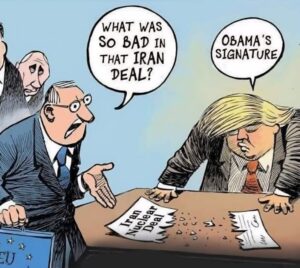
As a young and ambitious real estate developer in New York City of the late 1970s, Donald Trump had little love for an American president, Jimmy Carter, who seemed to him timid and indecisive. This annoyance turned to rage and mockery when the new Islamic state took 52 American hostages they would end up holding for more than a year. To the New York businessman, the idea of spending more than 400 days talking to a hostile regime that labeled the U.S. the “great Satan” represented unforgivable incompetence. The United States, he knew, possessed both the military and economic tools needed to bring Iran to its knees. None of them were used. There was a botched rescue attempt in April 1980, when the hostages had already been in captivity for half a year, but little else was done because the Cold War still raged and neither the U.S. nor Israel could take wider liberties, at the risk of Soviet intervention. Carter could not assassinate Ayatollah Ruhollah Khomeini in the way recent attacks have eliminated his successor. Thus the circle is now squared, from old impotence to big strike force. The real estate developer–turned president has evolved into a minor Shiva, a small destroyer of worlds. The impotent Carter legacy has been set aside. As have been the efforts of Barack Obama, who reached a tortuously negotiated 2015 nuclear deal with Iran that this president repeatedly described as “horrible.” Mr. Trump craves the role of hero and liberator — both now in the offing — no historical strings attached.
If any doubt existed before this writing, international law and diplomacy are dead and buried. Ironically, the culprit is the United States and its 51st state, Israel. Israel’s deeds are well-documented. In a disproportionate reaction to a 2023 terrorist incident, Jerusalem spent 2 years reducing the Gaza strip to rubble, with an estimated 70,000 Palestinian casualties. The U.S. then followed suit. Over the course of 6 months, it has abducted a Venezuelan leader, threatened the sovereignty of Greenland, attempted to fold Cuba into the United States by starving it of resources (it may succeed), and now assassinated the Iranian head of state in a move Russia’s Vladimir Putin, now an American “friend,” rightly called “a cynical murder.” Is there any end in sight? No. When big-power politics and military brawn come front and center (as well as a lust for oil), there is usually no turning back. It is this kind of militarism that precipitated the two most recent world wars. Let it be clear, however, that the U.S. has opened a Pandora’s box of the kind that cost it nearly 15 years of war in Afghanistan and Iraq. The murder of Ayatollah Ali Khamenei may mean little to Americans, but he was an important and symbolically weighty Shia leader. Domestic reprisals may not be imminent, but they will come. And they will be, in their way, justified. What is happening now, is what every American president since 1970 has sought to avoid, namely openly stoking the flames of anti-Americanism. The post-9/11 wars were at least, in part, justified by terrorist attacks on the United States. Here, there is no such justification, aside from one president’s impatience over slow going on the diplomatic front. In a nutshell, this cauldron of bombardments and bloodshed, provoked astonishingly by a man who created a self-styled Board of Peace, was not at all necessary. In the long run, woe to those who cast the first stones.
The kidnapping of Nancy Guthrie and the response of her television-personality daughter, a combustible mix of sadness, dread, longing, and resignation, has the effect of reminding me, at least in tone, of my mother’s quiet-but-poignant lamentations regarding the unresolved wartime disappearance of her Polish father, a man she adored. From the little that was known, he had escaped the Warsaw ghetto and managed to secure clandestine passage across the Vistula, away from the Nazis and toward the encamped Russians. But something apparently went wrong, and he was shot dead by a contingent of German troops who had also crossed the river. What haunted her, and she spoke of it in the same manner as Savannah Guthrie, was that her father was never found and therefore never buried. My mother’s dramatic, mystical side imagined his soul as still at large, unmoored and drifting in the ancient tradition of the unburied. I was mostly silent when she spoke of the story, and it was rare that she did. What she sought was what many Americans now call closure, which at times sounds more like a demand than a wish. But my own truth, now that my own mortality is tangible, is that more often than not, there is no clean final chapter, no explanation or even a longed-for resolution. Sometimes all that remains is acceptance, the book’s last chapter read again and again but with final pages always missing.
The U.S. president has finally begun his long-awaited military and political cleansing of Iran, which will march forward with Israeli help. The war is unprovoked, an act of Russian-style hubris rationalized because it is for the “good.” Bad people will be routed and replaced with leaders more to the White House’s, and presumably Iranians’, liking. Again, there is no surprise here. America’s new bully-pulpit arrogance has no limits, nor does it need congressional approval, propelled by a man who toys with the world like rubber ducks in a tub — and I am no radical leftist. One can only hope Iran’s Islamic regime folds as soon as possible so as to let the victory parties begin, dastardly ayatollahs placed high atop the ash heap of history. Call this Operation Righteous Rubble, gentiles and Jews united in a 21st-century version of a Nazi blitzkrieg.
Should the United States succeed in toppling the existing Iranian regime, an increasingly likely outcome as it intensifies both economic pressure and gunboat diplomacy, the man most mentioned as a leader-in-waiting is Reza Pahlavi. Long exiled in Washington, he is the son of the late Mohammad Reza Pahlavi, shah of shahs, king of kings, himself deposed by Islamists in a year-long revolution that began in 1978 and ended early the next year with the return of Ayatollah Ruhollah Khomeini from his own Paris exile. The revolution and the brutal theocracy that followed were not spontaneous events. Since 1967, when the king of kings was himself crowned in a lavish ceremony that at the time was rumored to have cost a billion dollars, Iran’s merchants, rural residents, Islamic clergy, and even its growing middle class had grown restive. Many believed the new and mostly secular Iran had sold out to the west, the U.S. in particular. The shah proclaimed himself a devoted capitalist and anti-communist, a stance that enticed Western support. But as doubt and income disparity grew, he responded in much the same way as the Islamists who would replace him, encouraging a secret police known as SAVAK to arrest and detain at will. Many were tortured, some killed, and others simply vanished. In September 1978 came a massive earthquake: 25,000 died, and the slow, seemingly uncaring government response incited the whirlwind of dissent and fury that would ultimately force the monarch to flee. When Khomeini made his stern-faced return from Paris, millions thronged the streets to welcome him. Finally, the tyrant shah was gone. It is now 50 years later, and all seems set to swivel again. This is called history, and because of its fickleness, it is constantly teaching paradoxical lessons. Best to sit down, pocket your smartphone, pay attention, and take smart notes, lest it surprise you again.
Since the development and deployment of the first atomic weapons in 1945, the original members of the so-called Nuclear Club — the United States, Soviet Russia, and communist China — have fiercely guarded the inner workings of their weaponry. After all, they were and still are rivals. Leaks remain severely punishable. The popular spy-novel phrase Top Secret emerged from all this forced mystery. The newest twist on Top Secret is not top secret at all, but is as potent as a bomb. All have come to know it, and many to depend on it, as AI, the seemingly harmless acronym for artificial intelligence. Like the web before it, AI is poised to open a vast frontier. But there are risks. Even Sam Altman, one of its godfathers, has pointed out AI’s potential dangers because, unlike any tool before it, it can extrapolate and improve on human knowledge. In the wrong hands, it could be used to develop pathogens, chemical poisons, and possibly nuclear-grade explosives. Make no mistake. The madding crowd includes chaos-minded actors. Imagine, if you will, a real-life Goldfinger or Darth Vader. Checks and filters are therefore vital. To which the White House says “halt!” Never mind an AI conscience, there is big money to be had. If any regulation is necessary, the Board of Peace CEO-president or his successor will take that responsibility.
Unfortunately, none of this comes close to monitoring advances that will very likely change the complexion of the planet. If AI is Superman, the world needs some sort of kryptonite, but given the stakes involved, no fail-safe seems near at hand. As my father once said with an unsettling prescience that now seems apt, “If you can see it on the horizon, it’s already too late.”
Twice in the last six decades, the American judiciary, foremost the Supreme Court, has intervened when it believed a president exceeded his authority. Richard Nixon now has company with the twice-impeached incumbent. The specifics of the tariff case matter less than the conservative court’s strong message that presidential decorum had been violated. This leader despises those who stand in his way, and, like a petulant child, he responds vindictively as if caught with his hand in the cookie jar. His tormentors — he said in crass language of a kind never before directed at a Supreme Court — were “fools and lapdogs,” the most disgraceful of anti-American enemies. Democracy and the rule of law should apparently not constrain the “lust for unbridled power,” a no-nonsense phrase assigned to him recently by a Texas judge regarding an ICE deportation order. The president has already imposed a new 15% global tariff to defy the court’s ruling. But in both legal and symbolic terms, and they matter, the president-felon has been warned he has exceeded his authority. It is not America First but Democracy First. Kick and scream as he might, he has finally been rebuked, the fools and lapdogs, some of whom he appointed, ultimately doing the nation a brave favor.
At a recent security conference in Munich, U.S. Secretary of State Marco Rubio told assembled leaders that America would help with what he called European “revitalization” if the continent put an end to “civilizational erosion,” which he tied to “managed migration.” Europe, he all but said, should follow the lead of U.S. policy, rooted in detention and deportation. Migrants, like Jews of another era, are now perceived as money-hungry interlopers. In every sense, migrant has been made into this century’s dirtiest word, one mostly assigned to Muslims, Hispanics, and, more generally, those of darker skin, who occupy a space outside compassion’s embrace. No one should feel the slightest guilt in treating them as vermin, never mind that their flight to Europe is largely a trek born of hope. America First cares not at all and instead builds camps while Italy lets rickety boats founder in the Mediterranean. These ongoing events put me in mind of David Lynch’s remarkable 1980 film, “The Elephant Man,” in which a monstrously deformed British youth — he has spent most of his life as a circus freak — finds himself so tormented by gawkers that at a certain point he cries aloud, “I am a human being!” His name was Joseph Merrick, and he suffered through an entirely alienated existence in Victorian England, rescued only by a London surgeon able and willing to see beyond his first-person civilizational decline. Today’s migrants have few such benefactors. On the contrary, ciphers in the stream, they face a rising tide of wrath from people, police, and politicians who, unable to release their rage into a cathartic world war, turn to imagined elephant men.
Since the end of World War II, a fair number of Americans have lined up to take their place in the private pews of a new faith governed by the Church of the Conspiracy Theory. Its high priests — and this president is among them — dispute all science while suggesting “leftist” media exists to disseminate falsehoods. This belief system has expanded a thousandfold since the dawn of the online world and social media. When the president struck down what he called a “green scam,” he was doing no more than preaching to his choir. That ardent choir tends to believe that a plot was behind the murder of JFK, that the moon landing was faked and the Earth is flat, that COVID was manufactured, and that all vaccines and medical breakthroughs are mind-control schemes and a public menace. Racism is a fiction to disrupt White America, and the first Black president, no evidence needed, is not who he says he is. Perhaps even the surgeon general may have lied about the risks of smoking to snuff out the tobacco industry, just as the Black president (and Joe Biden after him) may have lied about climate change to undermine the lagging American auto industry. Again, facts are irrelevant because the passion of the true conspiracy theorist operates on a truer and higher plane. What John Kerry has called “Orwellian governance” is gospel truth to this latest flock. All of which makes this America a theocracy of a sort, a western kind of techno-Taliban minus the beards. So it is that years of enlightened conclusions have become contaminated by conspiratorial thinking — an industry in its own right — in much the same way Joe McCarthy (and Richard Nixon) imagined a contaminated America filled with communists. It’s an old dog with a new collar, and it snarls.
Europe and its imperfect union now know what it feels like to be Humpty Dumpty. For decades it sat benignly on a wall, safe in the assumption that America had its back. Now, in the space of little more than a year it has been pushed from its perch and feels both fractured and stunned. Stunned because the delinquent doing the dirty deed is the nation that was central to gluing it back together after World War II. French President Emmanuel Macron has gone so far as to refer to an “openly hostile U.S. administration” while encouraging Europe to reform itself into a nation-state, a Europe newly armored as an America, a Russia, a China — the new actors in an old, great Power-Passion play. With the United Nations all but dead and the American president interested only in divide-and-conquer ties with individual states, what other choice does it have? Even before the us invaded Iraq in 2003, there were tensions between France and the U.S. Many were the disagreements over the years, but they were always patched up diplomatically. Both America and Europe realized their Cold War–era bonds were too valuable to jeopardize. Were not Americans the ancestral sons and daughters of Europeans? But for the sitting president, who revels in neo-isolationism, it’s time to toss out the baby with the bathwater. His America First has no qualms about betrayal and counts support among the generation born after 1990, few of whom care much about Europe unless as a tourist destination. The damage done is now severe enough to think Humpty Dumpty cannot and will not ever again be mended. Maybe all this will eventually lead to a new and dynamically united Europe, as Macron has also suggested. But no messy divorce is easily forgotten and if the American troops who landed on Normandy Beach were still alive to witness this wrecking-crew administration, they would first wince, then weep.
By blocking its oil imports in the form of global tariff threats, the United States is effectively laying siege to Cuba, hoping energy shortfalls will cause the Communist regime to collapse. Few regional or global actors seem to care. Even fewer have much affection for the Cuban leadership just as they have no love for Iran’s. But the U.S. strategy remains a squalid bit of blackmail. The oil being blocked from Cuba is oil in essence stolen from Venezuela in America’s regime-changing putsch in which 32 Cuban soldiers died. No matter, say some, since the U.S. did Caracas a favor by ousting a dictator — and swinging open the doors to Big Oil. Cuba is headed for a similar endgame that will be labeled liberation. Cuba’s Miami exile community will heap adoring words on the great Anerican übermensch. If only this liberation weren’t also self-serving. Cuba has no oil, but it does have a gorgeous coastline primed and ready for massive real estate development, something a builder of tall towers and casinos knows a fair amount about. If the Gaza resort transformation is out of reach, the Havana scheme is not. It’s shameless but also shamelessly lucrative. As Canadian and Russian tourists are evacuated from the island because of jet fuel shortages, the other side is probably imagining a Major League Baseball franchise (the Havana Trumps?), ready to go by 2032, when the president will enter his fourth term, the minor obstacle of the Constitution overcome.
Toward the end of the Eisenhower presidency in the late 1950s it was widely assumed the Soviet Union would beat the United States to the moon and once there instruct its cosmonauts to patriotically claim the orb in the name of Russia while bombarding Earth with Communist propaganda. Thanks to John Kennedy’s ambitious space program, that’s not how it turned out. America was first to the moon in 1969 and followed its initial landing with five more in three years. Neil Armstrong, the original moonman, had no jingoistic remarks to offer in his first transmission. He spoke instead of a “giant leap for mankind” and was universally embraced, as was the U.S. NASA ended its lunar program in 1972 and began investigating a manned Mars mission as that planet seemed infinitely more promising than the barren moon. That funding never materialized, and NASA was forced instead into the space shuttle program, which by hauling a variety of satellites (many from the military and tech companies) into space seemed more commercially gainful. But in the end, even the shuttle, which suffered two major disasters, faded from sight and mind. Now, a driven president with a Sun King ego has decided to force a new lunar landing mission expected, after trial orbits around the moon, to make landfall later this year. His efforts are motivated at least in part by a Chinese wish to put its own people on the moon by 2029. The American stunt — what else to call it? — has less to do with science and humanity (the moon is after all old hat) than one leader’s wish to place a new feather in his cap. A moon escapade pumped up by social media may well go heavy on chauvinism and flag plantings, though this time a woman or two might do the honors. In a word, the project will be an exercise in White House contrivance. All the while as lonely Mars awaits its Magellan.
Decades ago a one-time Polish actor named Karol Wojtyla sat down in a screening room to watch a new film by Oliver Stone titled “Wall Street.” Wojtyla found most interesting the caricature of a wanton capitalist and corporate raider named Gordon Gecko, who memorably tells a young acolyte that greed is good. While at the time focused on lifting the pall of atheistic communism from his homeland and all nations in the Soviet orbit, the film, he believed illustrated the dangers posed by the opposite extreme — rule by wealth and material excess to the exclusion of all else. He imagined this as a threat to discretion, spirituality, and basic humility, cornerstones of civil society, or so he suggested in countless speeches and tracts. Though a profound conservative, he nonetheless worried that the acquisition of things would become the new opiate of the people, replacing a dependence that the founders of communism ascribed to religion. With Elon Musk dancing atop his boardroom table to celebrate his newfound status as a trillionaire — and there are others like him, including a somewhat-less-wealthy president — the Pole’s most troubling concerns have been realized. Greed is in all shapes good, as is a society mesmerized by consumerism. To paraphrase a leading techno-oligarch, corporations are “kingdoms” that provide the world with a plethora of “beautiful things.” In such a landscape, the standards of restraint and modesty have no meaning. Let greed be greed no matter the eloquent Pole’s warning. He is dead, his last breath drawn in 2005, and if you wish to find his tomb, visit the Vatican crypt and look for the name Pope John Paul II.
I have hit upon my next vocation. Fake outrage, hit me up and I’ll be there for you. Need me to howl in defense of the best president in American history? Gladly. Need me to back you up against those idiots who can’t see the obvious connection between apes and Black politicians? I’m all in. But first tell me where to get my skills. Does the greatest president hold fake outrage classes? Is there an online academy? Like, how do I get the right words, the right voice? I’m already trained in fake news. Will that help? All I’m asking for is a tryout. I already feel outraged that I don’t know what to do. I love hating on people. It comes naturally after listening to the great president. Just help me get to the next level, and I’ll despise you so much you’ll think it’s totally real. Thanking you in advance, I remain hypocritically yours.
In the mid-1970s, a college classmate wrote a novel set in the near future in which everyone suffered from what he dubbed information sickness. Burdened with too many choices and too much data, they would slip into paralytic depression. His book came to mind as I considered the fate of three teen sisters in India who jumped to their deaths from a ninth-floor apartment, suffocated by an addiction to video games. They had all but stopped attending school. Stories such as these are no longer rare as dependence on AI, games, smartphones, and social media deepens. Tech giants are fully aware of this slavery but prefer to steer clear because to warn of it might undermine profits. All know full well that if the web crashed, human identity would be compromised. Even the American president often forgoes speaking in favor of the scrolling language of posts. To me, this is information sickness become reality. Faced with a new world I can neither fathom nor understand, I choose instead to savor memories of boyhood in Washington, D.C., in which I would often secretly climb to the roof of my home and behold the world around me. I was Kid Charlemagne, and all I needed was my imagination and perhaps a “Road Runner” cartoon or two.
Those days are gone forever, alas, and any souls poised on rooftops today may be there for an entirely different reason.
Product Defect is the term assigned to consumer goods thought to be either flawed or harmful. Usually, they are swiftly removed from circulation. The designation comes strangely to mind in the wake of a sharp federal court ruling that a five-year-old boy and his father be freed from immigration police custody and allowed to return home to Minnesota. ICE had erred and erred badly. But the judge went far further. Basic human decency had been violated, he said, and the man to blame was a leader who knew only to lust for unbridled power. This is where human product defect comes into play. The leader in question is incapable of understanding the concept of decency. The flaw is at the core of who he is and always has been. It cannot even be called malice because it is intrinsic. He lacks morality and conscience because his self-involved being never absorbed what should be an essential part of character. He should be removed from shelves not in response to his reactionary policies but because he poisons the commonweal. A five-year-old would know to behave more generously toward friends and enemies alike. But not this flawed adult, and the broken beat goes on.
The release of millions of heavily censored documents, photos, and videos regarding convicted sex offender Jeffrey Epstein makes me reflect on the murky nature of voyeurism and moral accountability. Do the many victims of Epstein’s lurid schemes deserve some measure of redress for their suffering at the hands of rich and powerful men? In a word, yes, though the U.S. Department of Justice is unlikely to comply with their pleas. But what then to make of still images of well-known figures cavorting in Epstein’s high-roller orbit? Should men like Bill Gates, Bill Clinton, Noam Chomsky, and then–Prince Andrew be detached from their accomplishments and tossed wholesale to the dogs? Are these indictments of their own accord because they captivate the imagination? Good questions, all. I remember being tossed from an 8th-grade class for rebutting the teacher’s characterization of Hitler as the greatest of monsters. I had insisted he should be labeled an evil genius instead. I thought likewise of Stalin. That three Kennedy brothers and a preacher named King had their way with women mattered less to me than their legacies. The Epstein story is graver and more appalling, and yet it too is tarred by boundless voyeurism. Is there a way around so much primordial lust among the wealthy and the potent, almost all of them ambitious men? The answer, I am sorry to say, is no. Call it the human stain.
The late U.S. senator and foreign policy expert J. William Fulbright once stated that no matter how repugnant a regime might be, America should not interfere in its internal affairs or seek to expunge it unless its leadership was blatantly trying to impose its values or system of government elsewhere. That was then, in the Cold War era, and this is a very different now, in which the newly minted chairman of a self-styled Board of Peace seeks to overthrow the Iranian regime, this doing a Venezuelan war dance in the Near East. It is worth remembering, however, that the peace mogul already has Iranian blood on his hands, if only by omission. Inexcusably, he recently urged anti-government protesters to intensify their uprising. If the Iranian Revolutionary Guard shot to kill, he said, his America would jump in to help them. He also encouraged the son of the late Shah of Iran, a longtime Washington, D.C., exile, to cheerlead the protests, and he did. He would soon come home to Make Iran Great again, a hardly original invocation. Emboldened by these pledges, dissenters openly confronted the Revolutionary Guard and were slaughtered by the thousands. Knowing what to say and what not to say is key in dealing with volatile situations. But Mr. Peace simply says and writes what pleases him. Consequences are immaterial. If nothing else, he is good for the morgue industry, and that of Iran will likely be replenished in the days ahead.
The late Italian populist Silvio Berlusconi, a real estate and media tycoon, derived most of his substantial support from the country’s southlands. Its denizens adored his brio. They rallied around his portrayal of Rome as a political capital that stole from the people, they applauded his baiting of all enemies as communists, and, thanks to them, he lorded over Italy for more than two decades and counted Vladimir Putin among his buddies. Those men who could operate outside the law he clutched to his bosom, but even he knew to stop short of renaming concert halls and gulfs. He understood at least the crassness and vulgarity of such actions. Donald Trump, admired by some Italians in the Berlusconi vein, does not. And the existing ‘last laugh’ now belongs to him.
The need by societies to find all-purpose culprits and bogeymen shifts by generation. A century ago the dastardly were Jews, and Nazis constructed a literal Final Solution. But the hatred also had intellectual roots, with T.S. Eliot, Ezra Pound, and French writer Céline making cases for the menace posed by Jews. In the postwar came paranoia toward communists and communism, with America taking the “Better Dead than Red” lead. Countless politicians joined in, and the sentiments gave Richard Nixon his platform. Now the enemy is migrants, in America largely Hispanics, while in Europe they are African and Middle Eastern Muslims. As always, parties have been formed and tweaked to absorb and spread the loathing. In the UK, Nigel Farage’s Reform UK has come front and center and may soon be a power broker in British politics. He wants migrants deported or jailed and has shrewdly recruited mainstream “legal” Muslims as spokesmen for his purging wants. In January, three senior members of the usually moderate Tories defected into his ranks. His popularity has grown since the reign of a US president who shares his outlook on the rhetoric of exclusion and who has made deportation a bloodsport. Farage led the successful Brexit movement and is not to be trifled with. Elsewhere, in France, the anti-migrant National Rally is favored in many polls as 2027 presidential elections near. Fueled by unfettered social media, anger and resentment are the emotions of choice across the board. The problem with all such talk is that it suggests the recovery of some pristine past is possible if nations just clean house. Truth is, no such past exists. Rage is a social constant, all the more so in a tribal time, and new bogeymen will always and surely replace the old. Purity is a lie of history. And yet there sit Farage, Marine Le Pen, and an American president, avid as vultures with millions of stirred-up purists in their thrall.
Europeans are also struggling to come to grips with a second fatal shooting of a civilian by Customs and Immigration police in troubled Minneapolis. Partisan finger-pointing aside, it can seem to some that deportation-happy America is, because of a president’s harsh views, at war with its own people. Many no longer recognize the nation they embraced in solidarity after the 9/11 attacks. In Italy, critics of the new mood see parallels to the 1924 Giacomo Matteotti killing, in which Mussolini’s Fascist police murdered an opposition politician and opened the door to more systematic oppression. In any event, the large contingent of would-be tourists to America are beginning to void their plans. They are for the first time in memory afraid of walking into harm’s way. The damage this president is causing to his nation’s global reputation is incalculable, his ICE raping the ghost of Emma Lazarus, RIP.
Ukraine’s embattled president Volodymyr Zelensky finds himself stuck without recourse between a rock and a hard place. On the one hand is a mean and bullying American president who wants him to sign a peace deal with Russia no matter the cost, in this way garnering credibility for America’s pay-per-view Board of Peace. On the other side are the European Union and NATO, which support Ukraine’s territorial integrity, but have none of America’s military clout. This would once have been an implausible paradox since it was postwar America that engineered NATO and by doing so helped usher in the EU. All that of course is now but a memory as this president — I have dubbed him Strangelove — has time and again expressed his disdain for “horrible” Europe, a continent he sees as contaminated by migrant Muslims and assorted darkies. This ugly collision helps explain Zelensky’s speech at the Davos summit, which despite his White House humiliation of a year ago, saw him talk as if from Strangelove’s lap. Europe was weak and fractured, he growled. It could never become a true world power. It’s no surprise the remarks came soon after a private session with the American don. Saddest in this sad landscape is that postwar Europe was fashioned for two reasons: to confront the then–Soviet Union and to limit European rearmament to guard against a future new Nazi Germany and Fascist Italy. So it is that the EU, intended as a federation of economically linked but still sovereign nations, is now mocked for not assuming Nazi-style arrogance. The result, witness the Greenland debacle, is a loss for all involved, a loss that may cost the United Nations its job, just as re-armament and Axis powers fully struck down the League of Nations before it, after which came a detail known as World War II.
A friend advised me recently not to exaggerate the extent of my maladies. I should not “catastrophize,” he said. This word immediately brought to mind how pliant is the English language. One-time verbs become nouns in a heartbeat. A football player who once would have been praised for his toughness is now admired for his physicality. Other somewhat nastier changes are also afoot. Presidents and governors delivering four-letter obscenities in public is now largely accepted, or at the very least tolerated. Unfettered anger is also now commonplace, a subject I will address at another time. Also, America’s love affair with money and profit has made new verbal inroads. To be responsible for something gone amiss is to “own it.” On much of social media, adolescent emotionalism holds the high, or low, ground, with histrionics and hatred often in the scribbled mix. All of which suits an inarticulate president just fine. He can catastrophize at will and delight excited supporters. He’s a straight-talker, and if he wishes to own Greenland (“a very small ask . . . for a piece of ice”) or detain the whole of Minnesota he must be right, and so it is that the New World Order meets new world English. In his social media behavior, the president is astute. He knows how to tap into these raging times, while managing a reality show that never hurts for ratings. His online “Truth” may be anything but, I agree, but oh does he like owning the fiction.
There is little to say about Greenland that has not been said and repeated. It is a sovereign land governed jointly by the people of Greenland and Denmark. But this of course means nothing to the geriatric child who is America’s incumbent president and who I will henceforth refer to only as Strangelove, since he is painfully suited to caricature. He wants porridge and pudding (and the Nobel Peace Prize) served to him in bed. Vex this infantile pettiness, and he will order his ravenous backyard dogs to eat you alive. A child has no pity, only cravings. America brought this spoiled brat upon itself and now the broken world at large must reap the winter whirlwind. As my usually mild-mannered author friend told me recently, “America is done.” First is also last, at least among those postwar Europeans who once deeply embraced the symbolism of the Statue of Liberty.
A number of Italian friends of South American descent have strenuously admonished me for failing to appreciate and embrace the “heroic” actions of my president in rightly removing a Venezuelan monster, to which I softly reply that without fail I hold to international law and above all to the sanctity of sovereignty. Violating one or both as if they did not exist or could be bent to accommodate one nation’s sense of the right and the righteous is aggression, plain and simple. Did we kidnap Stalin or Mao? Did we raid Havana and abscond with Fidel Castro? Did we make away with Ayatollah Khomeini or even with Saddam, who was easy pickings in 1991? Serbia’s Slobodan Milosevic was properly remanded to the International Criminal Court, which this president treats as detritus. A number of other decades and dictators come to mind, but no matter. Suffice it to say that our shameless commander in chief stands poised to deliver Venezuela’s ample oil fields into eager American hands. This I say to my excited, shoot-first friends who have had a taste of colonial-era force and love it. To which they shrug in disgust at me and busy themselves with champagne corks, as I wonder to myself how high those same corks will fly when Greenland is annexed and Iran returned to New Washington’s sphere of influence. If ever there was any doubt, the America-first gang is headed by a CEO in love with mergers, acquisitions, and hostile takeovers, who represents rule by the one percent. It’s money that matters, brute militarism its handmaiden, and there is no turning back.
The brazen kidnapping of Venezuelan President Nicolás Maduro on charges he abetted drug trafficking has brought into evidence a pandemic no one knew existed. It is called sycophantism. Aside from America’s traditional rivals Russia and China, few global nations have chosen to decry the move. This is because they fear the American president, who is the lord of their manor, a president who has placed plutocracy where democracy once was. If they vex him, they face sanctions, trade problems, and even visa restrictions on their citizens, so all bow before him rather than express any form of public criticism.
This pandemic is likely to get worse before it gets better — and there is no vaccine in sight.
With its actions in Venezuela, the United States is now officially an outlaw state. The bombing of Caracas and the abduction of a foreign head of state, no matter his despotic leanings, has no legal or moral justification in any post–World War 2 codes of conduct. Now the prospect of a hop into other nations labeled as having undesirable leadership seems more likely and less in the realm of political science fiction. Make no mistake, the nonpartisan tradition of consultation with allies, of respect for international law, of deference toward the United Nations and the International Criminal Court has been supplanted by a locked-and-loaded era whose unilateral scripture, no congressional approval needed, is poised to endure for years to come.
It is both misleading and grossly insulting for Donald Trump to label the existing Ukraine-Russia conflict as “certainly the most deadly” and “probably the biggest” since World War II (link). Two pre-drone wars must be taken into account in that stretch of time: the war in Korea and the war in Vietnam. Together, they accounted for an estimated 5 to 7 million casualties, civilian and military, with no single agreed-upon tally. The dead were American, Vietnamese, Chinese, Korean, and many other nationalities. Trump is again seeking to aggrandize his place in history by attempting to strike a peace deal, but misrepresenting history should not be part of such a deal.
That Venezuela and Greenland are not America’s playthings to toy with means nothing to the incumbent president, nor does the once-binding concept of international law. He is a ruler and not a creature born of governance and its intrinsic restraints. But he is a convincingly elected ruler elevated by those who sought such a figure. So, woe to America? Hardly. Welcome instead to an America whose ‘A’ stands for arrogance and welcome also to a new world order based on all that which limitless personal hubris implies and delivers. Let “free world” leadership rest in peace.