In mid-January, I became a doctoral candidate. Formally, this means that I passed the dissertation proposal, plus the qualifying exams on material that informs the dissertation. Informally, candidacy is an even bigger deal to many people than becoming a doctor: The research that follows is the “fun” part, the downhill to the finish line.
Perhaps for this reason, I’ve been feeling mixed emotions: on one hand, content and proud; on the other, restless and a little lost. One day, while sitting for meditation in my front yard, a little voice in my head said: Yes, but you are becoming the wrong kind of doctor. Meaning: you should be becoming an M.D., not a Ph.D. A doctor of medicine, not philosophy.
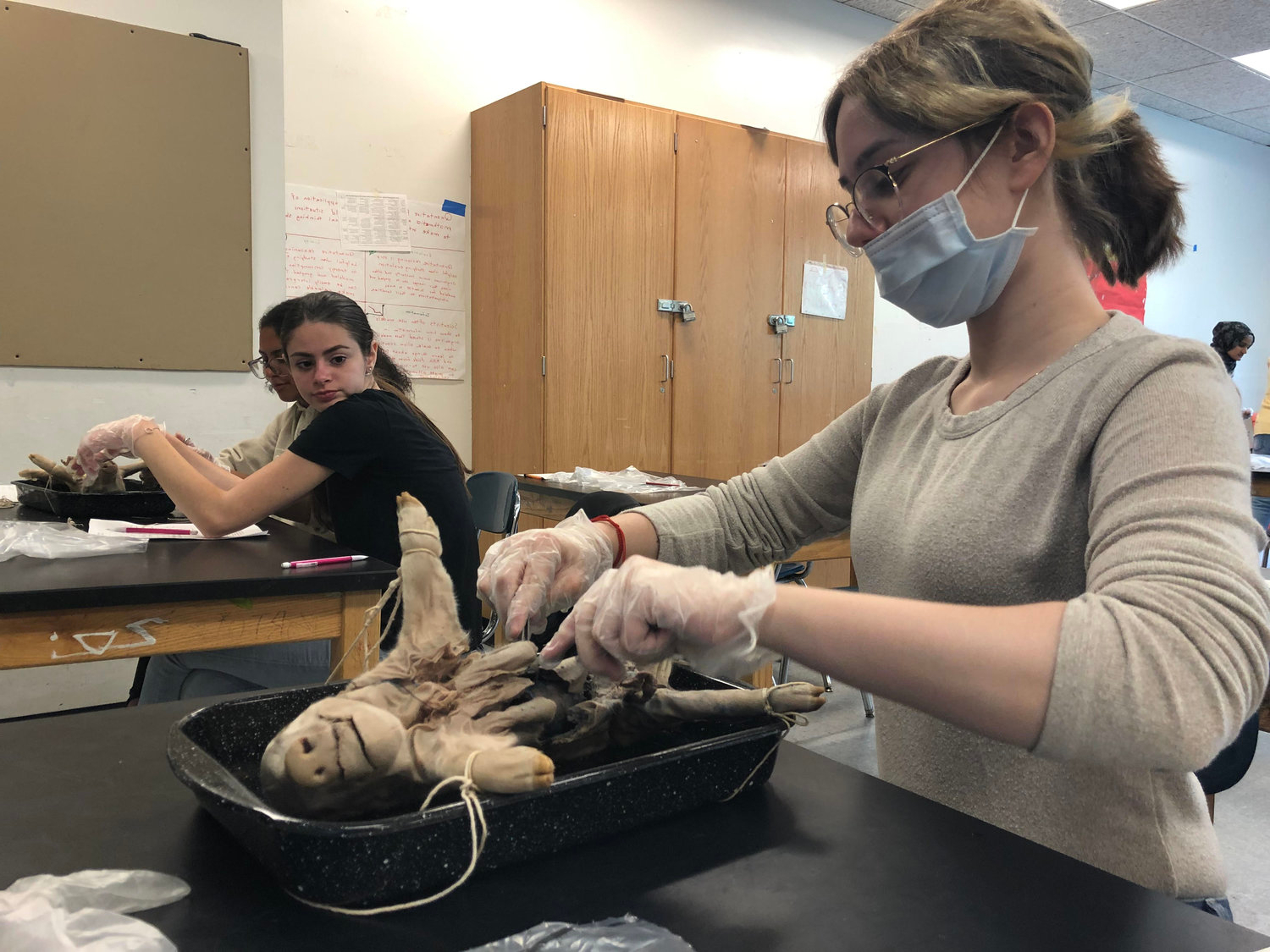
Although the voice caught me off guard, I’d heard her before. I first dreamed of becoming a physician during seventh-grade biology class, when I enthusiastically dissected formaldehyde-soaked fetal pigs.
My second longing to be a doctor came in my mid-thirties, when I had been working as a health reporter for several years, and thought it would be more meaningful to be on the other side of my stories. I even enrolled in an anatomy and physiology class. But I was also starting a new health reporting job, and I ultimately decided that what most engaged me about medicine was its vernacular: Latinate words that reminded me of Italian, and the oddly poetic phrases doctors use to describe conditions, like “weeping feet,” which I’d found in my mother’s medical records.
My recent interest in medicine comes from the opposite impulse: I’m a little sick of words and the hubris of meaning-making with them. On one hand, I’m simply burned out. My research uses “critical discourse analysis,” dissecting words for larger meanings. On the other hand, my rekindled passion for medicine is a by-product of my studies. As a friend told me, “You probably had to get through the rigors of a Ph.D. to arrive at medicine.” Indeed, doctoral studies teach you to think deeply, see patterns, and make associations — all relevant to practicing medicine.
Practicing is the operative word here: Unlike certain academic fields, medicine is hands-on. I remember my nurse-mother once pointing this out. I had been doing interviews with her fellow cancer patients, and she said: But what are you doing for us? The question left me feeling silly, and stumped — even if I felt giving voice to patients helped them in a way a doctor could not. But in a later conversation, in which I briefly floated an interest in pursuing medicine, her eyes lit up, as if blessing that path.
I first dreamed of becoming a physician during seventh-grade biology class, when I enthusiastically dissected formaldehyde-soaked fetal pigs.
I’ve always been more of a thinker than a doer, professionally driven by my own passions and skills. But lately, for the first time ever, I’ve been asking myself: What is a stable line of work? And: What does society actually need? (Besides real political leadership). Family doctors, for sure. I’ve watched friends become frustrated with inadequate primary care that fails to put the pieces of their ailments together. One friend called me in a panic, thinking he was having a heart attack due to chest pain. Fortunately, he didn’t have other symptoms and the episode had been triggered by eating something that got stuck. I diagnosed (correctly) esophageal spasm.
If I’m good at helping people figure their bodies out, it’s because I’m hyper-attuned to my own. My childhood hypochondria might have given me anxiety, but it also made me an astute observer of myself. This can be an asset in middle age, when the body starts to tell its own story more assertively. Perhaps my longing to be a doctor is really a desire to be at peace with my own changing body by understanding what goes on in it.
Speaking of middle age, a wise friend in Rome once described middle age as a time in life when you realize you’re not going to do everything you set out to do. You can still do some things, even many things, but not everything. Becoming a physician at this point might be in the latter bucket, so while I am reigniting this desire, I might also be letting go of it. The other day, I locked eyes with someone wearing a T-shirt that said ‘family medicine,’ a stranger who must have wondered why I looked at him so quizzically, as if to say, ‘Hello, path not taken.’
But I can still, as they say, dream a little dream. After my meditation-induced epiphany, I emailed a trusted advisor, herself a former health reporter–turned Ph.D., and sheepishly asked if she’d ever considered becoming the “other kind of doctor.” No, she said: But you still can do this. It’s not too late.
That was all I needed to research unconventional paths to becoming a doctor. I discovered that in Italy, you can become a primary care physician in six years, at a fraction of the cost in the U.S.; plus, the IMAT (or International Medical Admissions Test), the equivalent of the MCAT, is apparently an easier exam. Here’s another interesting phenomenon: middle-aged Americans are increasingly getting student visas to live and study in Europe.
Pondering all this, I’m reminded of a moment during my first solo trip to Italy, as a nineteen-year-old. One day, I was wandering around the open-air markets near Piazza San Giovanni, when a young Italian man came up to me and asked me if I was a doctor. Puzzled, I shook my head, but before I could speak, he said, “Because you look like a doctor.” I’d been newly donning heels and short skirts, and I didn’t think “doctor” was quite the image I’d been projecting, but I was also flattered. I’d been raised in a medical town, where doctors garnered immense respect.
I don’t remember what I said to him, but today I might thank him for seeing something in me that would take me half a lifetime to see in myself.