

Toward the end of his life, long after battles won and lost, brute temper and trivial anger exhausted, my father spoke often of the need for elegance of spirit.
This regarded not a man’s bearing or status or temporal power but his ability to exert and quietly transmit a sense of class. Dress could not accomplish this, nor could money. It struck deeper into layers of confidence, self-esteem, an ability to always rise above reversals. Later, I would come to think of what my father had in mind as a inclusive crisis between Boccaccio’s sprezzatura, a man’s cleverly confident awareness of self, and García Lorca’s duende, that vein of inner class and style that could not be taught but brought effortlessness to all actions.
Remember, said my father, to seek elegance of spirit in others so that your own will not come to harm. By this he meant for me to pay attention to how others behaved, because to do so attentively might prevent disappointment, even harm. To belabor lost causes, as my father recognized he had done too often in his lifetime, at times hurting others, was, in the obverse of what he preached to me, what Milton called a waste of spirit.
To say all this is an excursion into intangibles is to put it mildly, all the more so today, when class has neither purpose nor locus. To speak now of chivalry is to indulge the archaic. It is to tell of World War I fliers who, some of them, their planes mortally stricken and without parachutes, would salute their foes with an salute, acknowledging they had lost a fight to the death. A long way, this, from the cowardly impersonality of lethal drones.
Why this preamble?
Remember, said my father, to seek elegance of spirit in others so that your own will not come to harm. By this he meant for me to pay attention to how others behaved, because to do so attentively might prevent disappointment, even harm.
To tell a story of course, a very small story and, these days, an atypical one, but nonetheless kin to that elusive elegance of spirit.
Some days ago I received an unbidden email message from a young woman in Milan. It was sent to this magazine’s information address and so came to roost with me. The woman, I’ll call her Nell, told of her lifelong interest in music and how much she’d liked to write about it. She had a blog on the subject, focused on choirs, and wondered if we might have space for a writer who focused more generally on the subject of music old and new.
I was thrilled. The idea of just such a contributor had always appealed to me. Please, I replied, call me, since you, Nell, are an American in Milan and I an American in Rome. I expected little, but lo and behold Nell did in fact call.
She was gracious, polite, and enthusiastic, and we spent some thirty minutes discussing how she might write a monthly column on music taken in part from the interests professed on her blog. She was a doctoral candidate in music studying for a year at a Milan opera conservatory. She came from Washington state but had found her way to Milan, a central port for opera.
I asked her to please write to the magazine managing editor, explaining that my vision was failing, and she kindly expressed sympathy for my condition. This I considered rare — the willingness to softly address another’s misfortune — and even rarer she sent the message I had recommended only hours after our chat. Her message received a swift reply with thanks and a request that she send her blog link so that we might advance her cause.
I waited on the next steps with pleasure.
But they never came.
I prompted her with a text message a few days later but received no reply. A phone call after a week went unanswered. So did an email message inquiring after her health. Had something happened?
Silence.
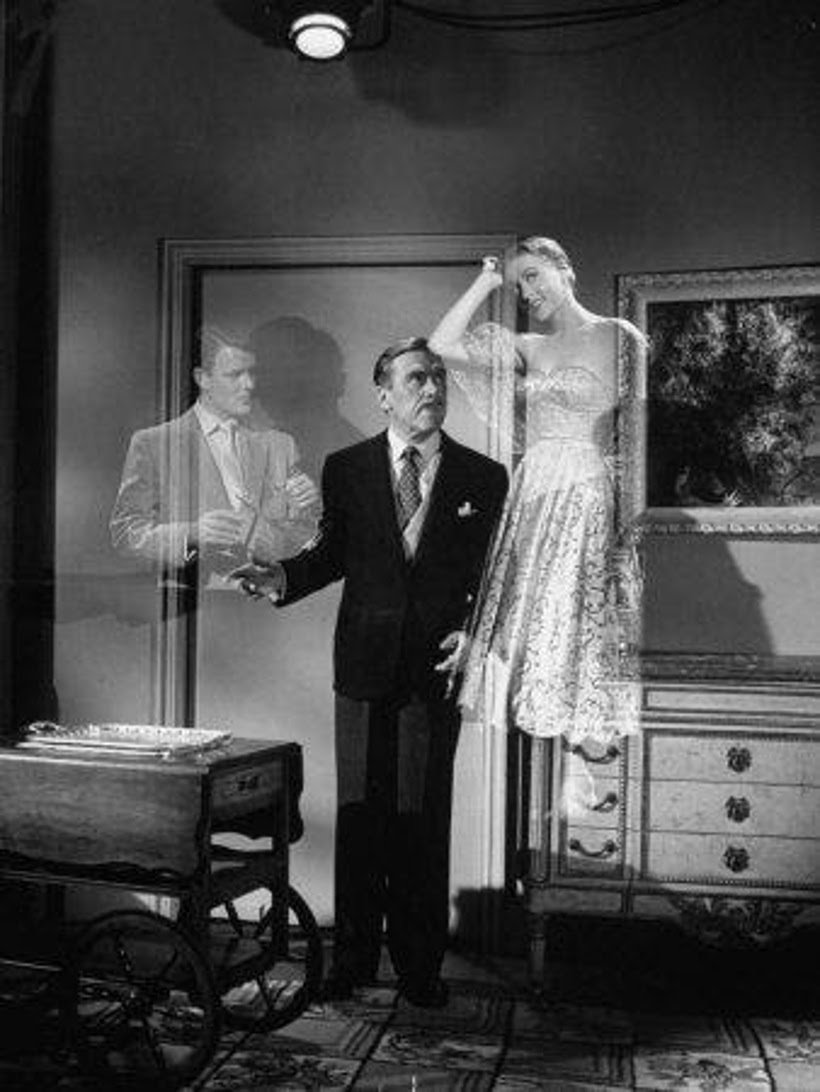
Finally and reluctantly it struck me that I had, in a favorite verb of this made-up-verbs century, been ghosted.
Style, hers, had dissipated into thin air.
Happens all the time, said a friend, then another, but I knew this already.
Electronic vanishing is this era’s cold feet or I changed my mind or, more simply, No.
It is not elegant.
It is rude.
But it is also both easy and feasible, so why not?
I long ago lost my illusions about a world that revels in assertive impoliteness as a badge of honor, one in which anti-sprezzatura and killing the duende reign.
Which brought to mind a comment by former German Chancellor Angela Merkel when informed American spy agencies had been intercepting the calls of European leaders. Well, said the unabashed agencies, such intercepting was both easy and possible.
Just because it can be does not mean it should be done.
Her complaint was brushed off as trivial and, worse still, belonging to the European Old World.
Elegance of spirit?
Where and what for?
Why not lie and vanish? Or promise and vanish? Or be sincere in the moment only to reverse direction and vanish? Why not play vicious and insulting politician and then say, “Sorry about that. . . . just wanted to make my point.”
Never mind the hurt and the literal murder of symbolic elegance.
I said this was a small story, and it is. I long ago lost my illusions about a world that revels in assertive impoliteness as a badge of honor, one in which anti-sprezzatura and killing the duende reign. The only upside to such a world is that personal dictatorships, Hitlers of the I, me, or my, have replaced the far more dangerous Hitler of the masses. Tyranny and its congenital cruelties now exist mostly as extensions of the phone-broadcast ego, though armed adolescents eager to embody a personal version of authoritarianism impose Gestapo hormones. Better that way, I repeat. Better the occasional Gestapo than the sanctioned whole. Better wholesale rudeness than calibrated slaughter.
But painful to me still, that lover of music who seemed for an instant to have found a muse.
It is a mistake to want too much, since muses are elusive and some behave capriciously. Literature is full of them.
I did write Nell a final note, expressing disappointment but wishing her well in her studies. No reply, of course, nor did I expect one.
In a suggestively melancholy Tom Petty ode, my most treasured, a weary traveler behind a midnight wheel spies in the clouded moon the face of a ghostly someone who once mattered but whose true identity eludes all detective work, “a dollar gets a dime,” so condemning the song’s night driver to the same road, the same moon, and the same wistfully eternal desire to know what he cannot.
