

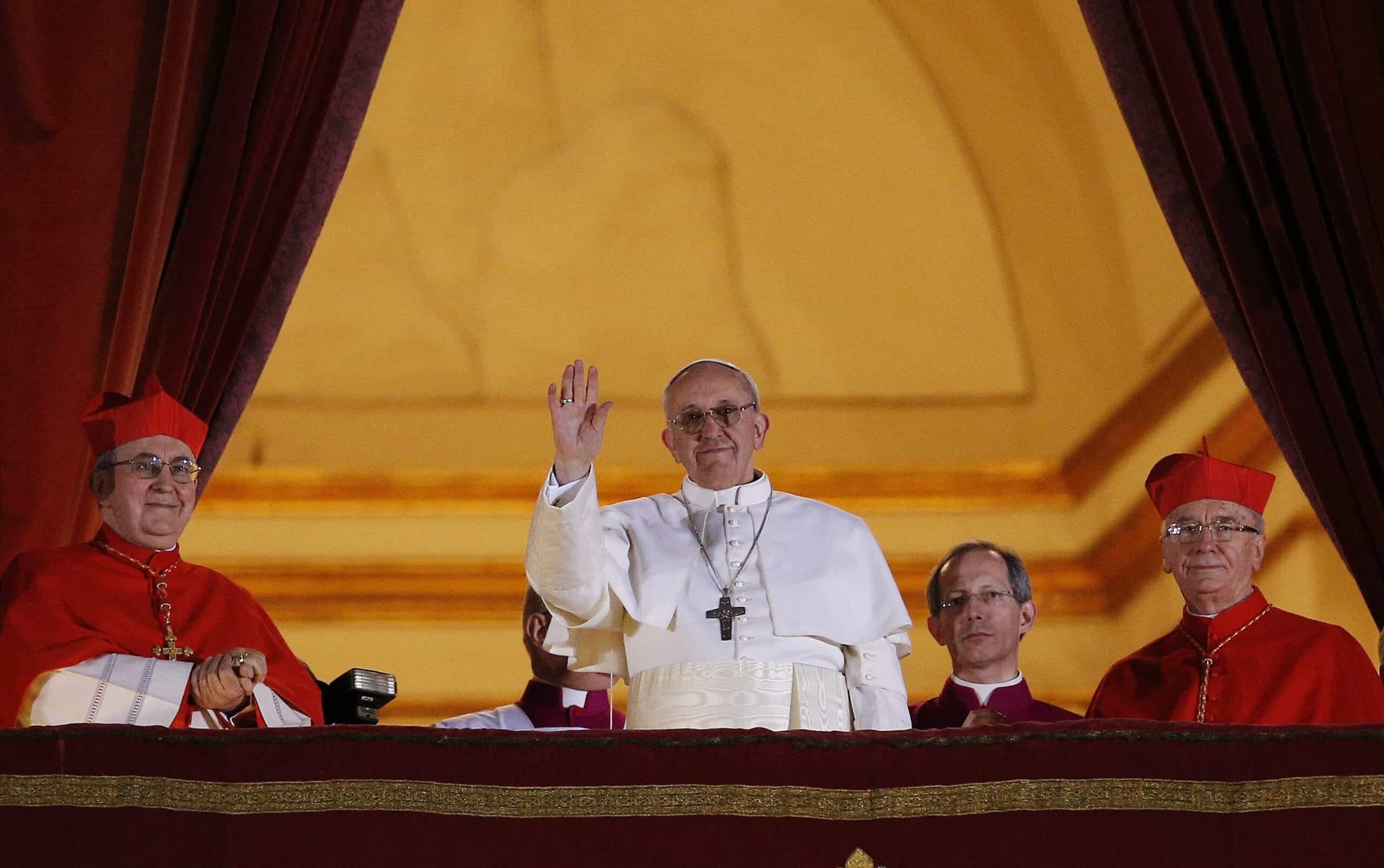
The death of Pope Francis was coming for some time. Now, cardinals will face some hard choices, most of which reside behind three doors.
With the death of Pope Francis following a largely demure twelve-year reign, the Roman Catholic Church stands before the doors regarding his successor.
The first opens toward a Western European prelate in the vein of Pope Benedict, Francis’ predecessor and a strict, by-the-book figure who lacked charm but appealed to the conservative branch of the Curia, the Vatican’s governing body. An upright German, he had no interest in apologizing for Church sins, including sexual misconduct. He was instead a manager who ran the Church as one might run a military academy, and some within the Vatican found this rigor both useful and appropriate. Pastoral efforts should be left to priests in the field. They viewed the pope as a monarch, which in fact he was for centuries.
Some are nostalgic for such a figure, though it might appear to casual observers that the Church wishes to be kinder and gentler. Rest assured that much of it has little affection for such sentiments. Women in the Church? Never. Apologies for misdeeds? Not if they can be avoided.
Behind this door also resides the prospect of returning the papacy to Italy, without a pope since the death of John Paul I in 1978 after little more than a month in office.
The second door opens into something seemingly radical, though in fact it is not: the elevation of a cardinal from an Asia or African state. Catholics are falling in number in North America and Europe but increasing in notable numbers in the world’s south and east.
It would thrill Africa or Asia to finally have a pope to call its own (priests from African states are ubiquitous in Italy, some forced to flee tribal violence at home).
For many years, the Church chose to pick only older men, seeking to avoid someone who might pore over Church affairs for decades.
It would also like to expand Church internationalism in an unprecedented way and offer a media-friendly antidote to Donald Trump’s celebration of the insular.
The last three popes have been Polish, German, and Argentine, in that order, so the room to expand exists. The impact of a Black or Asian pope, especially if, in the vein of John Paul II, he chose to travel, would be in every sense inestimable — all the more in the social media era, in which visual presence and charisma might act as tools for conversion.
Whether the Curia would accept such a bold move is another matter, and the cardinals who vote for the pope are very much aware of the Curial mood. Still, the possibility is real and makes sense from many viewpoints.
Can the Church rise above a kind of ethnic racism? To be determined.
Finally, there is always the possibility of the interim figure, which to some extent Francis was. He was in his late seventies when elected, and many assumed, correctly, that he would last for about a decade.
For many years, the Church chose to pick only older men, seeking to avoid someone who might pore over Church affairs for decades. They took a great chance on Pope John Paul II, elected at age fifty-eight, and he in fact kept the Vatican under tight control for four decades. At the same time, his charisma gave the Church a sheen it had never before known and his anti-Communist views were critical in leading to an end of the Berlin Wall period.
The Polish pope, who would later be canonized, also issued prescient warnings about the dangers of consumer capitalism and how the love of things might supplant a love of faith.
All this unsettled the Curia, which over time came to regret having been under the thumb of so young a man. For this reason, his strict right-hand man, Benedict, got the job after his death. Order was restored.
Those who believe that popes are elected by the hand of God, the view promulgated by conclave cardinals, are sadly mistaken. The pope is a political figure, and his elections come about as a result of preferences and compromises.
So it will be this time. The only question is which doorknob the cardinals will turn or if, as was the case with Pope John Paul II, they go in a direction no one can foresee, one they can tell the world was guided by the Holy Spirit.
Editor’s note: The author has covered the death of four popes since 1978.
