
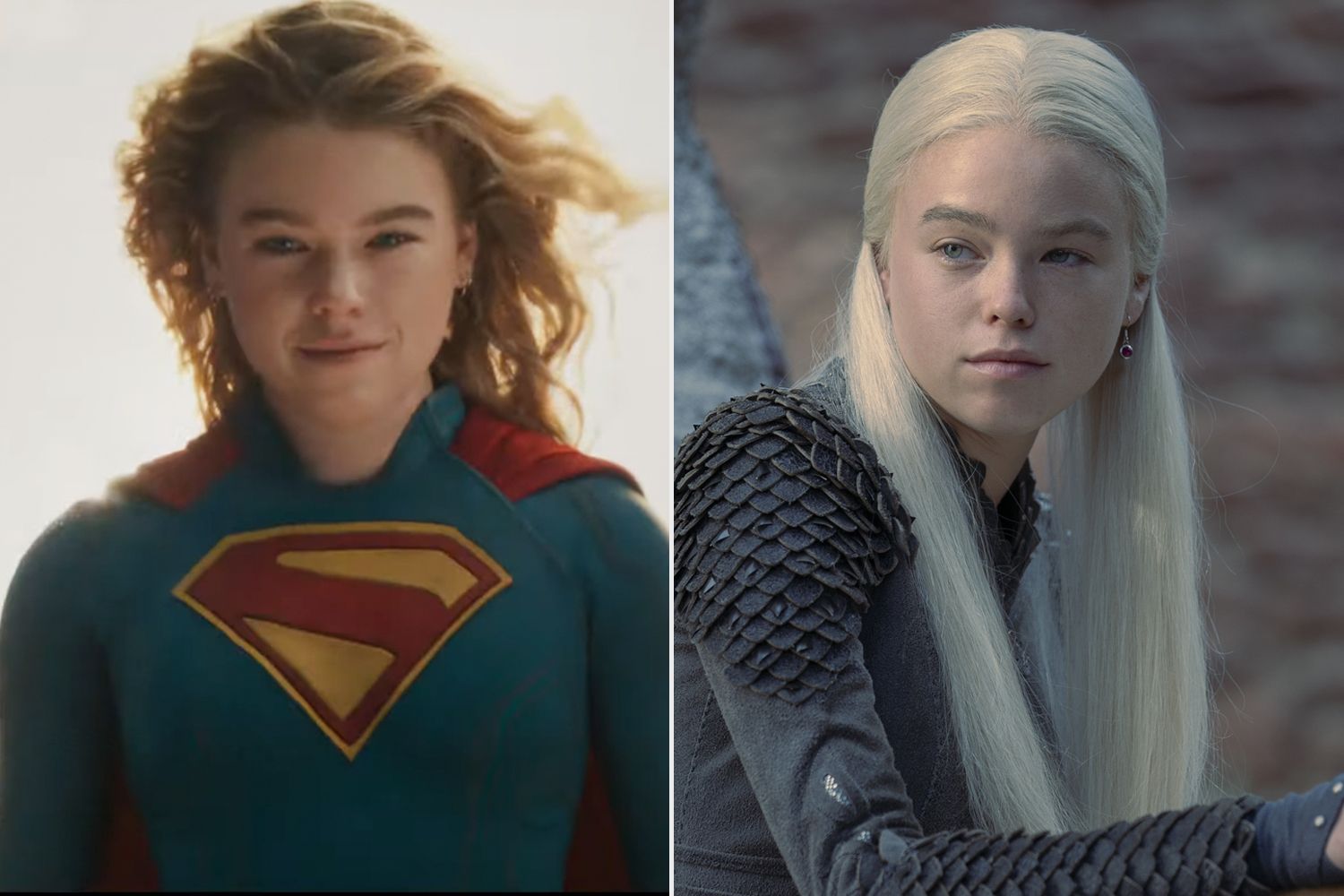
Is it any wonder that the DC Universe’s much-awaited “Supergirl” summer blockbuster has been pilloried far and wide as a box-office disaster and a flop? The film earned just $7.8 million during its early theatrical opening and is expected to suffer a whopping $100 million loss by the end of its run, which may well be cut short, due to poor word-of-mouth and the mounting backlash from film critics. “Supergirl” is not the first female-led superhero film to fare so poorly of late. In 2020, “Wonder Woman 1984,” the fourth of the franchise’s series that began in 2017, also tanked with audiences. Gone are the days, it seems, when a female action hero could be heralded for breaking another cinematic glass ceiling and for achieving critical and commercial success on par with her male counterparts. So, who’s to blame for this apparent collapse of feminist movie-making vision in Hollywood?
Hollywood, of course. You can’t really blame “Supergirl” star Milly Alcock, who first made her name in the 2022 HBO series “House of the Dragon,” for being so hopelessly miscast in the role of Kara Zor-El, Superman’s lesser-known cousin. She clearly lacks the physical stature and demeanor of a crusading warrior but is also saddled with a weakly written script that has her literally spinning in circles in outer space trying to wreak vengeance on a male foe accompanied by her female consort, Ruthye. Directed by virtual no-name Craig Gillespie, on the advice of James Gunn, the mogul behind DC Universe and co-producer of the film with Warner Bros., who apparently was too busy to helm the director’s chair himself, the film suffers from disjointed, stop-and-go pacing, and seems to struggle to keep its momentum. At times, the film’s exposition feels rushed, only to be punctuated suddenly by sluggish, depressing interludes. The film’s jangly score doesn’t help; its tonal touches often sound off-key, if not altogether out of place.
Superhero action movies, even ones focused on lesser-known figures, may still have a future, but they clearly need to evolve. Audiences want to see more psychological depth, moral gray areas, and relatable flaws in their film icons.
Not surprisingly, “Supergirl’s” rating on the movie review site Rotten Tomatoes stands at a dismal 59%, among the lowest recorded for a film in this genre; its “audience” rating is somewhat higher, though still relatively low, just 76%, probably owing to Alcock’s earnest performance in the lead. Still, the movie cost more than $300 million to produce and market, and it was projected to earn $55-$70 million at its weekend opening. Its actual performance with audiences in the theaters – just 10% of the expected receipts – suggests a widespread dislike of the film from which it is unlikely to recover.
Undoubtedly, Gunn’s dereliction in delegating the director’s role to Gillespie and his choice of a relatively unknown, fledgling screenwriter (Ana Nogueira) to write the script is partly to blame for this disaster. But there’s a larger issue at work here. Gunn did direct a modestly successful “Superman” movie last year, but the entire superhero action genre has struggled with audiences for some time now, partly due to over-saturation. “Spider-Man” and “Batman” were huge novelty hits when they first splashed on the scene more than 20 years ago. The “Batman” franchise — or franchises — has featured a whopping 11 stand-alone movies, including Christopher Nolan’s widely regarded trilogy (2005-2012), culminating in “The Dark Knight Rises” (arguably one of the peaks of the genre). And “Batman,” of course, featured big-name actors like Jack Nicholson and Christian Bale, with massive box-office appeal. Is there really space for another superhero action figure, one who never really loomed large in Marvel comic book canon? Catwoman, an infamous Batman nemesis from the old “Batman and Robin” TV series, might be a more inspired female choice, or even Batgirl, Supergirl’s counterpart, who was the subject of a fully completed $90 million film in 2022 that was inexplicably cancelled at the last minute by Warner Bros, ostensibly as a tax write-off.
Apparently, Hollywood is content to coast on its superhero laurels and is reluctant to spend time and money on new, well-crafted, and superbly cast (thus inevitably more expensive) productions and is expecting movie audiences to just suck it up and settle for less. Instead, they’re voting with their feet. The downward trend began with 2023’s “The Flash” — another box-office flop — and continued with “The Marvels” that same year. Both films suffered bloated production costs and lost gobs of money. Now, with the “Supergirl” fiasco, a major rethinking by the studios should be a top priority.
But don’t count on that happening anytime soon. Gunn & Co. are already circling the wagons to defend their film, and, predictably, suggesting that critics are engaging in “sexism” and “misogyny” for subjecting it — and the film’s two female leads — to harsh criticism. That’s a bit of a canard, of course, but it’s the kind of backlash that often finds sympathy in über-PC Hollywood. It might even stanch the film’s financial bleeding and help salvage Gunn’s reputation, which is suddenly under siege. But it’s unlikely to distract the film’s growing chorus of critics, male and female, for long. Even Hollywood’s traditionally loyal media organs are beginning to turn on “Supergirl.” The Hollywood Reporter offered measured praise for Alcock and her co-stars but still concluded that the film overall was “stuck on autopilot.” Variety film critic Owen Gleiberman was less gentle. “Supergirl has the worst script of any movie ever made in this genre,” he declared. “It stinks.”
Superhero action movies, even ones focused on lesser-known figures, may still have a future, but they clearly need to evolve. Audiences want to see more psychological depth, moral gray areas, and relatable flaws in their film icons. The era of the easy, formulaic billion-dollar blockbuster hits, featuring epic computer-generated battles between “perfect” heroes and “evil” enemies, is probably over. Instead of a succession of endless franchise offerings, each less compelling than the last, Hollywood desperately needs higher-quality scripts that can support stand-alone, grounded narratives with better, more nuanced storytelling. Audiences want superhero characters who mature and grow, triumph and fail, figures they can look up to, perhaps, but still recognize and embrace as powerful reflections of themselves.
“Supergirl,”in some ways, fits the bill. Kara, after all, is no saint. Deeply traumatized, she’s been drowning her pain in alcohol and drugs and impulsively seeks vengeance against the alien that poisoned her dog. But through her inter-galactic journey she learns that retribution never satisfies, concluding that serving the entire planet as “Supergirl” is her only sure path to redemption. That’s a compelling moral lesson, one that might have fulfilled Alcock’s vision for a “Supergirl” that can serve as a role model for today’s young women. But it takes superbly crafted writing and sharply drawn characters who can display real depth and interiority to be convincing. We’ve seen this in earlier superhero movies, “Batman” especially. Unfortunately, it’s not on display here.
In “Supergirl” we see Kara the action figure swoop and fly and do endless battle with the dark forces of the universe — dispatching her nemesis, Krem, with aplomb — and her occasional display of wit and humor mid-battle is certainly amusing. But audiences never get a chance to connect with her trials and triumphs on a deeper level, to see how her pain and dawning self-awareness have transformed her. She’s back from the brink of despair, but she remains worn-out, depressed, even a tad cynical. With her tousled mane and weary glare of defiance, she looks like a refugee from a rave party who could use a good stint in rehab, not a buoyant and uplifting survivor ready to join forces with Superman in a 2027 sequel.
