
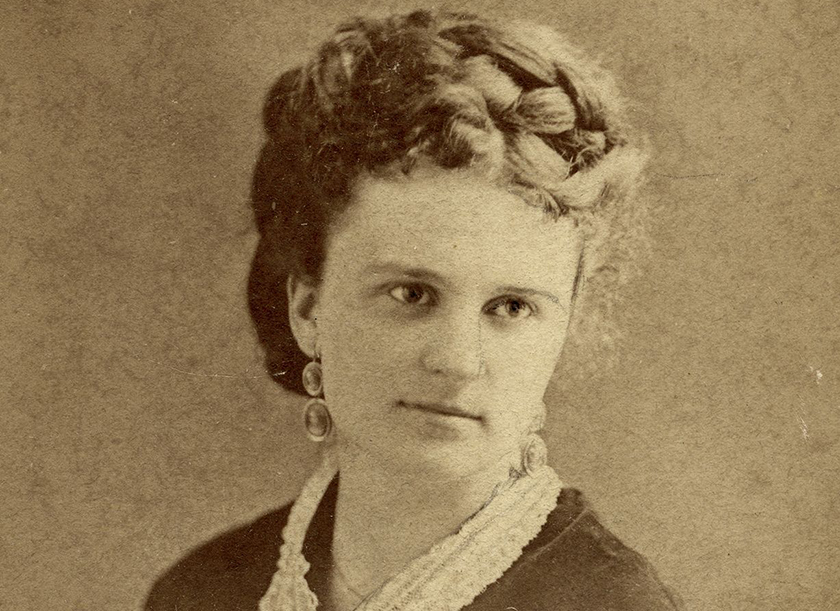
Originally published in 1899, The Awakening by Kate Chopin is an early exploration of abandoned conventions, feminist agency, and perceived selfishness. So scandalous was the narrative at the time that the book was banished for decades. Initially titled A Solitary Soul, Chopin’s novel explores a woman’s choice, self-discovery, and complete desertion of the rules in search of deeper meaning and independence.
Set in the nineteenth century American South, Edna Pontellier, living among respected Creole society in Louisiana, has a deep, though melancholic, realization while summering off the Gulf of Mexico with her family.
“This beautiful little book so disturbed both critics and the public that it was banished from sight and from print for decades afterward, and its author and her reputation were carried into an oblivion from which they are only newly recovered.”
Married to Leonce Pontellier, a respected businessman, Edna cares for their two young children, at times reluctantly, and begins to entertain a sense of kinship with Robert Lebrun during their trip to Grand Isle. Managed by the Lebrun family, the resort they stay at in the Gulf of Mexico creates an intimate and easy familiarity between Edna and Robert that her marriage lacks. This kinship grows into something uncontrolled yet alive, a forbidden relationship that sets off the ensuing drama at the heart of the novel.
Written in a realistic, naturalist style while exploring psychological, societal, and emotional complexity, The Awakening draws a canvas on which Chopin uncovers hidden taboos.
“Her marriage to Leonce Pontellier was purely an accident, in this respect resembling many other marriages which masquerade as the decrees of Fate. It was in the midst of her secret great passion that she met him. He fell in love, as men are in the habit of doing…”
Chopin’s writing was a precursor to American Modernist Literature, a trend of philosophical thought arising from changes in culture and society in the age of modernity. With women taking on roles beyond the traditional ones of wife and mother, there were changes in social structure which opened up new vistas for women. Employment afforded them greater means for independent action.
These opportunities presented themselves to Edna like a tonic, leading her to question the integrity of her marriage, motherhood, and ultimately, her life. With a tone of despair reflecting her inner turmoil, Chopin’s writing evokes the melancholia of Sylvia Plath or Zora Neale Hurston. The novel shares themes with the famous short story by Nathaniel Hawthorne, Wakefield.
Written in third person perspective, the audience is invited to witness the kaleidoscopic feelings of mainly Edna and sometimes Robert, their inner conflicts often more complex than outward action can depict.
“There were days when she was unhappy, she did not know why — when it did not seem worth while to be glad or sorry, to be alive or dead; when life appeared to her like a grotesque pandemonium and humanity like worms struggling blindly toward inevitable annihilation.”
While the plot progresses in a somewhat predictable direction to a modern reader, Chopin left the why up to interpretation, inviting reflection, reasoning, and individual judgment. Her work is in no way didactic, but in every way honest.
These increased opportunities for women presented themselves to Edna like a tonic, leading her to question the integrity of her marriage, motherhood, and ultimately, her life.
A large part of the conflict that the novel investigates has to do with the sense of dutiful obligation, of the “natural” role Edna is supposed to play as a mother. Edna is not only in opposition to social expectations when she casts her marriage to the wayside and picks up painting as a lucrative occupation, but to the father of her children and the children themselves.
“The children appeared before her like antagonists who had overcome her, who had overpowered and sought to drag her into the soul’s slavery for the rest of her days. But she knew a way to elude them.”
To this day, motherhood and the role women play within its varying ideals are explored within the literary world from all angles, but at the turn of the twentieth century, this was forbidden territory.
“This beautiful little book so disturbed both critics and the public that it was banished from sight and from print for decades afterward, and its author and her reputation were carried into an oblivion from which they are only newly recovered,” explains Marilynne Robinson in the novel’s introduction.
For readers who enjoy rebellious characters, romantic tension, and layered emotions, consider adding The Awakening by Kate Chopin to your book list. You may enjoy this novel if you liked The Bell Jar by Sylvia Plath, Madame Bovary by Gustave Flaubert, or Beloved by Toni Morrison.
