

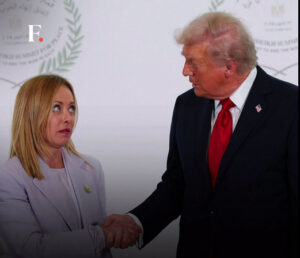
 Meloni on fire: It takes nimble thinking to transform condescension into political capital. But Italy’s far-right Prime Minister Giorgia Meloni was more than up to the task. At the G-7 Summit, the American president, typically rude, said he had spoken to Meloni but only after she chased him down to “beg” that he pose for a photo with her, something he said he agreed to because he felt sorry for her. A day later, Meloni hit back hard in a widely circulated video in which she said the president had fabricated the entire incident, adding, “I, and Italy, do not beg.” Meloni, lately criticized by the center-left for her perceived deference toward Washington, was almost instantly rehabilitated. Here, for everyone to see, was a new and tougher prime minister who had vocally defended the pope from White House insults and refused any involvement in the Iran War, positions that tended to push her away from reactionary policies ahead of 2027 national elections. Though Italy failed to qualify for the World Cup, her words and tone aroused Italian nationalism--all the more so since the president persists in assailing her online.
Why the American president cannot rein in his crudeness is anyone’s guess, but in terms of Europe, it runs deeper than the matters of national popularity, energy policy, migration, and Middle East wars. A decade ago, the French intellectual Bernard-Henri Lévy said in a New York debate that while he worried about the new president’s domestic and foreign policy, he was just as concerned about his egregious lack of style. He was right to worry. But, increasingly, European leaders are learning to fight fire with fire, which Meloni continues to do, giving her an odds-on chance of retaining her Italian leadership.
Meloni on fire: It takes nimble thinking to transform condescension into political capital. But Italy’s far-right Prime Minister Giorgia Meloni was more than up to the task. At the G-7 Summit, the American president, typically rude, said he had spoken to Meloni but only after she chased him down to “beg” that he pose for a photo with her, something he said he agreed to because he felt sorry for her. A day later, Meloni hit back hard in a widely circulated video in which she said the president had fabricated the entire incident, adding, “I, and Italy, do not beg.” Meloni, lately criticized by the center-left for her perceived deference toward Washington, was almost instantly rehabilitated. Here, for everyone to see, was a new and tougher prime minister who had vocally defended the pope from White House insults and refused any involvement in the Iran War, positions that tended to push her away from reactionary policies ahead of 2027 national elections. Though Italy failed to qualify for the World Cup, her words and tone aroused Italian nationalism--all the more so since the president persists in assailing her online.
Why the American president cannot rein in his crudeness is anyone’s guess, but in terms of Europe, it runs deeper than the matters of national popularity, energy policy, migration, and Middle East wars. A decade ago, the French intellectual Bernard-Henri Lévy said in a New York debate that while he worried about the new president’s domestic and foreign policy, he was just as concerned about his egregious lack of style. He was right to worry. But, increasingly, European leaders are learning to fight fire with fire, which Meloni continues to do, giving her an odds-on chance of retaining her Italian leadership.