

Leo revisited: My first response to the election of Chicago-born Robert Francis Prevost as pope, who took the name Leo XIV, was close to indifference. I considered him a compromise choice whose Augustinian training was much in evidence given the evangelical decades he spent in Peru. In fact, since he held Peruvian as well as American citizenship, I supposed that he would focus on the planet’s vast Spanish-speaking Catholic flock. But Prevost has proved me wrong in every 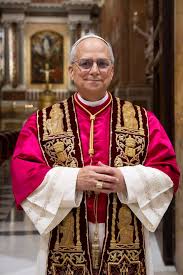 imaginable way. Both his social conscience and sense of morality are robust. Entering the political arena, he all but denounced the Iran War and its architects. In recent months, he has visited the poor and the dispossessed in central and east Africa while doing the same on a trip to Spain’s Canary Islands, where he warned human traffickers that they risked eternal damnation, strong words from a pontiff, though in line with his late 19th-century predecessor, Leo XIII, who upheld worker rights during the Industrial Revolution. In a thoughtful encyclical that minced no words, this latter-day Leo has also warned of AI’s danger to human autonomy and spiritual dignity. It is therefore no surprise that he would turn down an official invitation to travel to the United States for its lavish Independence Day celebrations. Instead, he will use July Fourth to mingle among those this White House considers subhuman, saying mass on the stockade-filled southern Mediterranean island of Lampedusa, where Italy detains stray migrants. If Pope Leo has proved one thing in his brief tenure, it is that his early American upbringing taught him the fundamentals of civics, civil society, human decency, and compassion, bulwarks of what America once stood for. And it is moving to behold.
imaginable way. Both his social conscience and sense of morality are robust. Entering the political arena, he all but denounced the Iran War and its architects. In recent months, he has visited the poor and the dispossessed in central and east Africa while doing the same on a trip to Spain’s Canary Islands, where he warned human traffickers that they risked eternal damnation, strong words from a pontiff, though in line with his late 19th-century predecessor, Leo XIII, who upheld worker rights during the Industrial Revolution. In a thoughtful encyclical that minced no words, this latter-day Leo has also warned of AI’s danger to human autonomy and spiritual dignity. It is therefore no surprise that he would turn down an official invitation to travel to the United States for its lavish Independence Day celebrations. Instead, he will use July Fourth to mingle among those this White House considers subhuman, saying mass on the stockade-filled southern Mediterranean island of Lampedusa, where Italy detains stray migrants. If Pope Leo has proved one thing in his brief tenure, it is that his early American upbringing taught him the fundamentals of civics, civil society, human decency, and compassion, bulwarks of what America once stood for. And it is moving to behold.