

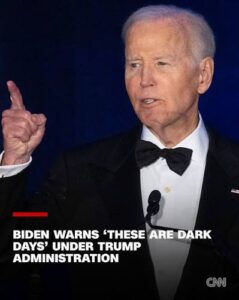
 Biden’s lament: In January 2024, Joe Biden began his reelection bid with a passionately rueful speech in which he pointed out almost disbelievingly that many Republican congressmen who had vowed to disassociate themselves from his predecessor following the January 6, 2021, Capitol insurrection were now firmly back in his snarling camp. How was this possible, asked Biden, and did it not behoove Americans to take a stand against the insurrectionist and his reanimated friends? Poor Biden. Six months later he was in effect purged as the democratic candidate and all his words allowed to mostly fall by the wayside. His vice president, Kamala Harris, took over for him and, entirely unprepared for a three-month presidential run, was summarily beaten. I mention this because one of the most emblematic of the lawmakers referred to by Biden, though not by name, was Lindsey Graham, the South Carolina Republican senator who died suddenly on July 11, 2026. Though the sitting president had no greater fan than Graham, it was not always that way. After the Capitol attack he had said “enough is enough” and seemed to turn away from Washington’s populist autocrat. On another occasion he referred to him as “a race-baiting, xenophobic bigot,” and accurately so. Graham also spoke of the president’s “dark side” in which lies became truth and woe to those who would contradict him. This waffling goes by the proper noun Politics. But at the same time it demonstrates the extent to which so-called loyalists are entirely unreliable and, party affiliation aside, can change course at any time. A Congressional whip, so well played by Kevin Spacey in the early days of “House of Cards,” exists to know precisely when such duplicity emerges. But Graham needed no lashes. He knew just what to do and when. So, apparently, did most of his fellow Republican lawmakers, preponderantly wedded to deference. Which makes Biden’s lament all the more poignant.