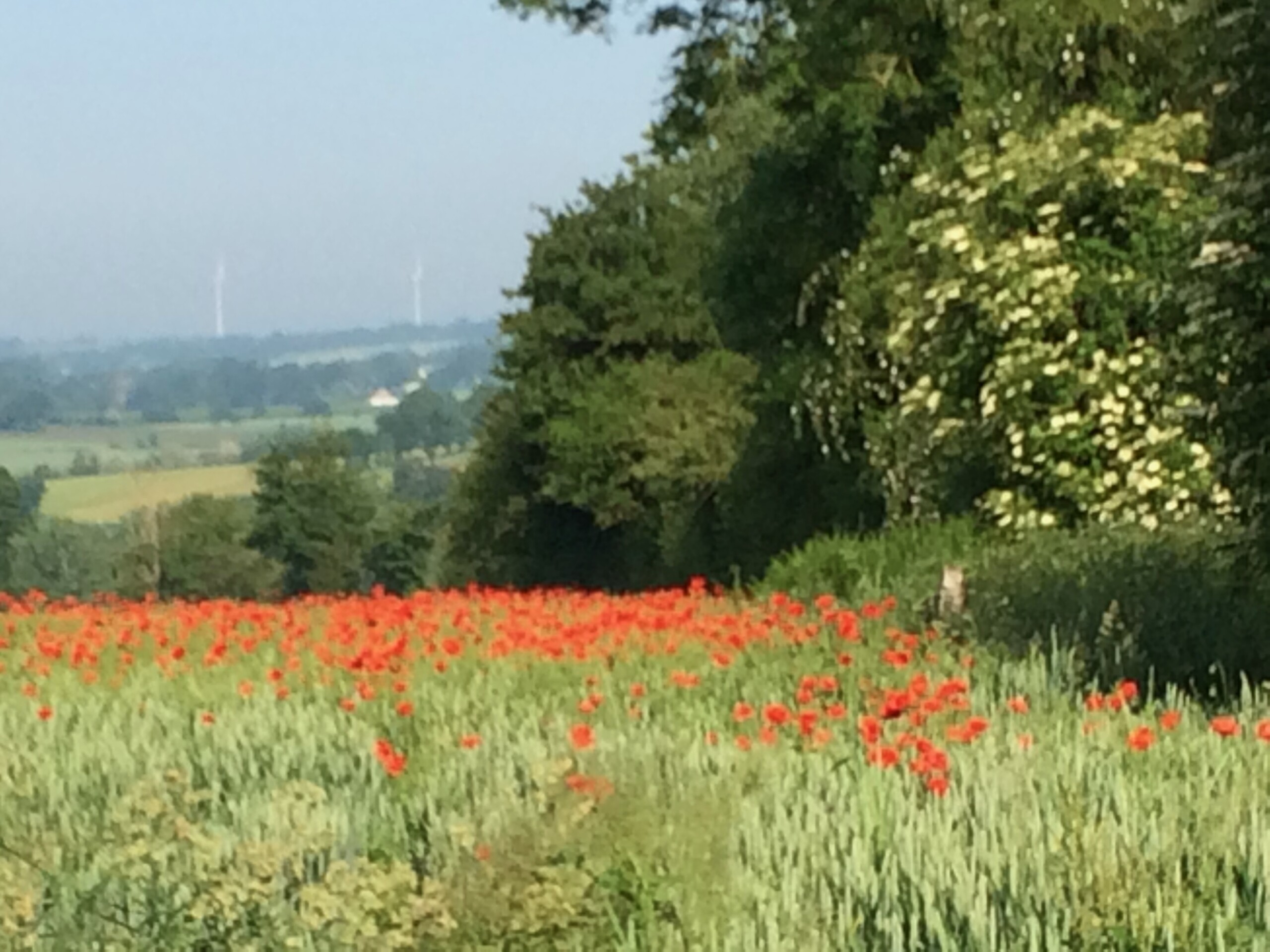
Views are like faces I have gotten to know over the years. Living in the region of the Normandie Bocage, hedged farmland or mixed woodland and pasture, since 2008, I have walked past the same places and the same scenes so many times that they’ve become as familiar as neighbors. Walking my son to up the hill to the village school, we’ve stood hand in hand and looked at the pasture which lies at the crest of the bend in this road. We’ve seen it in winter, in spring, in summer, and in autumn, and observed how its features change according to the seasons. In the warmer months, its crumbly, chocolate colored earth lies furrowed and planted. There is a period of a day or two, when the field is being prepared for planting, when it is pungent with the odor of cow manure. In due time, lines of green sprouts perk up, becoming rustling ears of maize. And then, after the autumn harvest, the field is a rough textured crosshatching reminiscent of brushstrokes from a Van Gogh painting.
Along the winter road, tangles of brambles are magically coaxed by spring into pinkish white flowers, and then summer comes along and turns them into blackberries. The locals get down their boxes of empty jam jars from the attic, ready for jamming season. My husband often has the intention to make his own preserves, but the berries are so sweet and so succulent that they never survive the journey into the basket. Straight they go into our mouths!
The familiar, however, continues to be filled with surprises, often in the form of blossoms. Red-orange Coquelicots or common poppies, emblematic of the fields of Flanders, the tragedy of the First World War, and the hope of an abstract peace to come, hold claim over their own territory and never cease to generate awe when seen from a distance.
I have found refuge in looking through these pictures, which have given me joy and lifted my spirits in a winter that has seemed overly long and too, too gray.
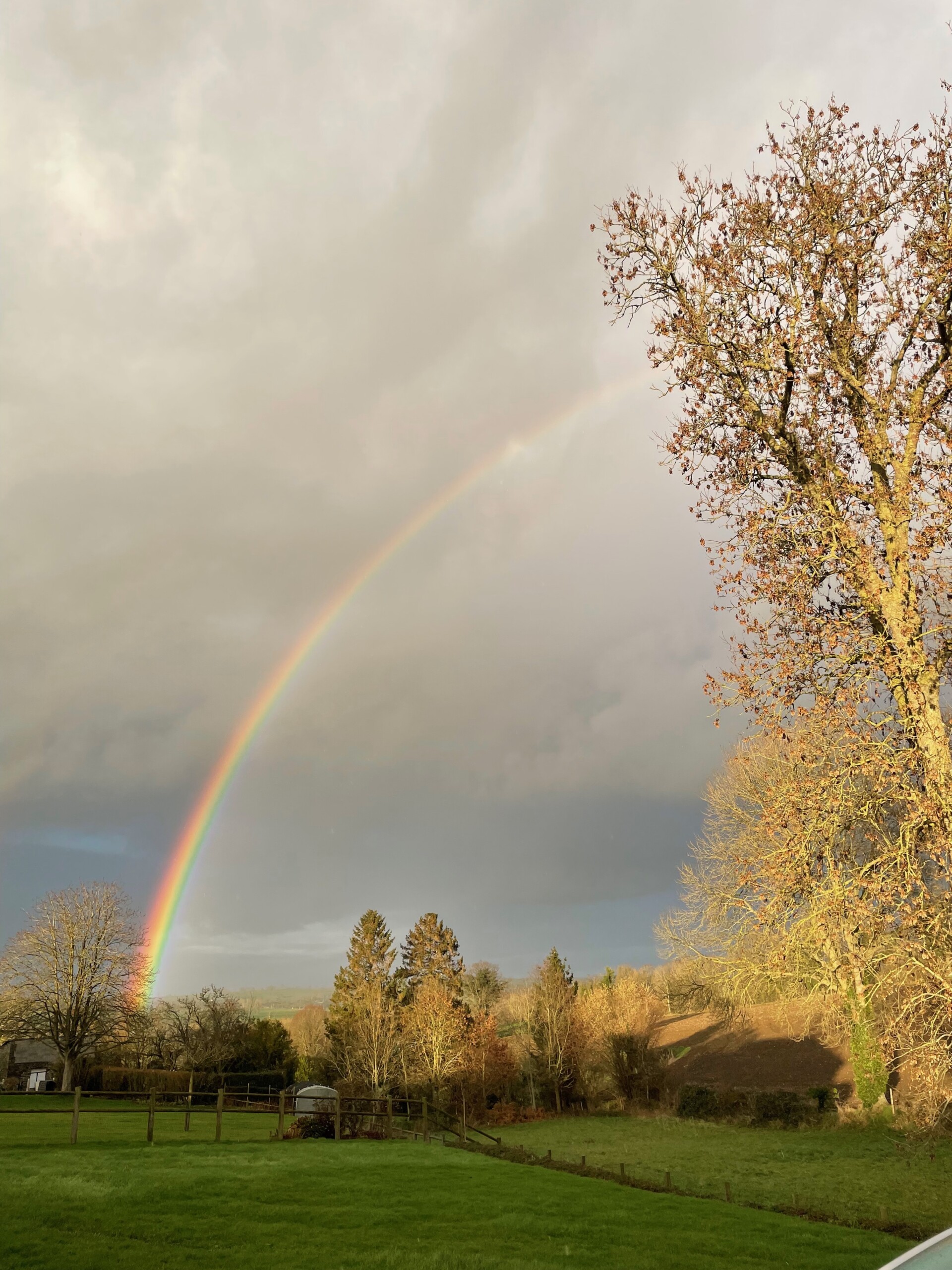
1.Rainbow
“Arc en Ciel,” arch in the sky, following an early spring storm, hints at brighter days ahead.
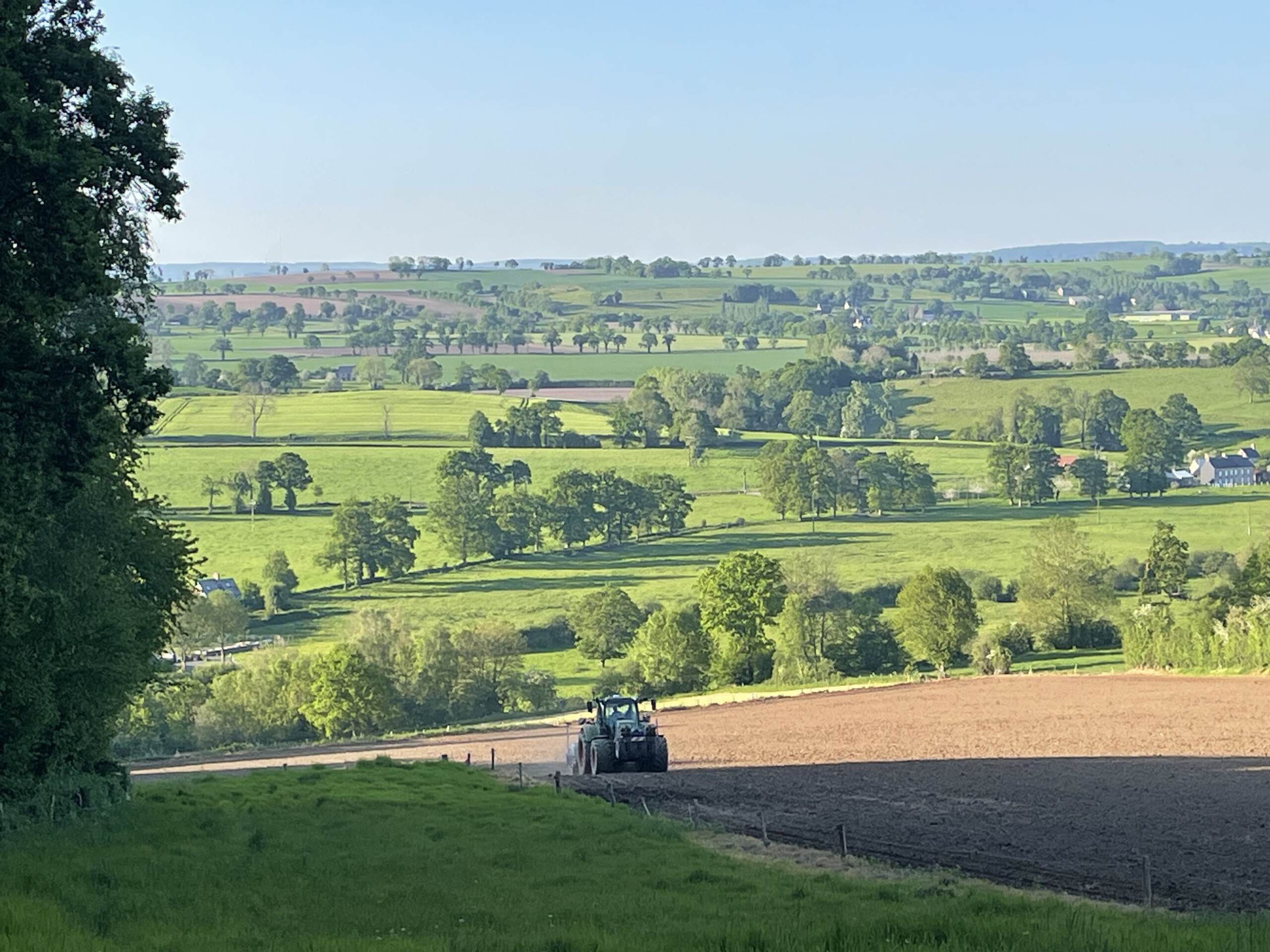
2.Seed sowing
The soft undulating landscape yields to the tractors. From this harvest, we will have our bread.
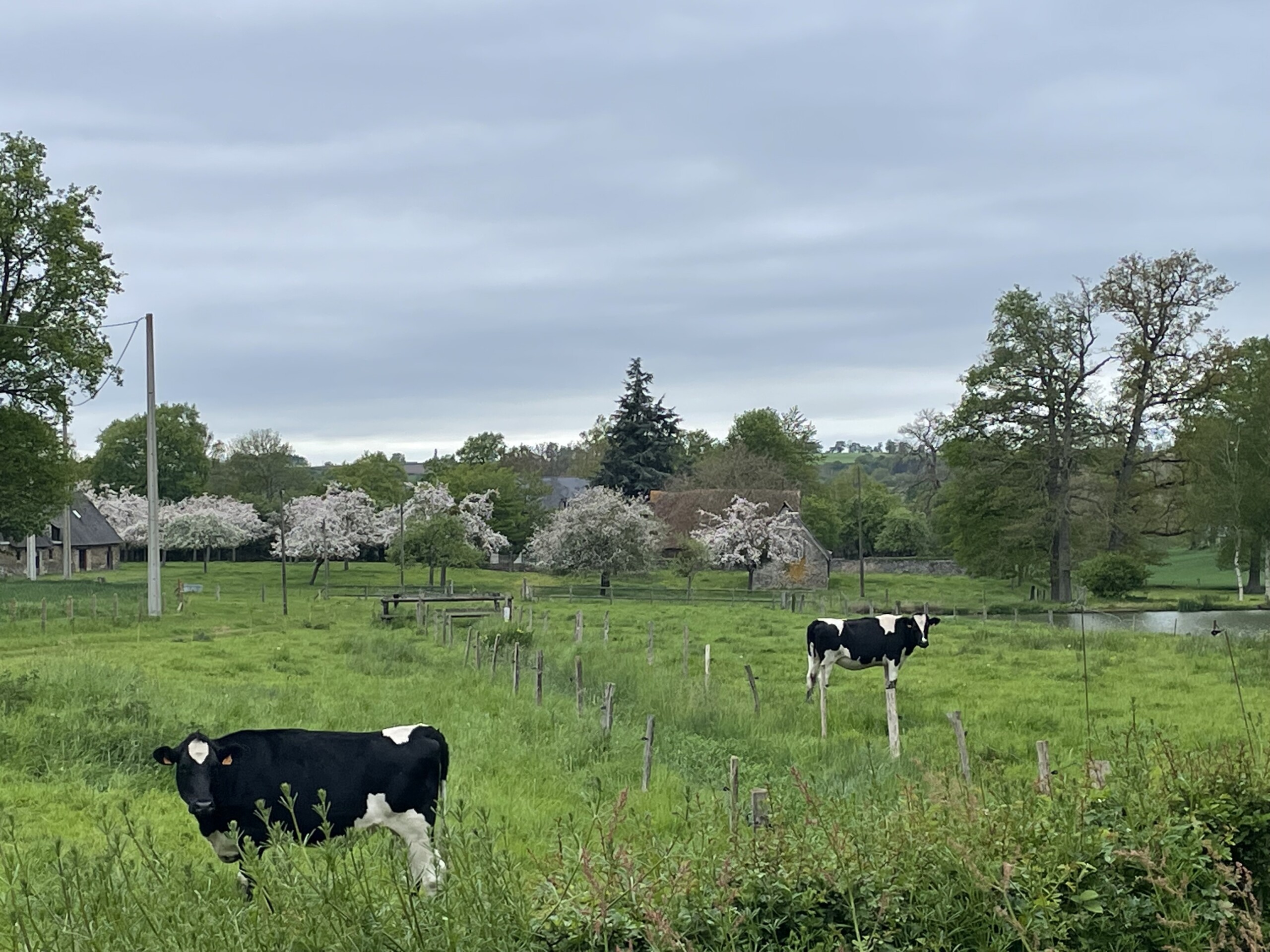
3.Wet meadows
Following winter’s floods, these riverside fields are the first to welcome grazing cattle. Here the cows feed in the apple orchards, part of a Normandy tradition called “Pré Vergers” (orchard fields) in which the cows help fertilize the trees and pat down the soil to prevent rodents from eating tender tree roots.
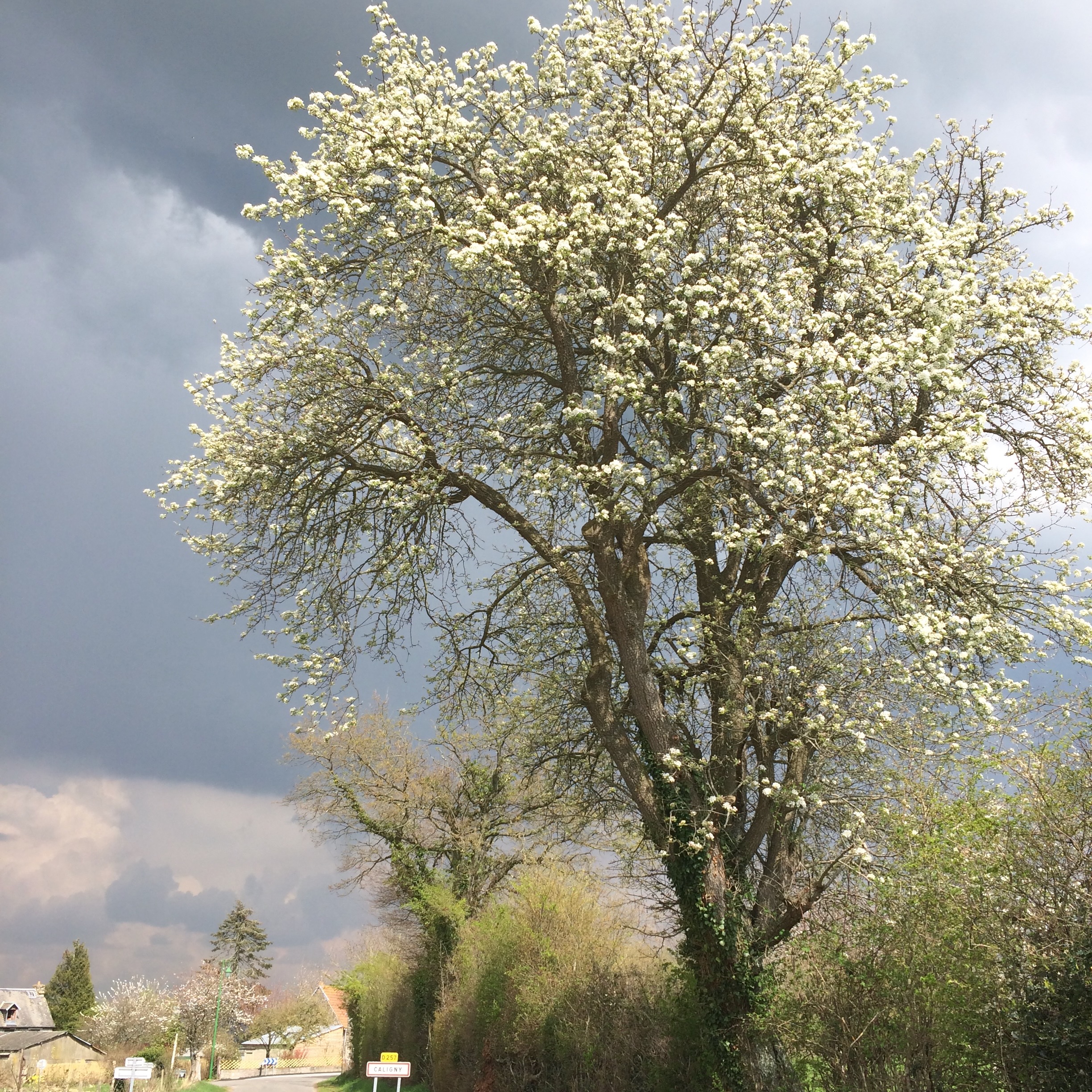
4.Pear Blossomsjpeg
A stately pear tree in magnificent blossom stands sentinel at the edge of our village of Caligny. For most of the year it’s never noticed, as it’s just one more tree in or out of leaf.
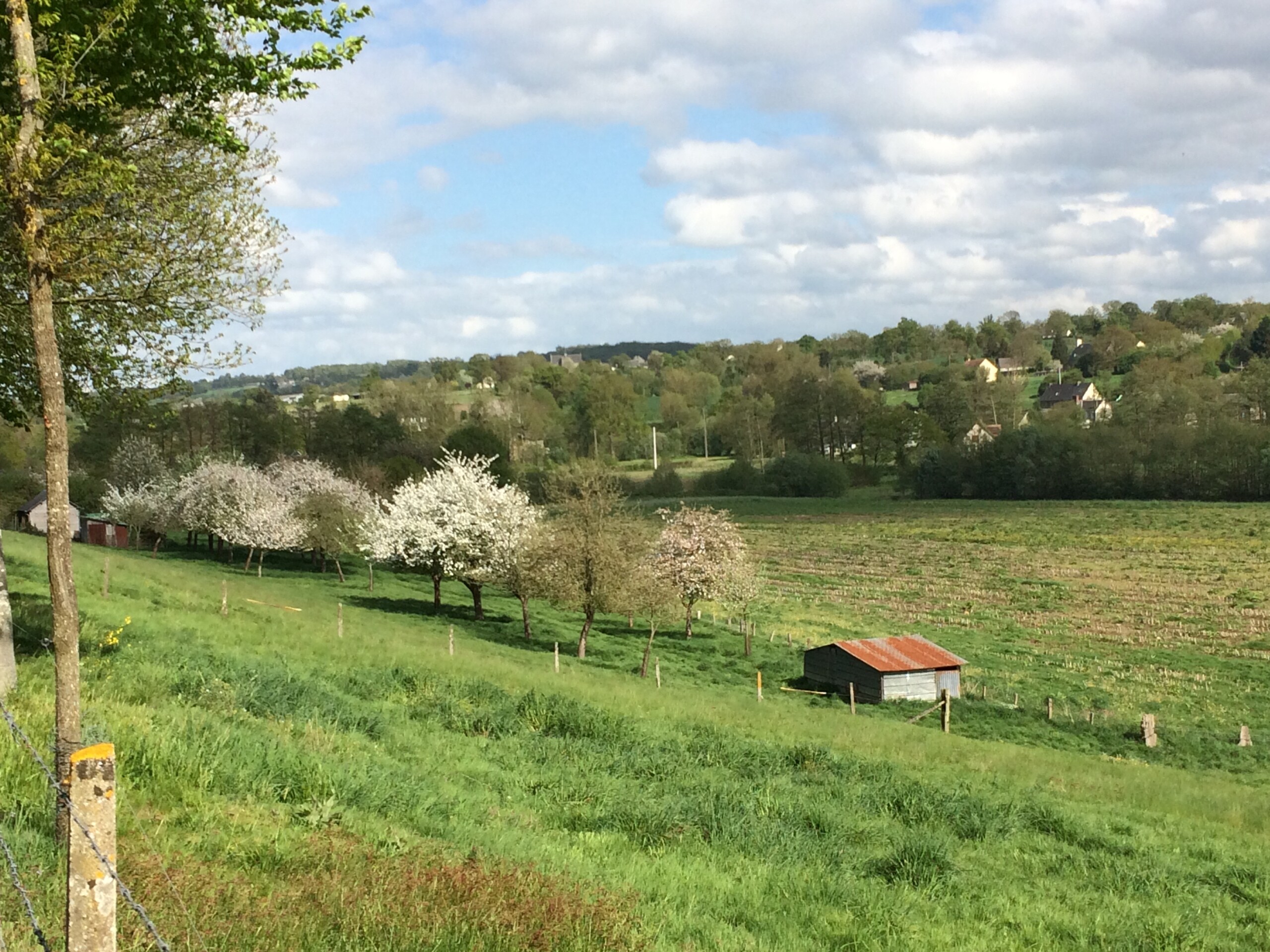
5.Our valley
Our valley.
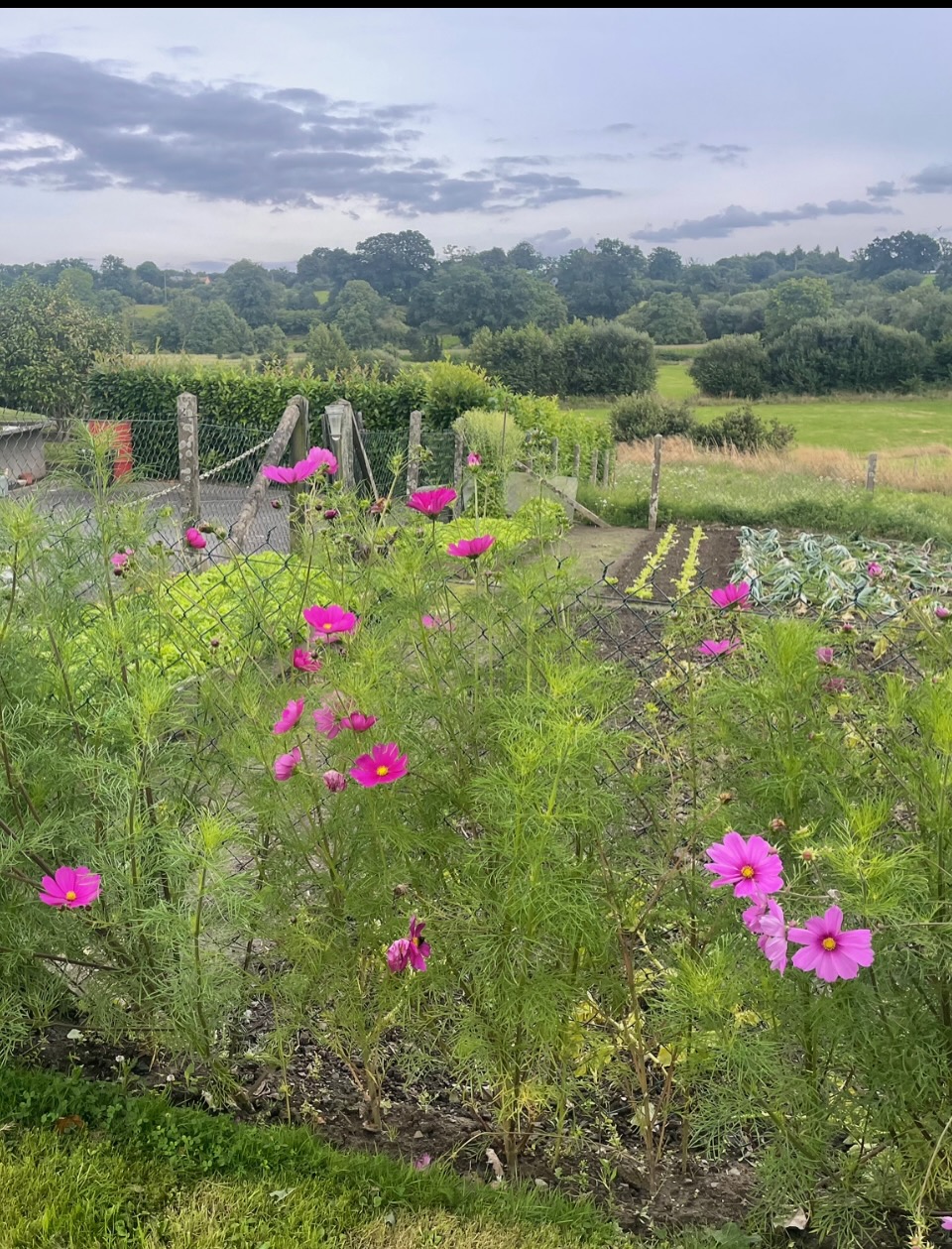
6.Potager
Our 90-year-old neighbor’s well kept vegetable garden. He camouflages the chain-link fence with an array of cosmos.

7. climbing roses
Climbing roses cling to a corner of our 1903 brick home on a late afternoon in June.
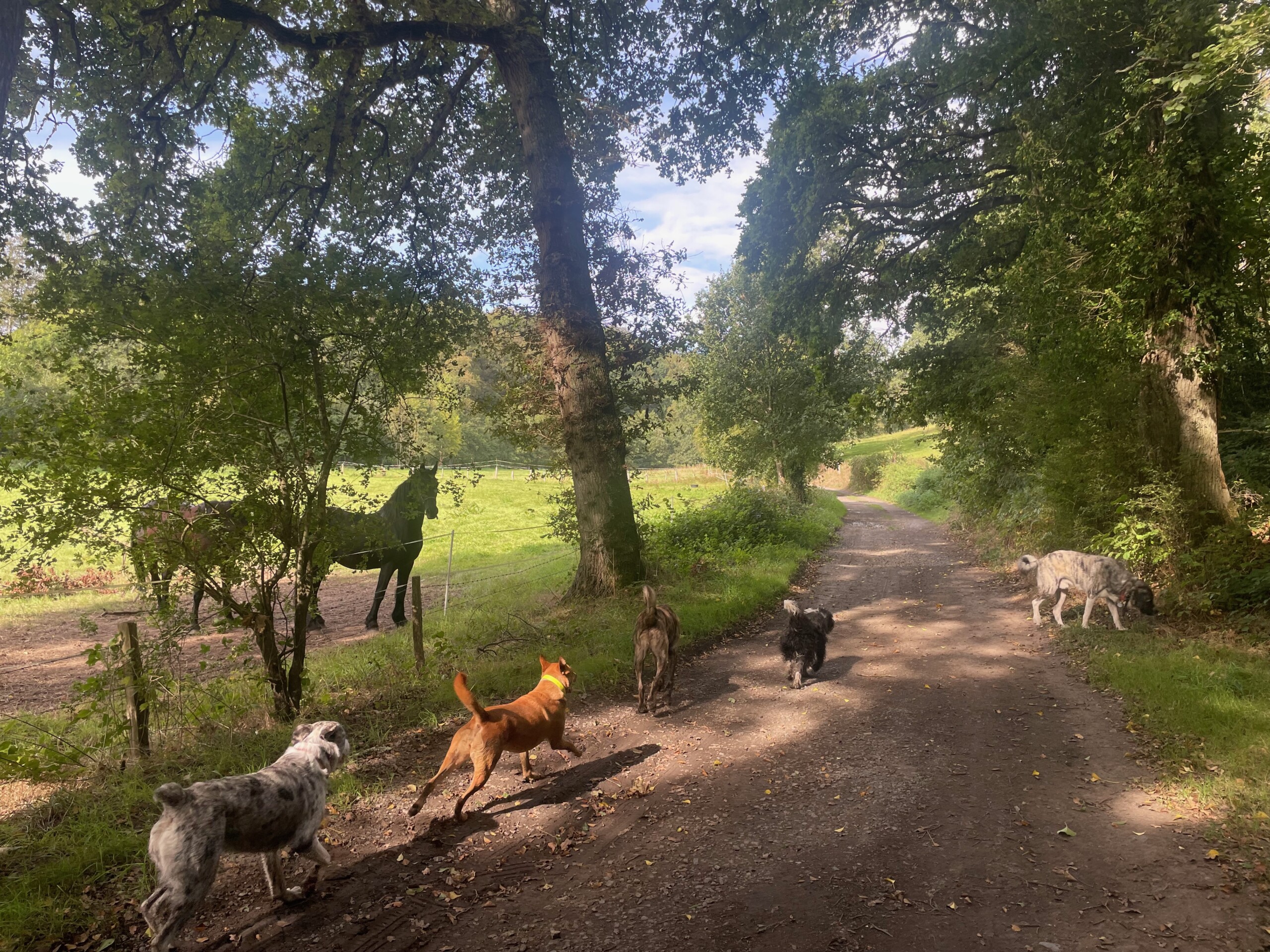
8.The Chase
Dogs experiencing the joy of the pack and the thrill of discovering new scents on old trails. Libby, my dog, second from left, is never happier than when with her friends, a “Meutte des Mâtins Espagnols” (a pack of Spanish mastiffs). Here, they race past a small group of curious equine onlookers. “La Chasse” (hunting) is a traditional activity in our area during autumn and winter, although we do not partake.
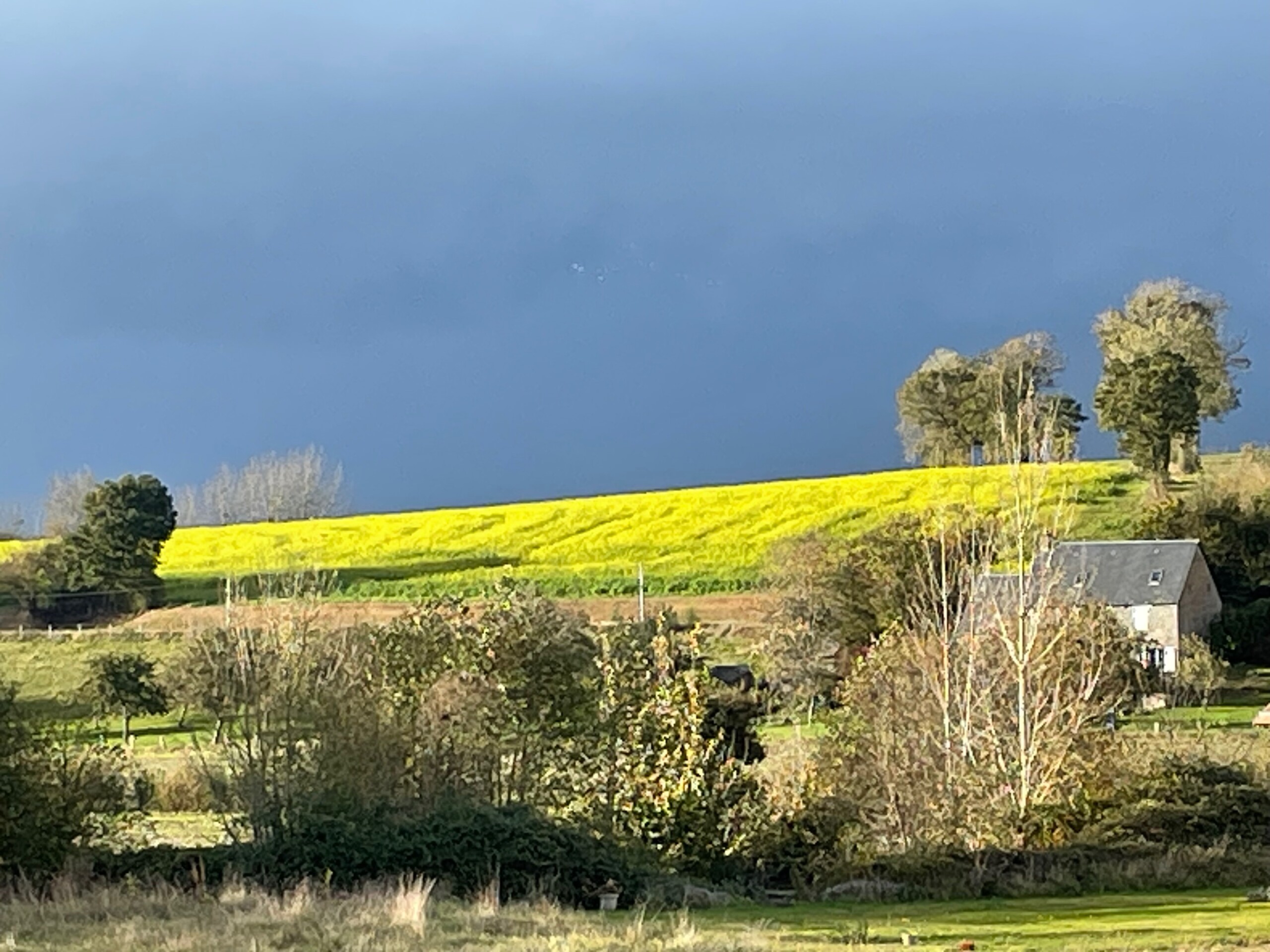
9.Rapeseed
Colza (rapeseed) in flower. Rapeseed oil is used in the diesel engines of the SNCF trains as well as for frying the frites.

10. Mum in window
Mom in the window. I was glad to capture my beautiful mother-in-law, Marie Robinson, at the window during her last visit to us in 2020. Marie passed away last June at the ripe old age of 90.
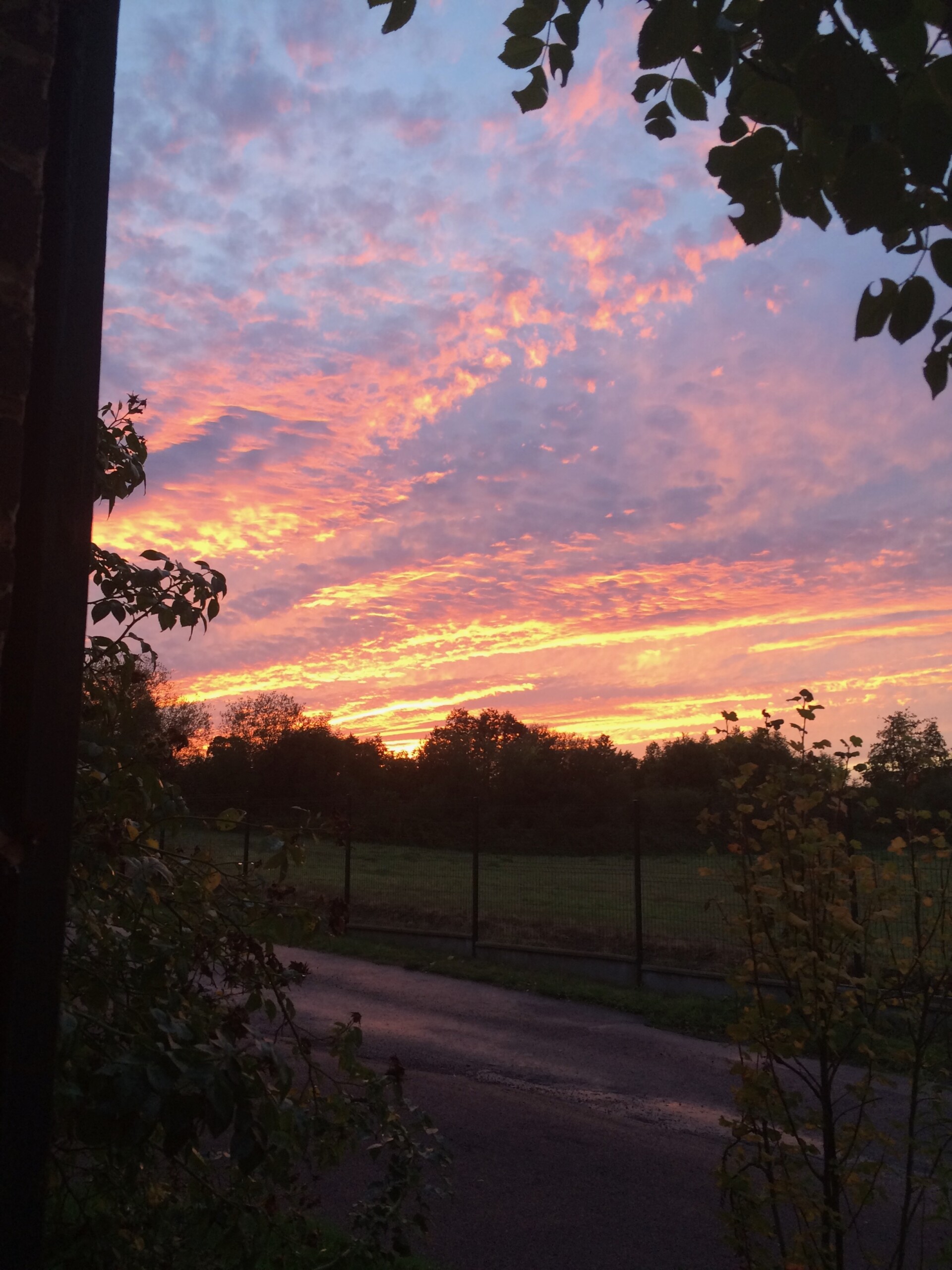
11.Sunset
I admit to being somewhat of a sunset snob. Growing up in Manhattan, I consider the golden hour over the Hudson River to be unrivalled, but the “Coucher de soleil” (literally “going to bed of the sun”) in our hamlet is pretty splendid.