There are risks to picking up sticks and moving to a foreign country, and a zillion questions arise: Am I ever again to feel comfortable conversing? How shall I manage the tax and social security systems? Can I remember that “16h” is the same as 4 pm? Why are there at least five different types of high school diploma? Will my old friends forget me?
In an effort to balance out the feeling of apartness, I looked for commonalities: in the history and shared Franco-American ideals of democracy, freedom of speech and religion, and right to assemble and protest. “Liberté, Égalité, Fraternité,” France’s national motto, had a great ring to it.
After many years living in rural Normandy, I still struggle with some of the challenges mentioned above, but this summer’s visit from my buddy from primary school and her sixteen-year-old son, assured me that strong friendships can hold. Jane and Oskar arrived by train from Paris, following a few bustling days there during which Oskar seemed to make the city his own. An enthusiastic runner, he found his happy place jogging on an Olympic track in the shadow of the Eiffel Tower. Then, with a full week of Normandy outings planned, our intrepid sixteen-year-old came down with “une gastro” as our local pharmacist flatly declared — a stomach bug that would last from 3-5 days.
It was a question of priorities. We had already made the tough edits to our agenda, leaving Mont Saint-Michel and the Bayeux tapestry on the cutting room floor (to adopt an apropos analogy for Jane, who is a documentary filmmaker).
By the end of day four, Oskar was feeling back to his old self, and as we had time for only one touristic outing and the weather was delightful, it was decided that the Normandy D-Day landing beach known as Omaha Beach would offer the most impactful experience for Oskar. It was here on June 6, 1944, that more than 34,000 American soldiers came ashore to fight the German troops.
Every U.S. high-school student would certainly study World War II and the Allied landings, or had perhaps watched the harrowing nine-minute continuous shot in Spielberg’s “Saving Private Ryan,” depicting American soldiers storming the beach — arguably the worst ordeal of the D-Day operations, during which the lives of some 2,400 young men were lost.

1. Sacrifices
“What is the difference between patriotism and nationalism,” Oskar posed this question to my son, whom he has known since he was very young. My history major son had just phoned up and had joined our conversation on speaker phone. A great question, I thought.
2. Full on
My son offered an eloquent stab at an answer: “Patriotism I would describe as pride in belonging to a country and what it stands for and represents. Nationalism would be the weaponized form of patriotism: that is, a use of patriotism for political ends to justify exclusion, discrimination, and oppression.”

3. The Spirit of American Youth
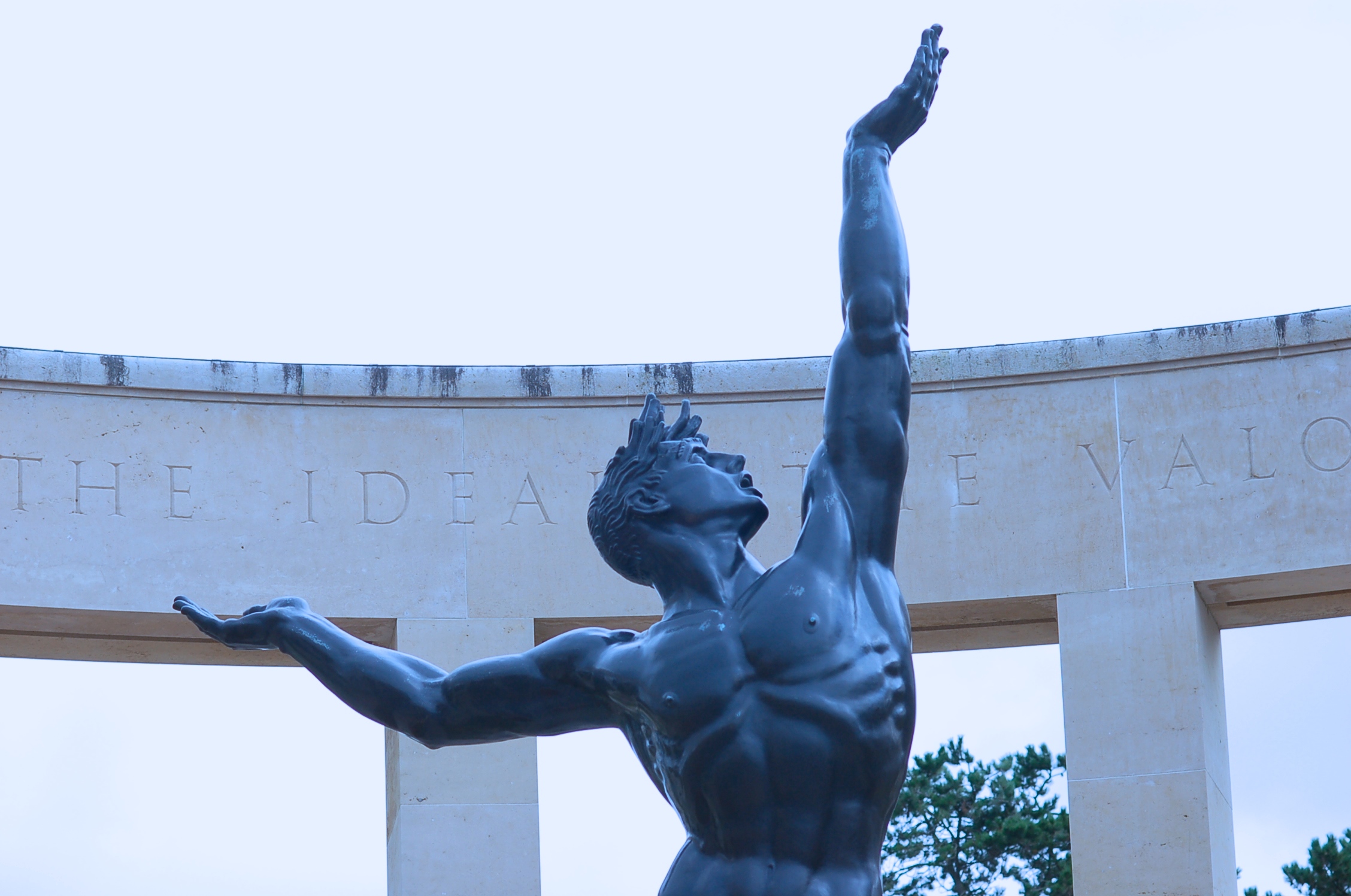
“The Spirit of American Youth Rising from the Waves,” the 22-foot (6.7-m) bronze statue by American sculptor Donald De Lue is the memorial’s focal point. It was unveiled to the public in 1956.
4. Reflecting Pool
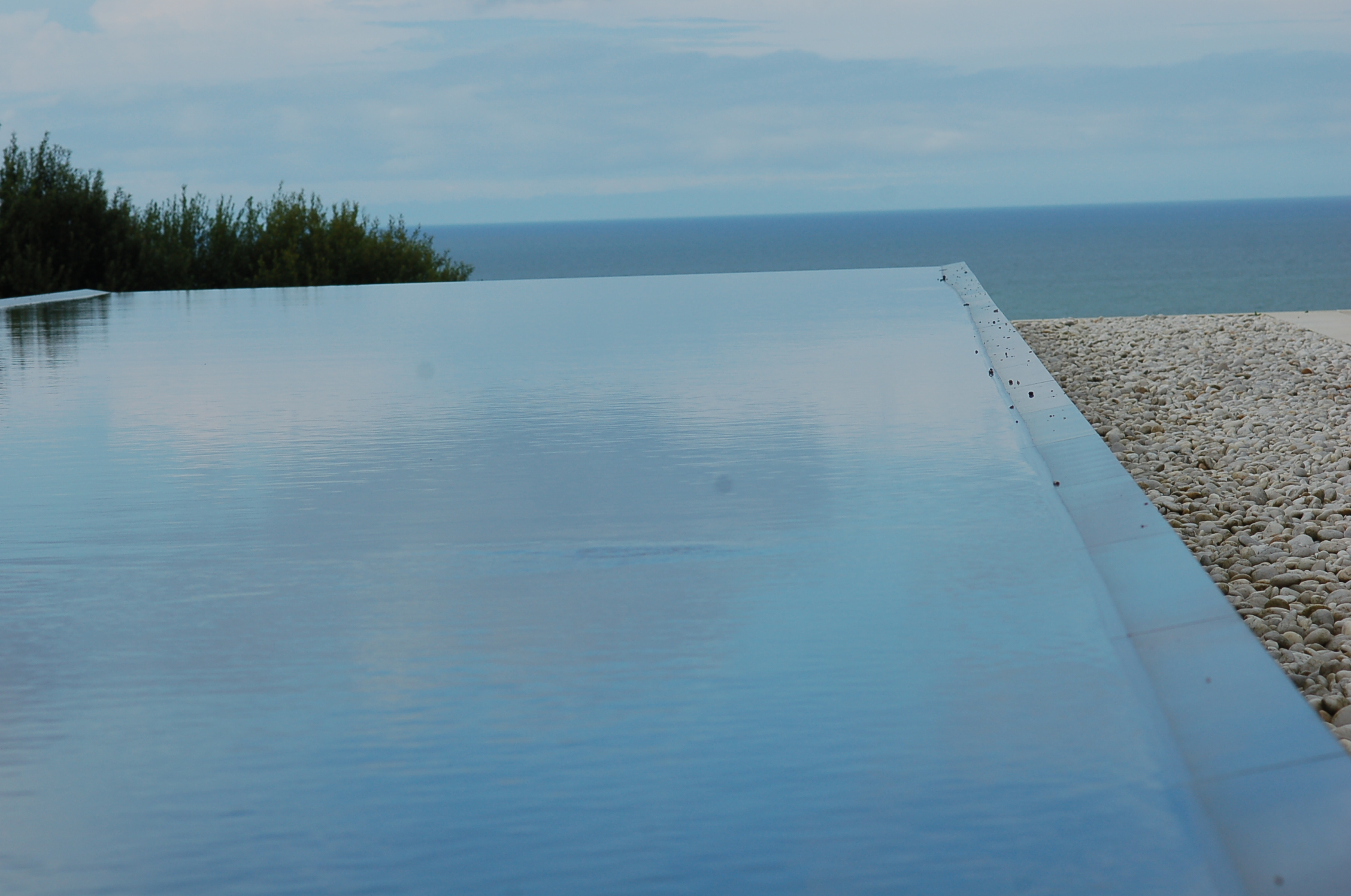
The reflecting pool leads away from the memorial and carries one visually out to an infinite terrain of baby blue.

5. Tender colors
Tender summer growth frames the view out to the Channel.

6.Ideals
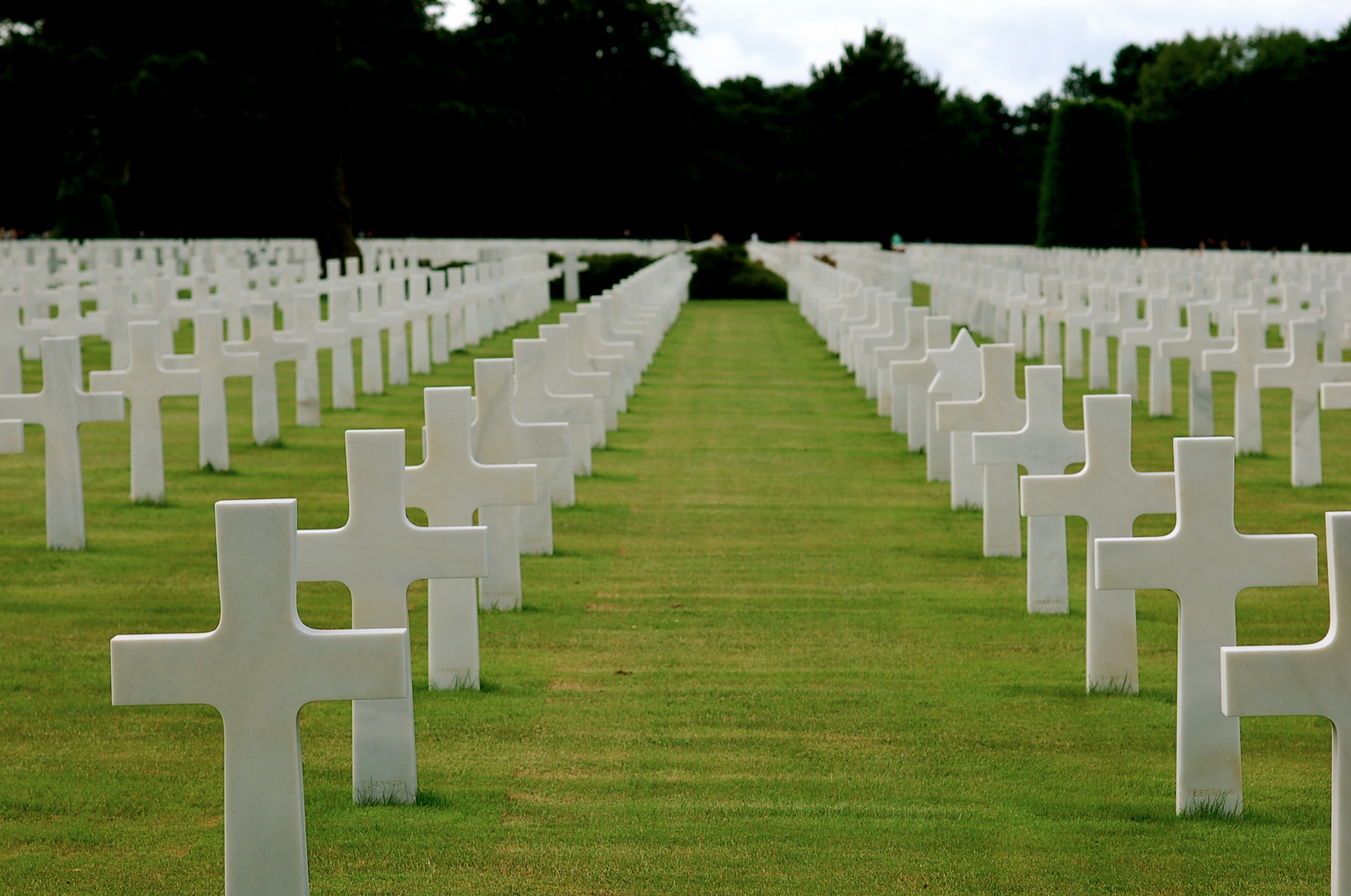
The American Cemetery covers 172.5 acres and contains the remains of 9,388 military dead, most of whom were killed during the invasion of Normandy.
7. Oskar face
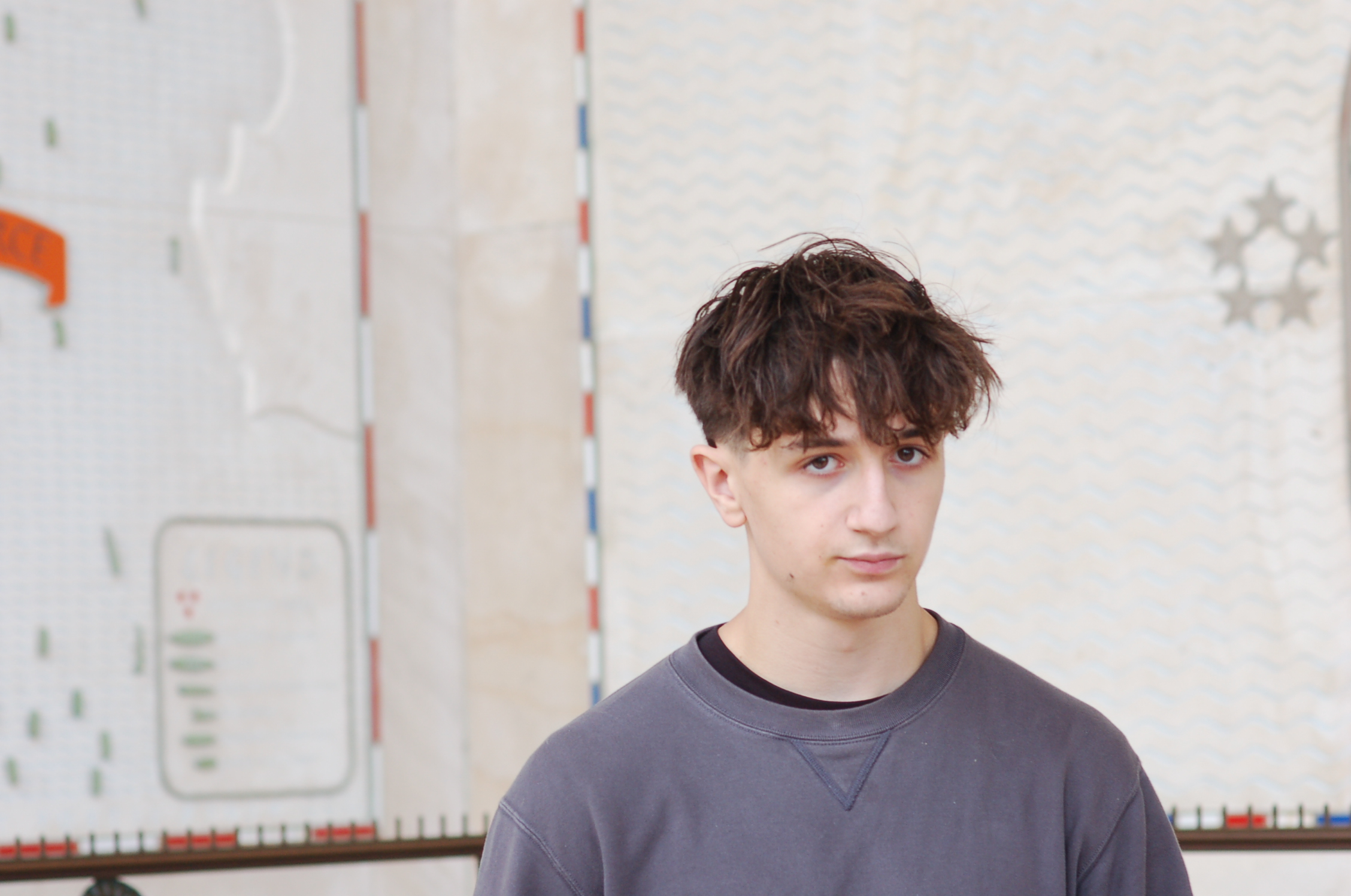
Oskar stands before a map of the Normandy landing beaches. Five in total: Sword Beach and Gold Beach for the Franco-British sector, Juno Beach for the Canadians, and Omaha Beach and Utah Beach for the Americans.

8. Oskar reflecting
“I was taking in the immense ammount of deaths that occurred,” Oskar reflected. “And just thinking about how such a brutal and bloody landscape has now transformed into a nice and clean museum.”
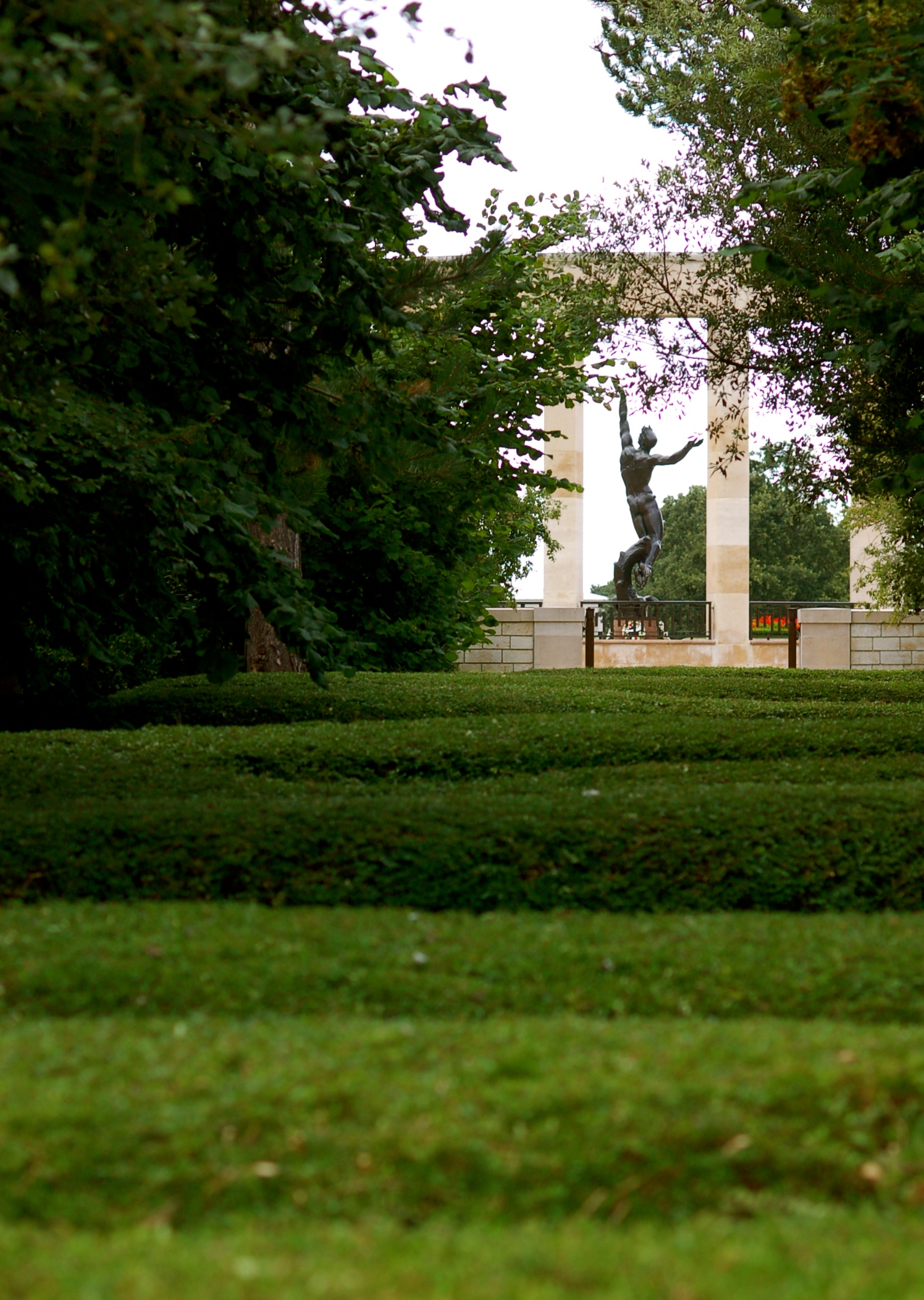
9. Undulating Green
I was struck by the undulating green waves created by the hedges. It was a last view as we were being shuffled out at closing time. One of the guards told me in an aside, I was one of the few people he had seen to notice that view — a great glimpse of the statue through the tree boughs. He worked as a phographer in addition to security at Omaha Beach.
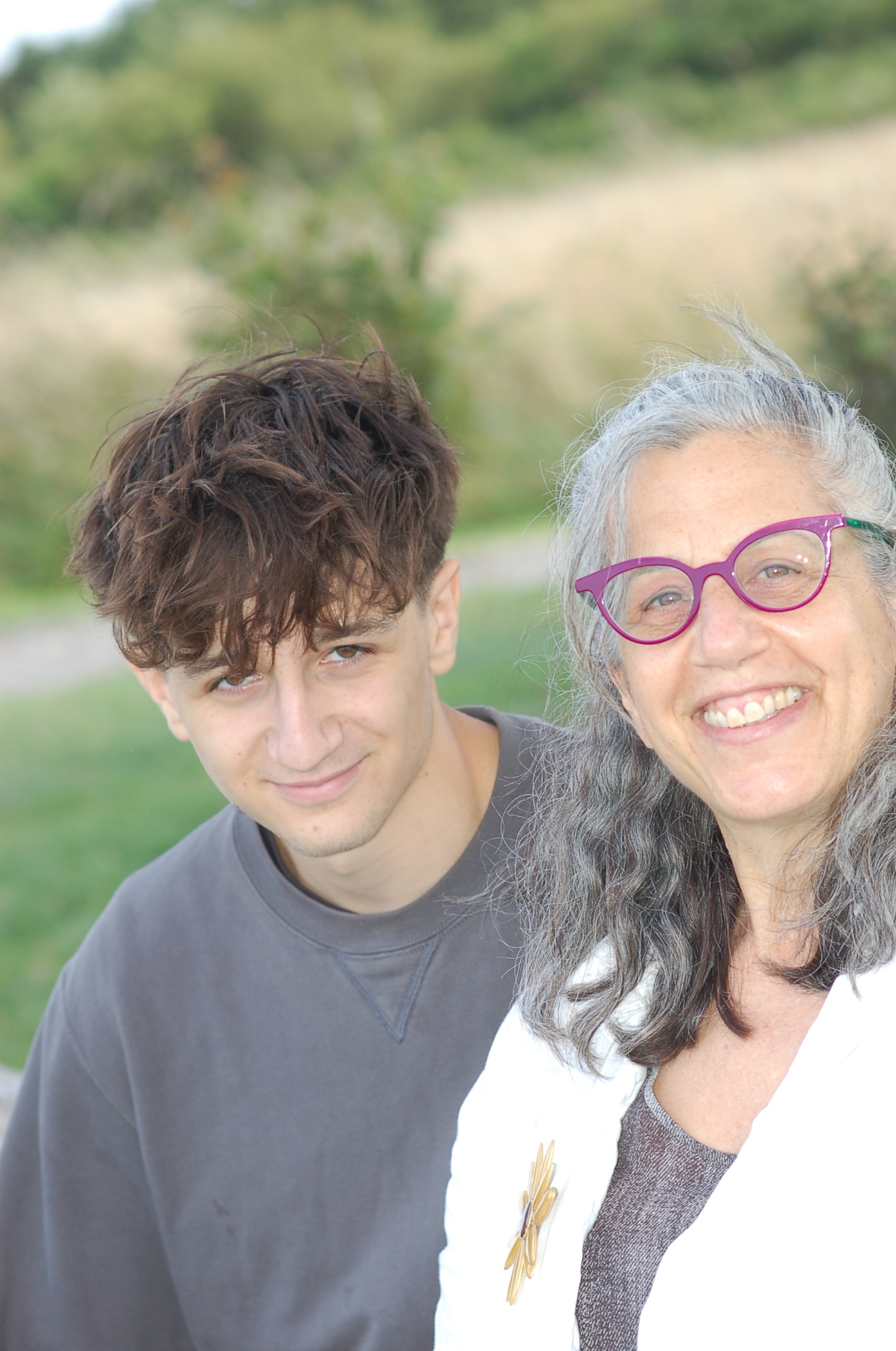
10. Jane and Oskar
Mother and Son: “I was struck with the idea that travel inspires a desire to connect to place,” Jane texted me later. “And connecting to place often involves history — losses suffered and . . . the value of life.”