
Conspiracy theories are a dime a dozen and in the light of day rarely withstand serious scrutiny. But when the protagonist at the heart of the presumed plot is a Hollywood screen legend with romantic ties to a philandering American president, no amount of speculation, however fanciful, seems completely off limits.
Film goddess Marilyn Monroe died 63 years ago on Monday, August 4, likely in her bedroom in Brentwood, a suburb of Los Angeles (other claims assert she died en route to the hospital). The coroner first ruled her death a probable suicide, and toxicology reports found an enormous quantity of barbiturates (plus an old-fashioned sedative — chloral hydrate — and alcohol) in her body, apparently enough to kill her several times over. However, it was later revealed that the chief investigating officer suspected foul play from the beginning and that other details relating to Monroe’s demise — such as time of death, witnesses’ accounts, and that it must have occurred quickly, unlikely in the case of an overdose — had been suppressed from the public.
Film goddess Marilyn Monroe died 63 years ago on Monday, August 4, likely in her bedroom in Brentwood, a suburb of Los Angeles (other claims assert she died en route to the hospital).
Moreover, other than Peter Lawford, a close friend of the Kennedy clan (and described by his former wife as a “pathological liar”), all who had spoken with Monroe in the hours leading up to her death had found her cheerful, not depressed, despite past episodes for which she had been hospitalized during the previous year. No one has pointed to specific evidence that Monroe was murdered, but the temptation to view her as a “victim” of someone or something — of Hollywood, of fame, of men, and of the Kennedys, in particular — has remained strong. She was a vivacious and brilliant but emotionally vulnerable woman who continually struggled for recognition and respect despite an adoring public and male suitors galore.

Among Warhol’s neon homages.
If anything, her tragic and mysterious death has magnified her persona, transforming “Marilyn” into an icon. She embedded the image of the blonde sex siren deep into the American popular psyche and more than a few subsequent pop stars, everyone from Madonna to Britney Spears, owe their celebrity appeal, in part, to her. Andy Warhol realized early on that Monroe had transformed beauty and glamour into mass-market commodities like no one before her — and perhaps no one since. She was the postwar Venus, splashing into comfortable white suburban living rooms riding a wave of unprecedented economic prosperity. She symbolized all the daring, dark, boundless, and forbidden promise of the emerging “American Century.” And her sudden passing, along with the assassination of John F. Kennedy a year later, seemed to suggest just how fleeting this vaunted “epoch” in human history would prove to be.
Monroe’s film career is often disparaged or treated as a mere adjunct to her bombshell image. And perhaps with some reason. It’s hard to watch her brief screen turn as Miss Casswell in “All About Eve” (1950) — playing opposite film greats like Bette Davis and Anne Baxter — without wincing at her depiction of the “dizzy,” hapless blonde at the mercy of a venal man’s whims and flattery. But within a decade, she had turned the tables. In “Gentlemen Prefer Blondes” (1953) and “Some Like It Hot” (1959), she ensnared not just her Hollywood paramours but American film-goers with a “dizzying” spectacle of her own. Pity then, that she died so soon after finally realizing her dream of being treated as a “serious” film actress. In “The Misfits” (1961) with Montgomery Clift and the ailing Clark Gable (in his final film role), Monroe portrayed a restless divorcée clinging to brooding and troubled men against the backdrop of the fading American West. The film, haphazardly directed by John Huston, who was drunk during much of its filming, defied many American movie conventions and was a classic “Box Office disaster.” Despite that bomb, Monroe herself had received a coveted Golden Globe for her leading actress performance in “Some Like it Hot” just a year earlier.
In the end, Monroe, like so many women of her time, clearly desired more from her career and her passions, and, by the end of her life, she had become trapped between her public image and her private desires. She‘d figured out how to parlay her beauty and charm into global celebrity, but not even the admiration of millions the world over could keep her private demons at bay. Untreated childhood sexual trauma, coupled with her descent into alcohol and drug abuse, may well have doomed her to a psychic misery deep enough to question the value and meaning of her life. Many other shining superstars, including Elvis Presley and Michael Jackson, have gone down the same path of self-destruction that Monroe did. There’s an old saying about such blazing personalities: the candle that burns twice as bright lasts half as long.

The Latin inscription on Monroe’s Brentwood hacienda, from the family crest of previous owners, translates roughly to “I finish the course (I persevere).”
Thanks to a number of fine biographies and remembrances, we now know Norma Jeane Mortenson was no mere victim. She was a woman of enormous vitality, charm, and resilience who overcame fearsome odds. And by age 36, she had changed the way American men and women looked at each other and the way the country looked at itself. There were other screen beauties of the 1950s that captivated men and the public — Sophia Loren and Jayne Mansfield among them (and Mansfield, like Monroe, died tragically) — but our memories of them have faded with time. But Marilyn was no mere “pin-up girl,” a bombshell for men to fantasize about lustfully. If we still adore her, and can’t quite let her go, it’s because, in an uncanny way, she still reminds us so much of ourselves. Amid her blazing blonde beauty, she never seemed distant and unreachable. She was a joyful goddess, not a temptress, an icon who, like Evita, never seemed far from commoners.
So let other celebrities soar — and fade. The great Marilyn, our beloved Marilyn, will persevere.
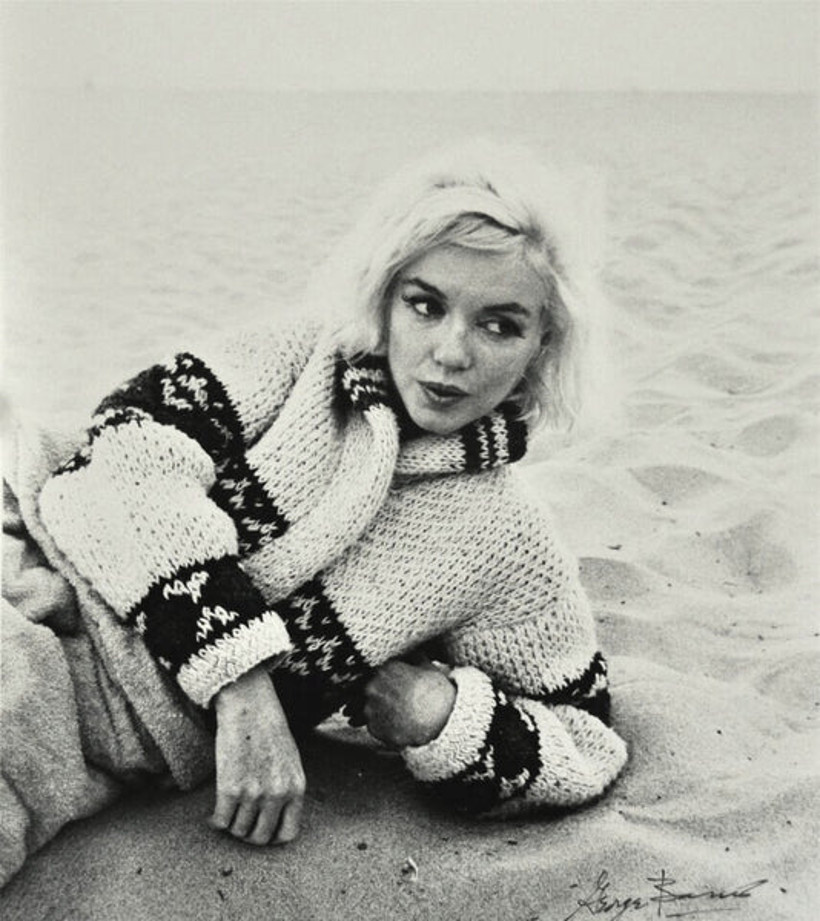
In June 1962, having just wowed the nation by publicly flirting with JFK (remember “Happy Birthday, Mister President”), Monroe decided to flip the script. In her last photo shoot, just weeks before she died, she asked one of her favorite long-time photographers, George Barris, to capture her frolicking at the beach. In dozens of snapshots we see a Marilyn in rare form: dressed down in shorts and a sweater, wearing little makeup, and gazing warmly but modestly at the camera. Her smile is soft and sweet, and she seems far from dazzling. In some shots she stares off into the distance, wistfully, it seems, and she’s shivering. This isn’t Marlilyn, it’s Norma. It’s her final close-up, her parting gift to the nation. And perhaps to herself.
So let other celebrities soar — and fade. The great Marilyn, our beloved Marilyn, will persevere. Whatever she was ultimately looking for, and perhaps never found, we can still see in her remarkable ascendance and sudden fall something to lament and grieve but still embrace tightly. For a brief nostalgic moment, America can shine incandescently again, our lost innocence found, our inner beauty intact. We’re Marilyn, for all eternity.
