Among film connoisseurs, one of the most abhorred techniques is the montage. Some critics consider it a cardinal sin, an admittance by the filmmaker that they have no idea what to do next. In other words, a cheap way out. And yet many a film is saved by the insertion of a quick burst of short clips that advance the narrative, show some sort of growth or transformation, or merely denote the passage of time.
But that feeling that viewers sometimes experience when seeing a montage — that feeling of being cheated — remains; just think of the number of films you’ve seen that have pop-music–scored sequences, pointless lovemaking by candlelight, drug-induced hallucinogenic journeys, and most likely you’ll recall that sense of dissatisfaction. This reaction, however, need not be a given. In the hands of a filmmaker who understands the power of a deftly assembled sequence of images combined with carefully selected sounds, the montage can amount to a moment in a film that stands almost by itself, as if on a ledge, overlooking the narrative and infusing it with the necessary tonal or emotional aroma.
Early pioneers, such as Sergei Eisenstein and D.W. Griffith, introduced montages that provided additional information about events taking place simultaneously. Later on, directors like Stanley Kubrick and Francis Ford Coppola used them to create a movie within a movie. Some, like Steven Soderbergh, as in the “Ocean’s” movies, have used the technique to foreshadow a heist the characters are planning.
But montages do not necessarily have to follow a linear narrative. Early Dadaist, Surrealist, and later Avant-garde and other experimental filmmakers took the idea to extremes by using random, unassociated images for their own sake, rather than advancing any narrative.
In any event, these exceptions have shown that there’s a difference between using montage as just a handy device and using it as a means of artistic expression.
Most montages may be scorned, laughed at, and forgotten, but this work by a master such as Wertmüller can be considered impervious to contempt.
The opening montage of “Seven Beauties,” the 1975 film by Lina Wertmüller, is one example. The first five minutes of the film is full of actual footage depicting World War II in all of its blinding chaos and far-reaching devastation (think relentless bombing and costly aftermath), as well as the widespread influence exerted by the individuals most associated with initiating the war (think Hitler and Mussolini).
If the line between journalism and propaganda is oftentimes obscure, this montage buries the line. Wertmüller’s intention at first might be assumed to be the dissemination of information, but then we soon realize we are being duped a bit. More than the mere reporting of events, it is a history lesson on the horrors of war. As we witness infamous Fascist dictators pontificating and the goliath assemblage of troops and machinery of war, plus the throngs of supporters, it reminds us of the power of occupying minds vulnerable to manipulation.
That distinction becomes less obfuscated as we listen to a speaker narrating what at times appears to be a cynical poem aimed at those who might have stood by and allowed the war to take place as well as to those in the future not paying sufficient attention — and so letting history repeat itself. The speaker, rhythmically proclaiming “Oh yeah” at the end of each line, might touch a nerve for those who are true to their own moral sensibilities, those who prefer to hear “Oh no” instead.
At what turns out to be the apogee of the mayhem and carnage, the montage then suddenly and awkwardly, much like the actual moment of a battle’s end, overlaps with the clearly fictional narrative of the movie. Maybe there is no way to truly tell the difference between truth and fiction, but as viewers, we can’t help but feel that we had better be on our guard.
Images are not truth. They often suggest it, influence ideas about it even, but they are still just the representations of the subject matter. In the case of the montage in “Seven Beauties,” perhaps it suggests the absurdity of a tragic reality, one that didn’t necessarily have to be. But the brilliance of its use is that the montage becomes understood as an act of exegesis in the form of the explanatory fictional narrative that follows.
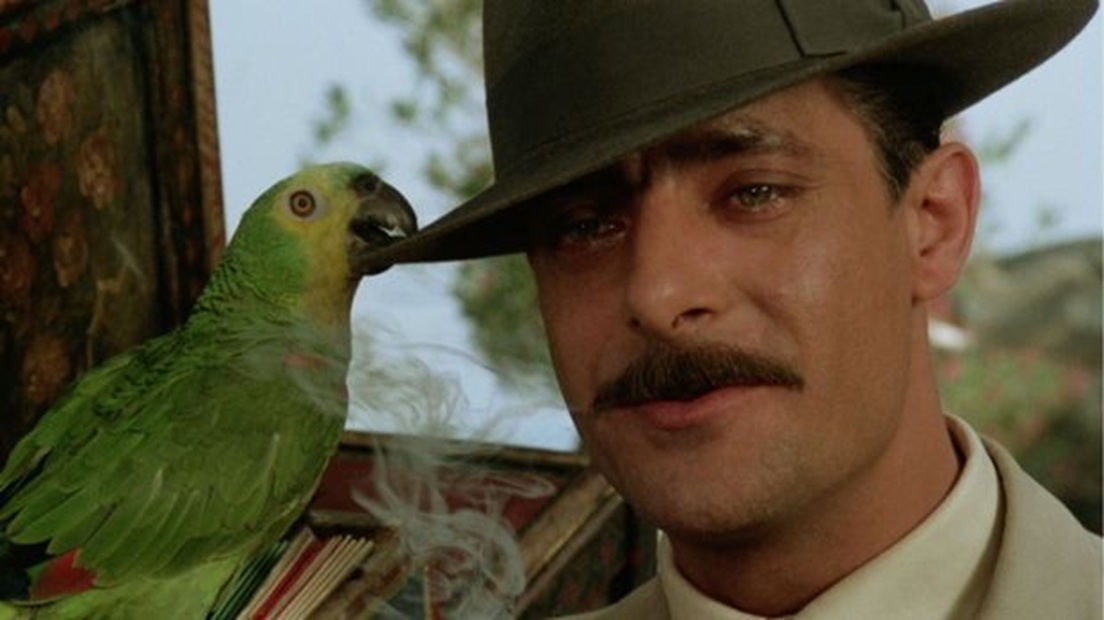
As much as anything else, “Seven Beauties” is a film about the confounding implications of reality. These are portrayed mostly via the main character, Pasqualino, played organically by Giancarlo Giannini. Pasqualino is a small-time Neapolitan mobster, though truly more of a wannabe. Right from the start, everything about Pasqualino is questionable and false, attributes Wertmüller makes no apologies for, since folly can best be seen as what it is when allowed to roam freely. And we can’t help but really see him for what he is, especially since the montage has already removed any guideposts for casual viewing.
Most montages may be scorned, laughed at, and forgotten, but this work by a master such as Wertmüller can be considered impervious to contempt. It will stand up over time to remind us of how dynamic serious filmmaking can be. Oh yeah.