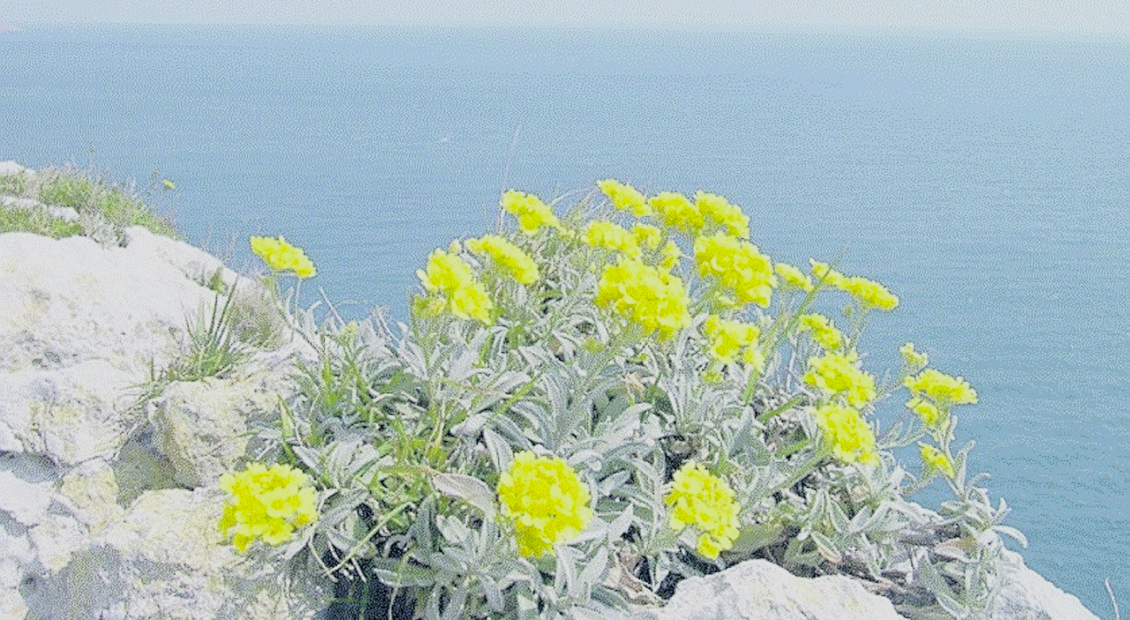
We waited all winter long for the first warm of spring to chase away the chill. There’s a lot of talk about the mild southern winters, but in my experience it amounts to legend. High stormy winds blowing from Africa dump their humidity charge on the coast and inland with torrential rains, and the northern winds emanating from Siberia can bring temperatures down to zero or minus-zero centigrade. I felt colder in my native southern village than in the snow in Budapest. Doctors suggested that the poet John Keats move to Italy, where the mild Mediterranean winter would have operated miracles on his poor health. He died in Rome before spring.
It worked — I never tasted a more exquisite medicine. And I confess that I almost looked forward to getting ill again!
After months of cold that went right through our bones and wet weather that made everything in the house, including clothes and bedclothes, smell musty, we would open the windows to let in the sun. Most of the houses at the time had only a fireplace and no central heating. The fire would keep burning for some time, a few weeks at least. Mum would fill braziers with glowing embers to warm the other rooms. However, with the coming of spring I was eager to venture outside again and wander in the countryside at the back of the house. We lived in the far outskirts. The meadows were already flowering: chamomile; calendula; delicate shoots of wild fennel; bushes of yellow African daisies, already tall; yellow broom; and small orchids typical of the Salentino scrubland that botanists call garrigue. The yellow corollas of wood sorrel thickly dotted the open fields. I would suck its long juicy stems, vaguely reminiscent of lemon, lying on a carpet of heart-shaped leaves and looking at the clouds riding up in the sky. Lulù, my mongrel, would chase lizards.
The crowns of fruit trees scattered in the fields were a cloud of white or pink flowers. Some were already covered with tiny leaves of tender green.
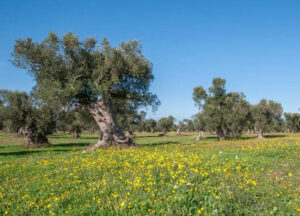
Here, lively calendula thrive among century-old olive trees.
More than they do today, people would go out in the fields foraging. In spring, you can gather all sorts of wild herbs and weeds: wild chicory and charlock grew abundant everywhere. Chicory may be sautéed in olive oil with garlic, black olives, and chili pepper. With a slice or two of hard wheat bread, it makes a delicious meal. Charlock just needs boiling and seasoning with olive oil and lemon juice.
The scarlet petals of red poppies stood out in the green expanse. Peasants used the flowers and the leaves, containing alkaloids, to produce an infusion that encouraged sleep and reduced anxiety and nervousness, especially in children. I think it could be a criminal offense, nowadays, to use them the same way. Harvested before flowering, the leaves are also edible, sautéed in olive oil, with chili pepper and olives.
The tips of asparagus emerged from the thick vegetation of the maquis and were avidly collected by local gourmets. Much more savory than their counterpart grown in greenhouses, they are excellent for a classic Italian omelet.
Salento is the first landing station for birds migrating from Africa. Birdwatching was one of my juvenile passions, and I still like to wander in marshlands trying to capture the occasional heron with my old camera. Luckily, the hunting season is already over at that time of the year.
Against cough and respiratory tract problems common in winter, the root, leaves, and flowers of mallow can be used to make an infusion. As a boy, I was prone to colds, and I remember that my aunt Assuntina, my father’s sister-in-law, would appear with a collection of the above-mentioned ingredients, plus dried orange peel, dried figs, almonds, and dried chamomile flowers, all bundled in a large tea cloth. My mother would boil the lot in abundant water until the liquid thickened a bit and was reduced by half. Then she would pour it in a mug, add a teaspoon of locally produced honey, and bring it to me piping hot to drink for two or three consecutive nights. It worked — I never tasted a more exquisite medicine. And I confess that I almost looked forward to getting ill again! I still use that decoction.
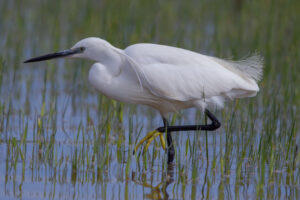
An Egretta garzetta, or little egret, fishes in a pond in southern Italy.
My father used to pick the tender branches of rue, which he put to rest in a couple of bottles of grappa. The infusion imparted digestive and diuretic properties to the distillate. I keep doing that, picking the delicate branches of rue shortly before flowering time. The plant is also known as the “herb of grace.” In the Middle Ages, priests used sprigs of rue to sprinkle holy water to bless penitents and, in general, parishioners before High Mass. The bitter taste of its leaves was associated with the bitterness of remorse after committing sin. On the other end, rue, the plant, is reminiscent of the noun “rue,” meaning regret, sorrow, as in Shakespeare’s Hamlet, “You should wear your rue with a difference” (Act 4, Scene 5).
Easter rites were a climax of spring, culminating in the solemn Holy Wednesday procession and the devotion of the seven churches. Even today, altars in churches are richly adorned with flowers and pots of white wheat shoots. For this purpose, people sow wheat during Lent and keep the pots in a dark room, preventing photosynthesis, so that it grows pale or light yellow-greenish. It represents the body of Jesus in the sepulcher, a symbol of the death and resurrection. Chapels representing the Holy Calvary along the streets are similarly adorned.
Spring also marked the beginning of day trips and picnics in the country. Canonical days were April 25, Liberation Day from Nazi military occupation; May 1, Labor Day; and, of course, Easter Monday, “Pasquetta” for Italians. Dozens of Fiats, their trunks loaded with baking-pans of lasagna, omelets, homemade bread, salami, ewe’s milk cheese, a demijohn of water, and a generous number of wine bottles, streamed out of villages and towns bound for the nearby beaches and the pinewoods. People still keep this tradition, though, in today’s more affluent society, many prefer lunch in a restaurant by the seaside or a trattoria fuori porta (outside the city gates), as we say in Italy. Times change.