
There’s always a danger in making a feature-length movie to expand upon a successful TV series: The narrative arc of the series can easily get lost, offending diehard fans who comprise its core audience. “Star Trek” is one of the more notable examples of success in this area. The TV show only ran for three seasons (1966-1969), but it became a cultural touchstone for viewers, and the 13 movies that became part of the sprawling “Star Trek” franchise magnified the popularity of the series, which had already entered into syndication. It also spawned a second Star Trek franchise, dubbed “Star Trek: The Next Generation,” that was almost as popular as the first. When the two series were collapsed into a single Star Trek movie (1994’s “Generations”), joining the lead actors in each (William Shatner and Patrick Stewart), a certain milestone in popular entertainment was reached.
Star Trek today is more than a pop-cultural touchstone; in some ways, having survived and thrived beyond anyone’s expectation for well over a half-century, it’s come to embody the late 20th and early 21st century’s fascination with space exploration and travel, and the hopeful possibility that new worlds and new forms of life may exist, far better than the one we know.
Something similar, but on a far smaller scale, occurred with the highly popular “X-Files” series, which spawned two feature-length movies that also enjoyed commercial success. Unlike “Star Trek,” though, the first “X-Files” movie was released while the TV series was still in production, emerging between Seasons 5 and 6, arguably a clever way to increase the reach of its TV audience. The movie expanded upon the show’s distinctive mythology about alien landings on Earth and alleged government conspiracies to exploit and cover them up. An “X-Files” sequel was developed and released a full decade later, in 2008, after the original series had run its course. Amazingly, the second film dropped the franchise’s focus on extraterrestrial cover-ups in favor of a more conventional horror mystery but also delved deeper into the personal relationship between the show’s two beloved central characters. It, too, was a smash box-office success.
One might have hoped that the just-released film follow-up to the immensely popular British crime series “Peaky Blinders,” which ran for six seasons over nine years (from 2013-2022), would have duplicated its television precedent’s success. The conclusion of the series had left some fans frustrated, with a number of narrative loopholes still open. And in the interim of seven or so years, its star, Cillian Murphy, had risen from near-obscurity into a global film star, thanks to his widely heralded Oscar-winning performance in “Oppenheimer.” That would seem to offer a wonderful opportunity to bring the original series to a firmer conclusion, while creating the foundation for a future franchise supported by an entirely new generation of viewers. Or so the show’s writers and producers thought, as they eagerly rushed “Peaky Blinders: The Immortal Man,” into production. In the end, [Tommy] was the only Shelby who could keep his brawling drunken band of murderous thieves together, and he was admired and loved — as well as feared — for it.
Alas, their efforts, while admirable, have fallen woefully short. Murphy’s character, Tommy Shelby, was the scrappy and tormented boss of a rogue band of Irish gypsies who survived on the theft of guns from a nearby British armory and the management of warehouses for the illicit transport of contraband. The gang also made themselves useful to Britain’s pre–World War II governments and established a modus vivendi that allowed them to flourish under semi-official cover. Tommy was the charismatic power broker of the Peaky Blinders, a gang so named for their penchant for flinging their razor-lined hats at unwitting competitors. Over six grueling seasons, filled with brutal rivalries and ruthless bloodletting, Murphy had emerged as the group’s iconic leader, his cold, ruthless manner and steely gaze masking a thinly concealed rage and borderline sociopathy toward enemies, coupled with surprising tenderness toward family and loved ones. Tommy ruled by sheer feral instinct, and when the chips were down, as they often were, he had a knack for pulling rabbits out of a hat so the family could survive. In the end, he was the only Shelby who could keep his brawling drunken band of murderous thieves together, and he was admired and loved — as well as feared — for it.
The writers and producers of the series could have left well enough alone, as Season 6 saw a weary Tommy deciding to “retire,” leaving the remnants of his family, including his young son, to themselves while retreating to a British castle, ostensibly to write a memoir. But his repose, disturbed by demons and ghosts from his past, became uneasy, and he was advised that his return home after seven years was urgent. The Blinders, now in the hands of his grown son, had formed a wartime alliance with British fascists and seemed to have lost their moral bearings, such as they were. So, in the “Immortal Man,” Tommy reluctantly returns to try to set the Blinders house in order.
In theory, this is a perfectly fine premise — a bit clichéd, perhaps, with a “Godfather”-like father-son battle over the family “legacy” at stake. But in embracing the Blinders’ uncertain future, Tommy, and the movie itself, seem to lose touch with their “roots,” the intangible sense of place, and the mood and characters that powerfully stamped the series. To be sure, most of Tommy’s family is dead or in exile, so the discontinuity is real, but their loss is also why he remains so haunted. The death of the Blinders’ acting matriarch Polly and the tragic murder of his beloved wife, Grace, his two great companions in life, remain unmentioned, and the film simply replaces them with two other women who never appeared in the series. Shelby’s son, who appeared as a youngster in Season 6, is likewise a fresh presence as an adult, but the actor also seems overmatched in his role. (If he’s Tommy’s flesh and blood, you’d hardly know it).
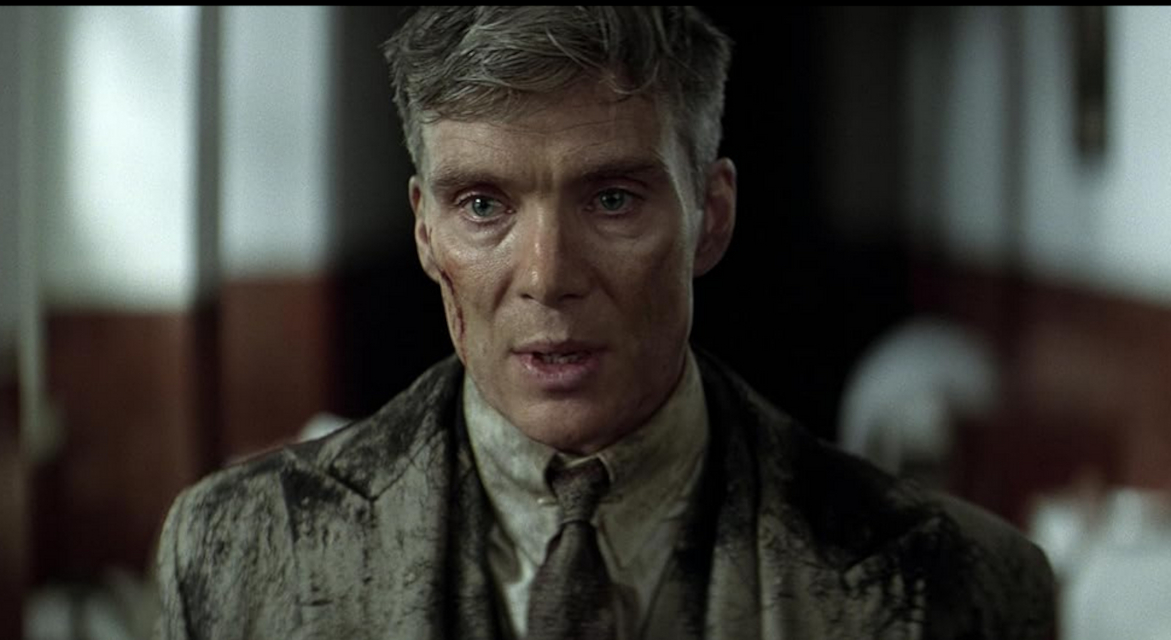
Yet this is only the beginning of problems with “The Immortal Man.” In the film, Tommy comes off as a shell of his former self: weary, battered, self-doubting, and lacking his characteristic swagger. Hardly a man seeking to clean house, restore order, and salvage the family legacy. Murphy himself seems listless in the role, as if he’s just going through the motions, having moved on to greater things and roles (which he has, of course). The two exceptions come early, when Tommy stands up to a nasty detractor in a pub and forces a grenade down his shirt, which promptly explodes, and later when he discovers his son and the two take to brawling in the rain and mud. This is the Tommy of old, feisty and combative, and spoiling for a fight when challenged. These scenes do add a slightly comedic touch to the mayhem, but the rest of Murphy’s performance fails to sustain the quiet explosiveness and irrepressible charm that defined his character in the television series and made him so appealing.
The other characters in the film are also singularly unimpressive. Especially so is the central antagonist, a Nazi-like fascist leader who has ensnared Shelby’s son into an unholy alliance that Tommy seeks to break. The TV series featured some notable villains — including Adrien Brody as the head of a rival Italian gang who squares off with Tommy in several of the series’ most dramatic episodes. There were also some compelling younger villains, mainly the heads of rival gangs, who appeared in Season 6, part of a younger generation of upstarts to the Shelbys, Finn, Michael Gray, and others with whom Tommy’s son has to wrestle. The fascist leader, the ostensible bête noire of the film, barely registers by comparison. He’s practically a cipher, limiting the film’s dramatic tension.
Is Duke feeling wistful about better character arcs or plots not involving Nazis?
The ending of “Immortal Man” seems to exemplify all its weaknesses: the hackneyed plot, the tonal disconnect with the original series, and the sub-par acting. Shelby’s son finally reveals that he’s broken with the Nazis, but Tommy is mortally wounded in a concluding firefight and the two end up embracing each other. In a final grandiose gesture, Tommy asks his son to end his life, and his son, out of filial loyalty, reluctantly agrees. It’s the kind of melodramatic, even schmaltzy, ending one might find in a fable or storybook tale, not in a gritty crime drama that eschews vainglory. Tommy, after all, is a petty mob boss who’s wreaked havoc on Britain for 20 long years. But he’s depicted as almost Christ-like as he perishes, arms outstretched, like a lamb to slaughter. It’s an exalted “heroic” death scene that befits, and perhaps celebrates, an Oscar-winning actor, but it seems over-the-top given the type of character Tommy actually was. The title of the movie seems similarly overwrought. Immortal man? No, just a fallen man, an infamous kingpin perhaps, but one who will soon be forgotten.
Or maybe not. A sequel TV series has been strongly rumored, and by killing off Tommy and just about everyone else from the original series, “Immortal Man” clears the budding franchise of past Blinders glory and introduces lots of younger faces who, in theory, might appeal to a new generation of moviegoers. It’s a huge risk, though, to try to reinvent the Blinders enterprise almost from scratch, without a strong connection to their past, their family icons or the original setting. Other franchises have maintained continuity with their familiar and beloved stars, preserving the mystique of the original series. Will Tommy reappear as a ghost of Blinders past? Probably not. By all appearances, Murphy is anxious to put this early start to his now-flourishing film career behind him. Unfortunately, diehard fans of the Blinders are likely to feel the same way. Blinders had a helluva run, and in Season 6, Tommy himself became a living legend, surviving, however uneasily, in exile. But he’s a martyr now, and a decidedly lesser man for it. Still, dead or alive, his character and Murphy’s peak-level performances will endure.
