
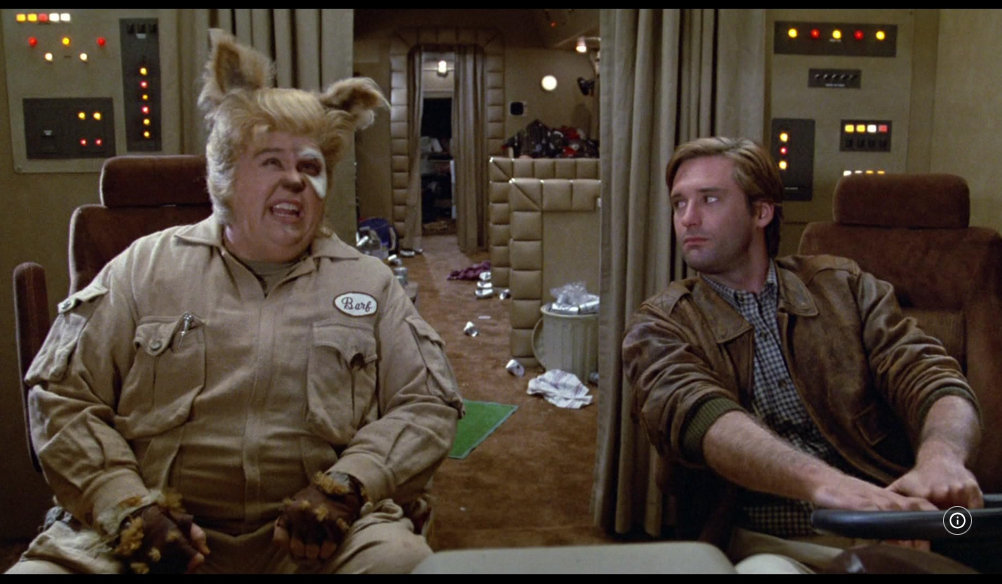
Hollywood actor John Candy wasn’t a leading man, much less a major film star, but when he died prematurely at age 43, in 1994, the grief and mourning among his industry peers was unusually emotional and heartfelt. Candy was remembered in person much as he was in his film roles: as a generous and compassionate man whose warm and disarming presence — and ebullient, self-deprecating humor — made people smile, if not burst out laughing. Candy, it is said, always left people ”feeling better about themselves.” In an industry filled with boisterous, outsized egos, he was a rare personality indeed.
In “I Like Me,” a just-released 96-minute documentary about Candy’s abbreviated life and career, we learn more about how the former stand-up comic — a veteran of the SCTV series and “Saturday Night Live” — came to be such a highly visible presence in such popular films as “Splash,” “Planes, Trains and Automobiles,” and “Home Alone” and why so many still feel pain over his death, by heart attack, now, more than three decades since his untimely demise.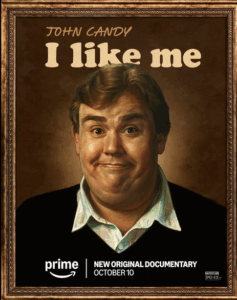
This isn’t the first documentary about Candy, but it’s far and away the most intimate and revealing. That’s thanks largely to the role of his wife and children as executive producers and the extensive use of interviews with industry colleagues, mostly fellow comedians, plus copious home video footage documenting his precious interactions with friends and family members. Not surprisingly, Candy is revealed on camera to be a devoted husband and father who worshiped his children. His daughter, Jennifer, remembers him in the film as the man who went to work and came home every evening and doted on them with unbridled love. She confesses that for years she barely even knew what he did for a living, even as his fame and celebrity became so well-known to others. To her, the burly and jovial Candy was just “Dad.”
The interviews with Bill Murray, Conan O’Brien, and Martin Short, among others, are especially poignant because they deal directly with the issue of Candy’s health and the likely cause of his death. His prodigious eating, drinking and smoking and his robust figure — yes, he was “fat,” for which he made no excuses and which he rarely ever mentioned, even for laughs — reflected the deep self-doubt and corrosive people-pleasing habits that would plague him for the length of his career, even as his talents became increasingly validated by his peers, and by the industry as a whole. Apparently, these habits stemmed from his early childhood, but in a jealous and unforgiving Hollywood, they were magnified as his career progressed and he felt the constant pressure to succeed at ever-rising levels, filling him with a quiet dread and anxiety that threatened to – and indeed, in the end, apparently did- overwhelm him.
There are some wonderful stories told here: For example, “Home Alone” Macaulay Culkin, who worked with Candy on “Home Alone,” recalls the comedian as the one person who stood by him when his fears and anxieties as a child actor threatened to derail his own promising young career. But above all, his industry peers want people to remember how magnificently funny Candy was, and how came to be perceived as a “gentle golden giant” – and not just in size but in his growing stature and reputation. “He was at the very top of what he did,” fellow comedian Steve Martin, who co-starred with Candy, says. “There are some things that are just painful and you can’t make them un-painful,” he adds. Several others offer similar sentiments, their tearful memories of John, and their sadness at his passing, still so evident.
Candy’s tragic story recalls those of Robin Williams, John Belushi, and other comics, who, like circus clowns, seem destined to go through their lives Janus-faced. In movies, we got to see Candy’s joyously shining happy face and we freely laughed, often uproariously, at the very sight of him. But in “I Like Me,” we get to see his sad face, too, and it’s not always pretty. Candy, in the end, may well have stared his worst demons down — fittingly, the documentary’s title are words his character uttered about himself in one of his films — but his body ultimately betrayed him. Free of his worldly burdens, Candy can just laugh now. And wherever his spirit may reside, others are undoubtedly laughing right alongside him.
