Being brought up in a village in the heart of the English countryside, I remember how the narrow roads were taken up by giant combine harvesters and tractors pulling trailers laden with massive loads of bales of straw from the fields during the grain harvest. As a youth, my friends and I helped with loading bales on the trailers, for a couple of quid an evening shift after school in the autumn and got to ride back to the village on top of the bales on the trailer.
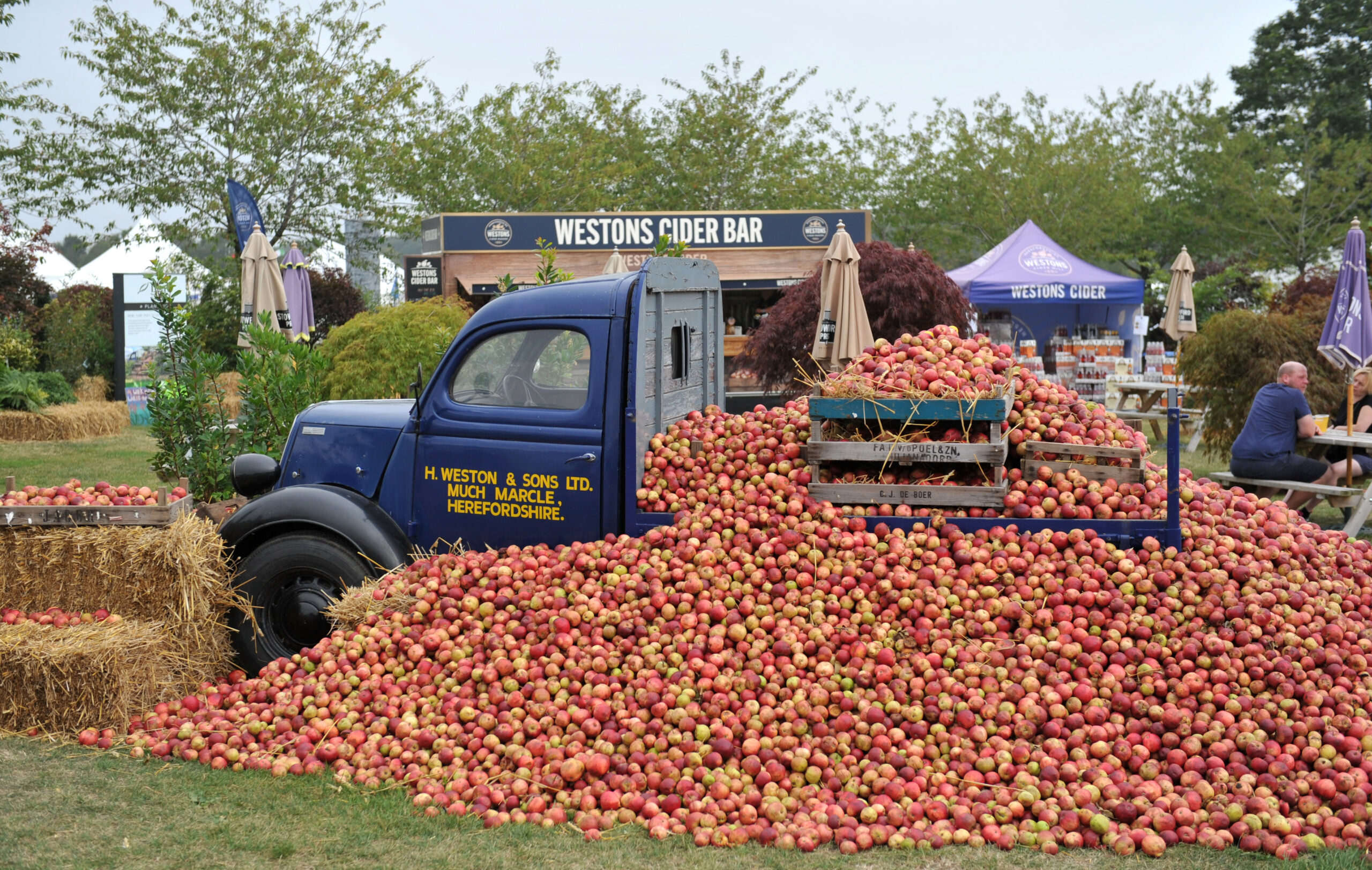
That’s because, in Britain, the grand climax of the growing season comes in September. At this time of year, farmers are rushing to gather the last golden grains of corn and bales of straw from the fields. There are ripe fruits like apples, pears, and plums to pick, and vegetables like potatoes and carrots to be brought in before winter. Although these tasks are now completed using massive mechanical combine harvesters and tractors pulling trailers piled high with golden bales of straw, there is still plenty of manual work that needs to be done.
And why does that work have a deadline? Besides making sure the crops were harvested in time, there were festivals right ‘round the bend.
For instance, the Harvest Festival is held annually around the harvest moon in late September or early October. In our village it was always a time of unity. On the Wednesday before Harvest Sunday, church and chapel folk with their children, walked the length of the village from north to south along the high Street, stopping of at intervals to sing hymns. The High Street was about two miles long and there were several stops so it took quite a time to get from one end to the other in this way. Nevertheless, it was a relaxed and easy-going event that everyone enjoyed.
The kids were given a day off from school, and there was the promise of cream buns after, to bribe us further, which always worked. This sense of togetherness and shared celebration was what made the Harvest Festival truly special. Once the length of the village had been completed, we would visit the outlying farms and give them a song or two. They usually responded by bringing out jugs of lemonade and sandwiches, and we would enjoy a rest and a picnic.
On return to the village, it would be teatime with more sandwiches, cakes, and lemonade, but, best of all, huge cream buns with a dollop of raspberry jam inside. Really, it was the cream buns that were the highlight of the day for the children as it was the only time of year we got them, and the anticipation of these treats added extra fun to the Harvest Festival.

Pastries like these are treats from harvest festivals past. Huge cream buns with a dollop of raspberry jam inside please any age group.
The following Sunday was the Harvest Festival, and the church and chapel held their own services. The emphasis is placed on charity and thanksgiving and singing hymns like “We Plough the Fields and Scatter” in celebration of the harvest. Through the following week, there were exhibitions of home-produced fruit and vegetables, and prizes given for different categories. This was followed by a grand auction of produce, with profits going to the church or charity.
Around the country, rural communities were celebrating similarly. In some places, curious ancient pagan ceremonies were enacted alongside the church celebrations. Possibly the oldest surviving ceremony in Britain still takes place annually in Abbots Bromley in Staffordshire, involving dancers wearing reindeer antlers on their heads.
I like that around the world the harvest season, whatever time of year it falls in, tends to be a time of thanksgiving for so many different people. The different symbols and traditions expressing the ancient ties to the land, the changing seasons, and the spiritual traditions of people all around the world, I find fascinating. Yet, despite the diversity there are still usually the themes of life, death, and renewal, which are recognized and celebrated in unique ways. We see harvest time marking the climax of growth and the beginning of the dying of plants, while remembering that their seeds are the hope for the future, planted under the earth, awaiting Spring.
One of the most popular folk songs we sang in school during the harvest season was “The Ballad of John Barleycorn,” which told a strange and violent story. According to my schoolteacher, John Barleycorn is a British archetype, seen as the personification of drinks made from corn, such as beer and barley and food such as bread. But as a vegetation spirit, some also include wine and brandy, products of grapes and vegetable foods. He claimed, as the embodiment of the spirit of corn, or vegetation, he must be ritually sacrificed at the end of the annual harvest, to be resurrected in spring in the growing shoots of grain. His story of death and resurrection is found in several Scottish and English ballads, which are still sung and remain popular. These parody the processes involved in preparing corn for bread or beer, from growing to cutting, winnowing, grinding into flour and making the beverages. It is intriguing that John Barleycorn, as the personification of corn, becomes metaphorically and physically the spirit of the grain, vegetation, and their products, which in turn we consume in drink or food.
I confess, I much preferred singing about John Barleycorn to “All things Bright and Beautiful.” And still do. Although I am not particularly religious, being neither for nor against it, I still enjoy the harvest season, although I only visit a church or chapel in adulthood for weddings, funerals, and christenings. Sadly, they no longer provide cream buns!