
There’s an age-old ethical proposition: Just because you can do something, it doesn’t mean that you should. This age-old proposition applies in spades to the issue of “gene-editing” to eliminate certain kinds of hereditary deafness. It’s part of a widening ethical debate over the uses of technology to expand the frontiers of medical research and health care, including the hot-button topic of harvesting stem cells from aborted fetuses. But in recent months, the issue has begun spilling into entirely new medical areas that have raised even thornier ethical issues relating to the social engineering of human life itself.
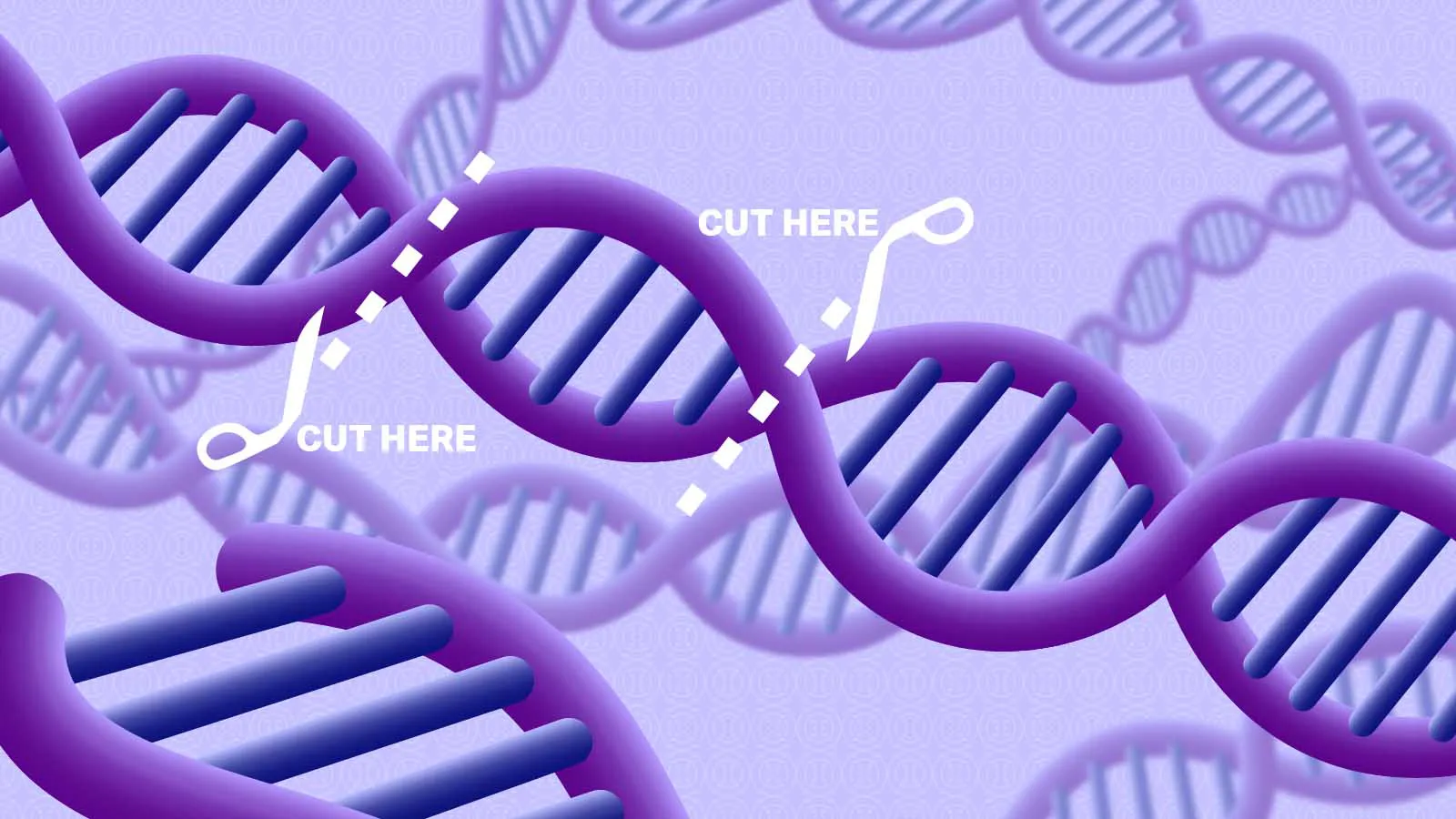
Thanks to scientific “progress,” a more precise and invasive form of the gene-editing technology known as CRISPR — sometimes dubbed “CRISPR 2.0” — can be applied to specific gene defects that limit a child’s auditory, or hearing, levels, and in some cases render that child completely deaf. Wouldn’t all deaf people, if given half a chance, choose to restore one of their elementary six senses and achieve what the hearing majority considers “normalcy”?
You might think so, but in fact, the answer is no.
Deafness is Not a Disability
The notion that genetic editing would be and should be freely chosen by deaf people assumes that deafness is simply a “disability” in need of “correction” rather than a reflection of a naturally occurring genetic diversity that many deaf people believe should be allowed — and indeed, encouraged. It may come as a surprise to those with “normal” hearing ability — the “abled” — but most deaf advocates these days celebrate their community as a distinctive ethno-linguistic group and take pride in their own vibrant and manifold forms of sign language and other communication rituals, patterns, and mores outside the social mainstream.
Indeed, many deaf advocates explicitly reject what they openly disparage as “oralism” and “audism” — that is, the bias in our society in favor of the spoken word that must be “heard” to be understood. It’s perplexing to many outsiders, but, if anything, deaf “pride” is becoming something of an underground social movement that is demanding recognition and accountability. Attempting to remake deaf people in the image of the non-deaf is not just discriminatory; it’s an outright cultural invasion.
Once the scope of genetic editing is extended beyond generally accepted disease conditions — like cancer and diabetes — a Brave New World of possibilities — and risks — emerges.
For many in the deaf community, the promotion of gene editing — in the guise of “progressive” science” — is only the latest technological assault on deafness that began with the promotion of cochlear “implants” in the 1950s.
Those surgically implanted devices were designed to enhance the ear canal of deaf people to mimic traditional “hearing.” However, cochlear devices don’t work for most of the deaf population; in fact, only about 30% can benefit, according to research studies. Hereditary deafness is simply too pronounced in most cases.
Many in the deaf community are critical of attempts by the hearing majority to “normalize” a segment of their community; if they choose to not undergo gene editing or the therapy is unsuccessful, they are then stigmatized for somehow failing to measure up through no fault of their own.
However, that’s precisely why many scientists believe that CRISPR 2.0 gene-editing should be welcomed by the deaf.
In theory, most deaf people with severe auditory hearing problems would likely benefit, they say. Society could still encourage sign language and celebrate deaf “culture,” but should all scientific progress be canceled in the name of deaf “solidarity”?
Bioengineering Experiments Underway
The debate over deaf gene-editing has become increasingly urgent ever since news broke that deaf gene-editing experiments were already moving forward, apparently in the absence of proper oversight from medical authorities.
In 2019, Chinese scientists demonstrated the positive impact of gene-editing on the DNA sequence shown to limit the auditory capacities of deaf mice. Since then, Russian scientists claim to have conducted gene-editing experiments on human embryos with signs of incipient deafness. And the most recent experiments suggest that gene-editing actually works with real-live humans — at least for the rarest and most extreme forms of deafness.
Still, there are real medical risks here, owing to the potential imprecision of gene-editing and a lack of clarity on which types of deafness might best be remedied and for whom. It may be that the potential for restoring human hearing across the board has been overstated, which is one reason more clinical experiments, conducted under the proper protocols, are needed.
News of these early experiments has already produced a backlash that has led to calls for a global moratorium on them pending an examination of potential risks, and the development of a regulatory protocol to define the scope of implementation. However, the pressure to move forward from the biomedical companies that stand to profit from gene-editing is clearly growing. At some point deaf advocates will have to decide if they support gene-editing among members of their own community who embrace the procedure, once its safety and effectiveness are clearly established.
There’s another, potentially darker side to this same issue: The possibility that some deaf parents might want to use gene-editing to keep their own children deaf — to preserve their family unity, or out of a misplaced sense of political or genetic “correctness.”
Non-deaf people might find this prospect horrifying, but is it? Once the scope of genetic editing is extended beyond generally accepted disease conditions — like cancer and diabetes — a Brave New World of possibilities — and risks — emerges. Which other characteristics of a developing child might be altered to suit the predilections of its parents: for example, height or eye color, or even gender?
Moreover, there are other diagnosed conditions such as autism that, like deafness, are viewed by some as having redeeming, even positive qualities. Should these also be eliminated through genetic editing whenever they appear, or tolerated and even encouraged in the name of preserving genetic, and cultural, diversity?
Bioengineering — increasingly possible thanks to CRISPR 2.0 — asks us to redraw some of the boundary lines between nature and science. Right now science seems to be galloping ahead at a pace that leaves little room for deeper reflection on the medical as well as moral/social consequences. Pulling back on the reins makes sense in the short-term, but excessive delay carries a risk, too: that the healing power of medicine — and the possibility of a better, more fulfilled life — will be denied to the next human generation in the name of ideological principles or simply out of fear of the unknown.
