
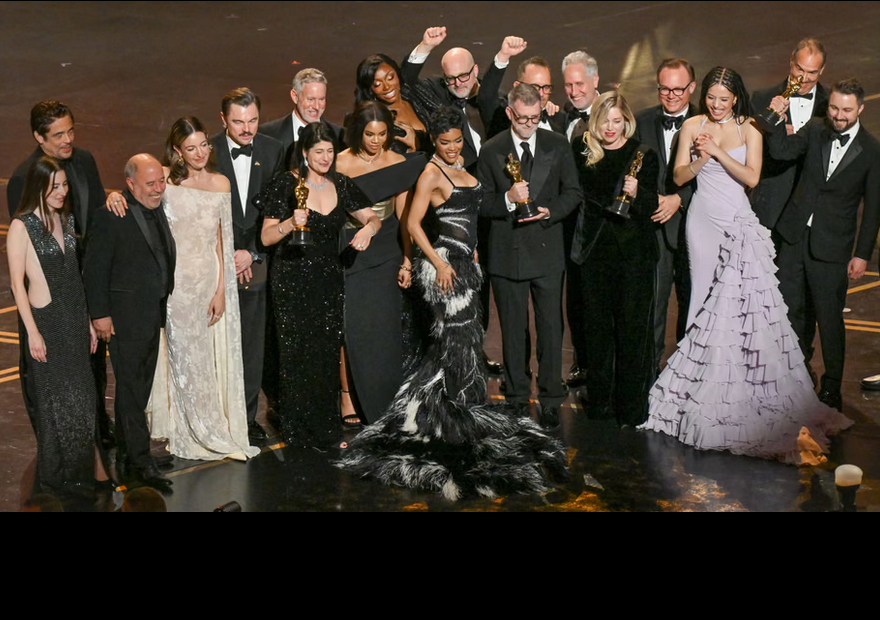
The 98th Annual Academy Awards have come and gone, and the only issue in dispute is whether the movie industry’s showcase event can actually survive, moving forward. The Oscars used to attract some 30-50 million viewers back in its heyday in the 1990s, but viewership has declined steadily, especially since the pandemic set in. There have been several years of modest recovery — last year viewership jumped 7% to about 18 million watchers — but this year it fell by 9%, hitting a four-year low. And it’s not just the Oscars. Other film (and TV or music) awards shows, including the Golden Globes and the British Academy Awards (BAFTA), have witnessed similar declines. The era of live award broadcasting seems to have come to an end.
Which doesn’t necessarily mean that the Academy Awards are any less popular with viewers. However, some observers, especially conservatives, feel that the awards shows have become “hyper-politicized,” featuring the imposition of “woke” themes as a condition for producing major Oscar contenders and the adoption of rigorous DEI hiring policies at all levels. Thematically, slavery has also become a recurring element in recent years, and a 2026 film depicts a grassroots protest against a far-right regime, echoing the headlines everywhere. Writ large, the “face” of Hollywood film stars has been radically altered, with many lead and supporting cast members — and Awards winners — now people of color. The old, overwhelmingly White-dominated Hollywood, which still prevailed just a decade ago, is shrinking, perhaps never to return, no matter how many #OscarsSoWhite hashtags may be generated.
But there’s mounting evidence that the burgeoning diversity in moviemaking hasn’t ensured that the new movies being produced are any more popular with film lovers.
But there’s mounting evidence that the burgeoning diversity in moviemaking hasn’t ensured that the new movies being produced are any more popular with film lovers. The new standards are coming from industry executives, in responding to backroom lobbying, not to the movie-going public, which remains largely White. A shocking poll conducted by POLITICO in March 2026 found that only 29% of Californians saw positive gains from liberal Hollywood’s cultural influence on American politics and social life. Movies like “Parasite” (2019), featuring an all-Korean cast speaking in native Korean, with heralded Korean director Bong Joon Ho, may be perceived as a single-year cultural novelty worthy of celebration. But did the film really deserve its much-ballyhooed Best Picture Oscar win? Not everyone thinks so. Other novelty efforts continue to generate buzz when they appear but do not necessarily captivate mainstream moviegoers. Still, given fierce ideological pressure on the industry, production of them will likely persist.
There are other less political explanations for the decline in movie viewership, namely the decline in on-site movie-going and the rise of multiple streaming video platforms, including YouTube and Netflix. This “seismic transformation,” which includes on-demand services and the popularization of binge viewing, has led increasingly to convenience off-site film consumption, except in the case of heavily promoted blockbusters. As a result, major chains like AMC are closing theater locations and grappling with debt, and so the industry overall is shifting toward luxury, large-format settings just to survive. The trend started under COVID-19 but has quickly become the industry norm.
Hollywood is beginning to acknowledge the trend and hoping to get ahead of the curve. By 2029, the Academy Awards will formally transition to YouTube, part of a larger shift in movie production and distribution toward online channels. And why not? In 2026, the revenue generated from movies released on YouTube eclipsed that of Disney for the first time in history. There are also hybrid models that likewise trigger a decline in more traditional moviegoing. Still, the age-old cinematic movie consumption model remains entrenched, because on-site viewing still suits consumer preferences — especially those of families — for live entertainment. But how long it can survive under the constant pressures of technology and finance, which are destined to become even more fierce with the rise of AI-enhanced moviemaking, remains to be seen.
When all is said and done, it’s hard to escape the conclusion that movie celebrity itself has lost its hallowed perch with film viewers. The need for an A-List of movie stars to drive consumer interest in films has faded: Nowadays, viewers are as attracted to movie franchises and their ongoing storytelling motifs as they are to real-life industry “heavyweights.” The passing of a prominent Boomer generation from the scene, including 1970s/’80s “giants” like Robert De Niro, Al Pacino, Harrison Ford, and Meryl Streep and even more recent icons such as Brad Pitt or Denzel Washington, has also left acting to an entirely new and unheralded Millennial generation who often seem politically naive though presumptuously outspoken. The new YouTube film “stars” — their stardom often an artifact of massive self-promotion — might register with younger audiences, but they lack the gravitas to resonate with larger movie audiences. Fewer viewers these days are looking to Hollywood actors as a role model or an uplifting story of triumph over adversity. The icons are being pulled down, and the Oscar statuettes, still glittery as ever, are crumbling.
The danger for Hollywood is a decline in its mystical allure that leaves it without a mask to disguise what it’s become: an increasingly boundary-crossing culture in some ways more accessible to the masses but at the same time filled with people living in their own self-absorbed bubble who are less and less interested in touch with and in giving expression to the themes and scenes of daily life in mainstream America. The comforting illusion of traditional moviemaking — of fantasy worlds that can transcend our hardships and inspire our glory — is gone, replaced by a vast array of intricate technologies and low-brow cultural posers that distract and titillate but never seem to feed our souls. The majesty of the Oscars and all that Hollywood moviemaking once meant for America are, indeed, passing from the scene.
