
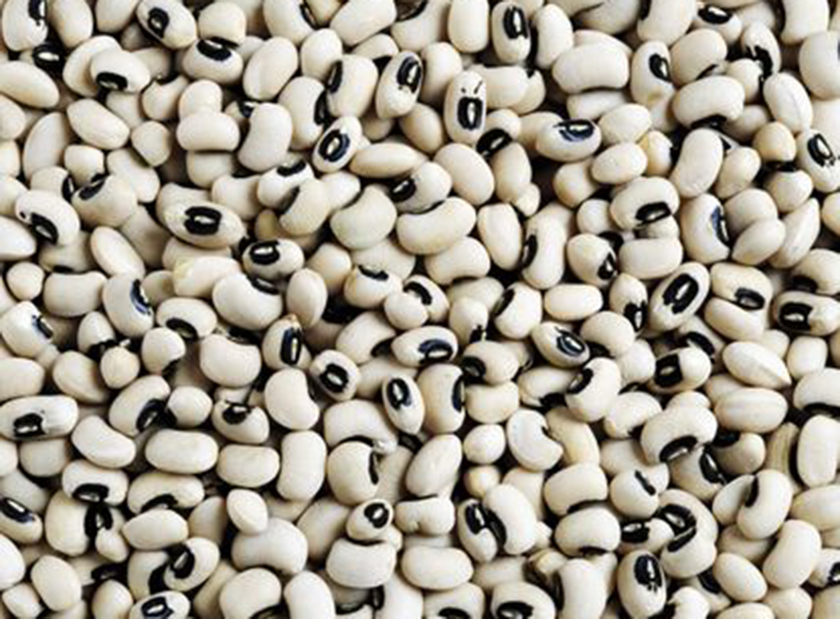
Since I was first given real food, which, in my family, was most around the age of six months, I have had black-eyed peas to mark the first day of the year.
For years I brought my black-eyed peas from Texas when we visited family in Rome and then, a few years ago, discovered (along with tortillas, hot sauce, and green chilies) that Castroni has had them all along. Surely there are not that many pea-eaters to warrant stocking the shelves with them, but evidently enough “sutheners” wanted them (Gore Vidal? Tennessee Williams?) and voilá, there they sit next to the cannellini and lenticchie, awaiting their ham hock, if you can find one.
In the south, everyone and his mother will have a recipe for black-eyed peas, but mine is simple and benefits from the presence, in Rome, of really good chunks of prosciutto (not sliced), found in manageable sizes in supermarkets. You might find a zampone, smoked pig trotter, to stand in for a ham hock, or a stinco (pork shank), but I’ve not seen a smoked one and pork shanks will stick out of most pots, making them great to stir but not at all practical.
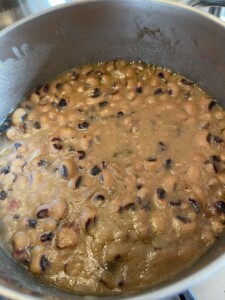
Suzanne Dunaway’s black-eyed peas.
A 500 gram package of black-eyed peas makes enough for four to six people and then some. Leftovers can be tossed into soups or used in other recipes.
I cook my peas in a large, heat-proof casserole. First, cover with cold water and wait, preferably overnight but you can do this in the morning and cook them in the evening as well.
Pour off all of the water after you soak them and with it will go, we hope, some of the substances that can make any bean or pea slightly… er … indigestible. Now add water to the pot just to cover the peas and add 2 cups of white wine or beer. Add 1 sweet onion, chopped fine, a stalk of celery and a carrot, split (to be removed later), and a good fist-sized piece of bacon, smoked ham, or prosciutto. Bring the peas to a boil. Skim off the grey stuff that comes to the surface, discard, lower the fire to let the peas simmer, covered, for about 1 1/2 hours. Check the liquid level and add broth if needed. When serving, each bowl gets a little of the “pot liquor” as it is called in the south, so you don’t want to dry out the peas.
They should be tender to the bite when done. Take out the carrot and celery and discard (well, I eat the carrots with a little salt). Heat 1/2 cup extra virgin olive oil in a small pan and add to it yet another sweet onion, chopped fine, 2 or 3 garlic cloves, chopped fine, a couple of sage leaves, chopped, and a very small hot pepper. Let these take on a bit of color and then add them to the pot.
Simmer the peas another 30 minutes on low heat, without the cover.
When the peas are tender, take out a cup of peas and put them in a blender or food processor, then add this to the mix. This will thicken the wonderful juices in the peas and give a nice texture to the whole shebang.
I serve chopped cilantro with my black-eyes, which is also nice to serve with Hoppin’ John — black-eyed peas, cooked rice, sautéed bits of bacon or ham, and sautéed chopped onion, or for Texas Caviar. Mix 2 cups of the cooked black-eyes, whole, with 1 small raw sweet onion or scallions, a small jalapeña, a clove of garlic, 1/2 cup of sweet bell pepper and cilantro, all chopped fine. You may use fresh corn kernels, cooked, and cooked black beans if you like. Toss with olive oil and wine vinegar or lemon juice to taste.
